When visiting historical sites, it’s often easy to marvel at the beautiful architecture in front of us and forget that all these buildings have been painstakingly restored over the years. Thankfully for photographic evidence, we’re able to see what the structures looked like in the recent past. As for how it looked like 8-10 centuries ago when they were first built, we can only imagine.
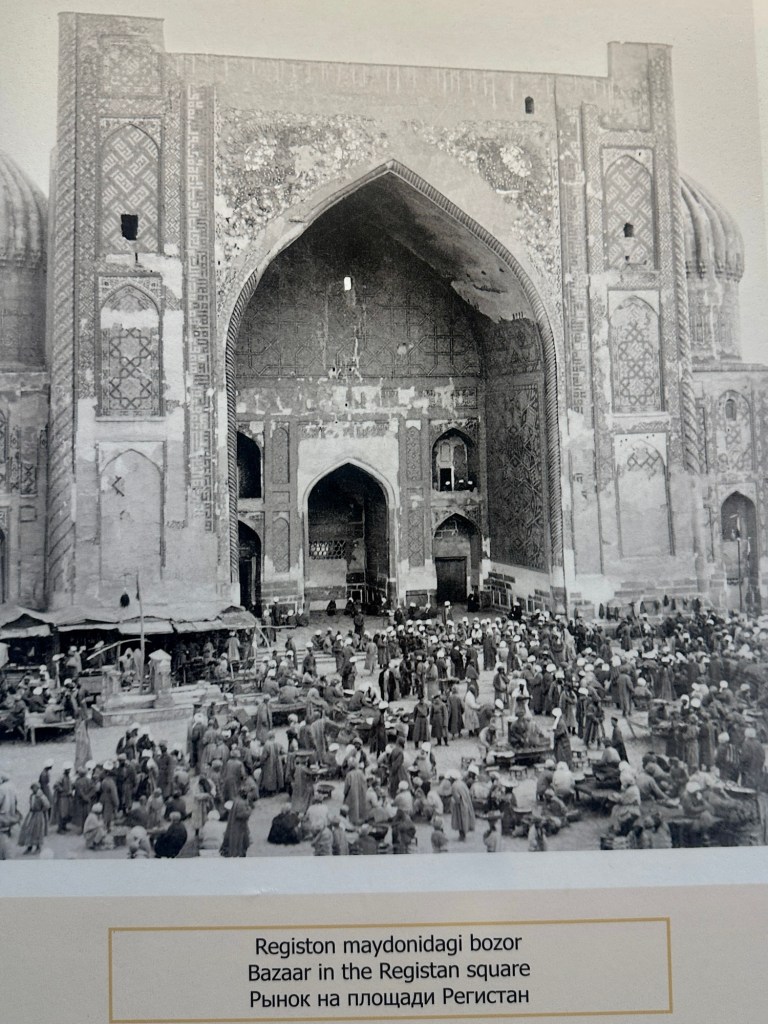
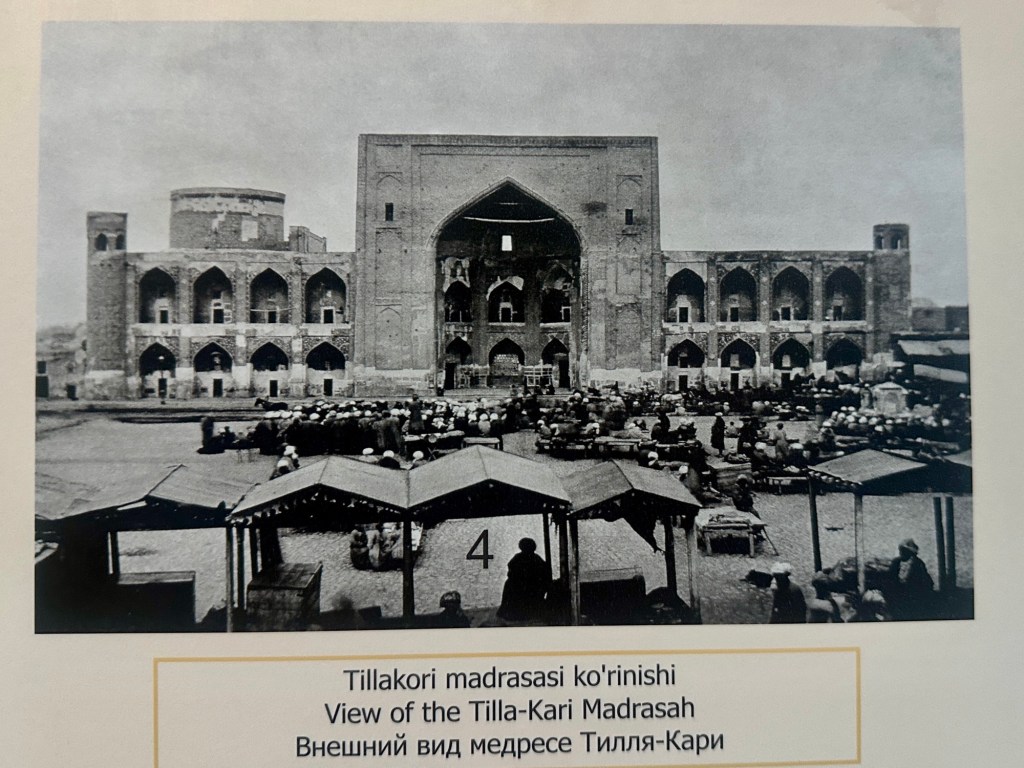
The Registan in the late 1800s to early 1900s served as bazaars and meeting places.
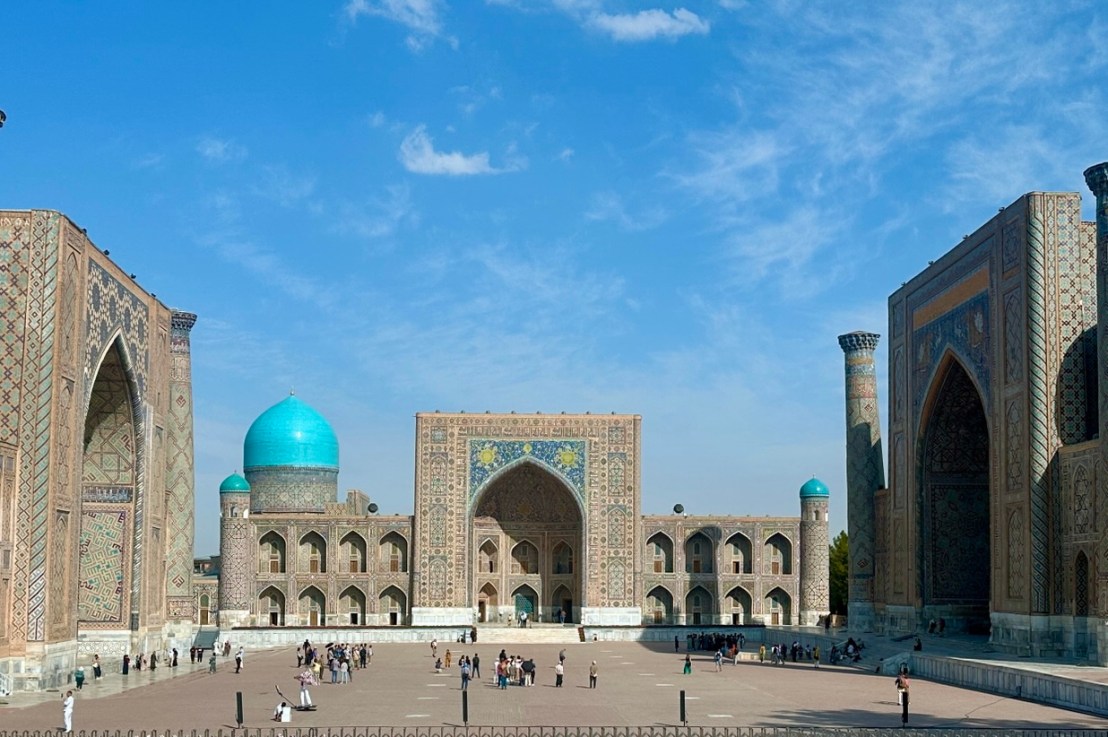
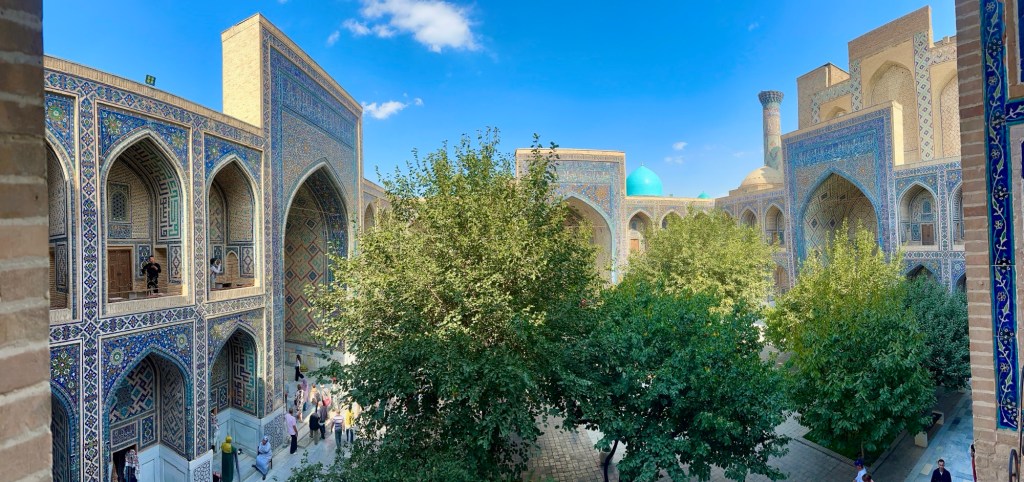
The 3 madrasas that occupy the Registan are the Ulugbek, Sher Dor, and Tilya-Kori.
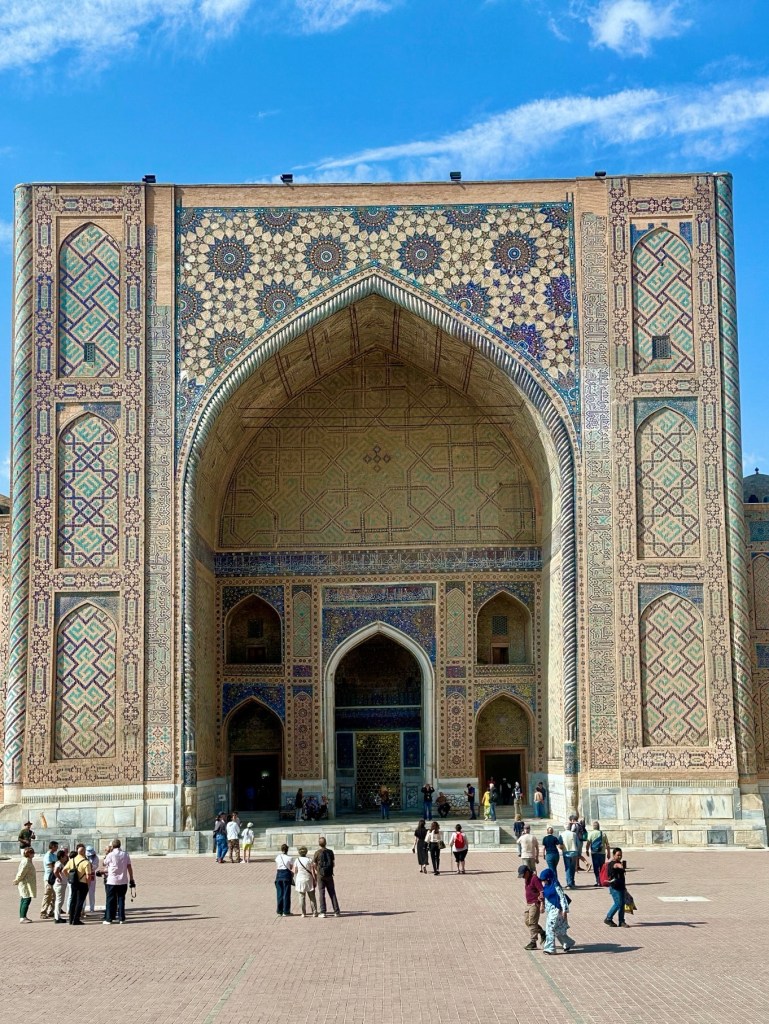
Ulugbek Madrasa
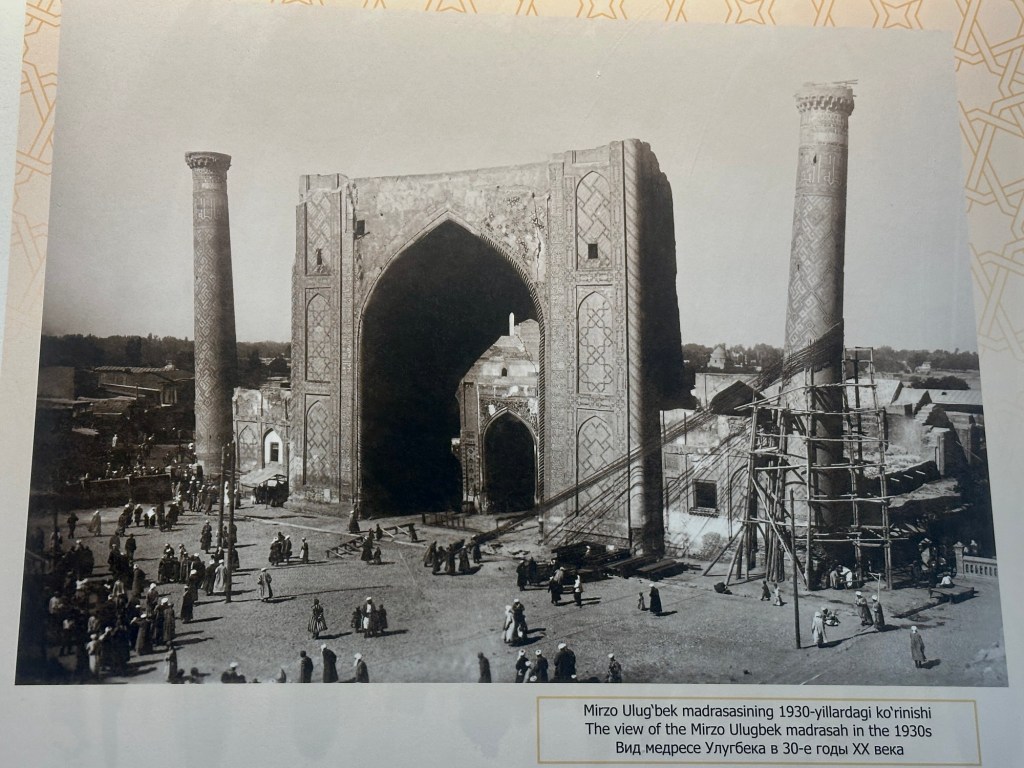
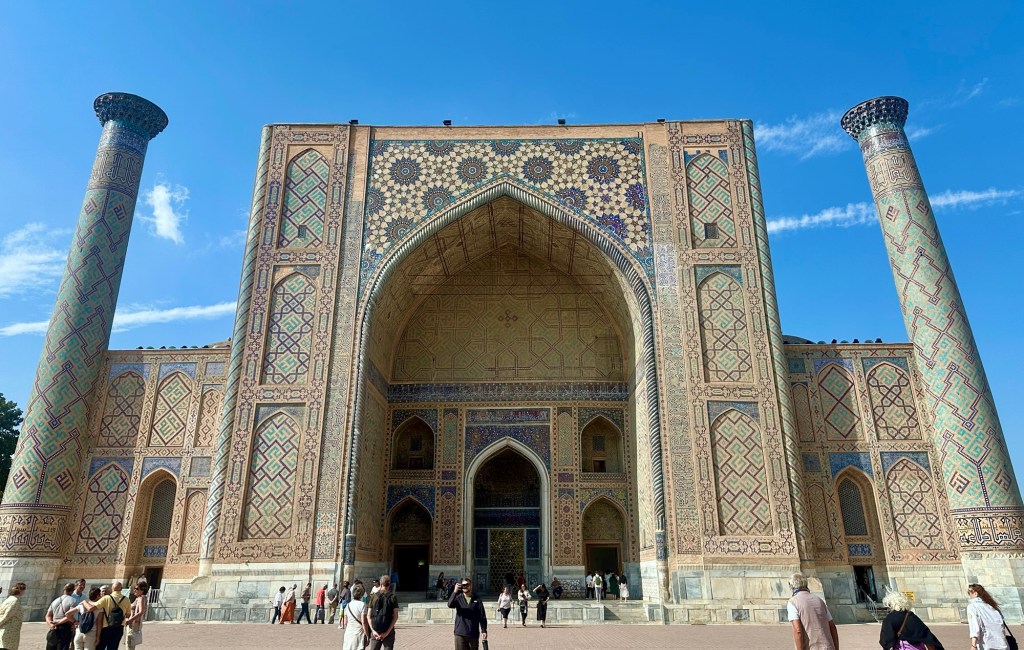
The construction of the Ulugbek Madrasa took only 3 years to complete in 1420, and it amazingly held up the best out of all 3 madrasas after a series of earthquakes hit the region.
The madrasa in 1930s2024
Alongside other teachers teaching a variety of subjects, Ulugbek had taught mathematics at this school.
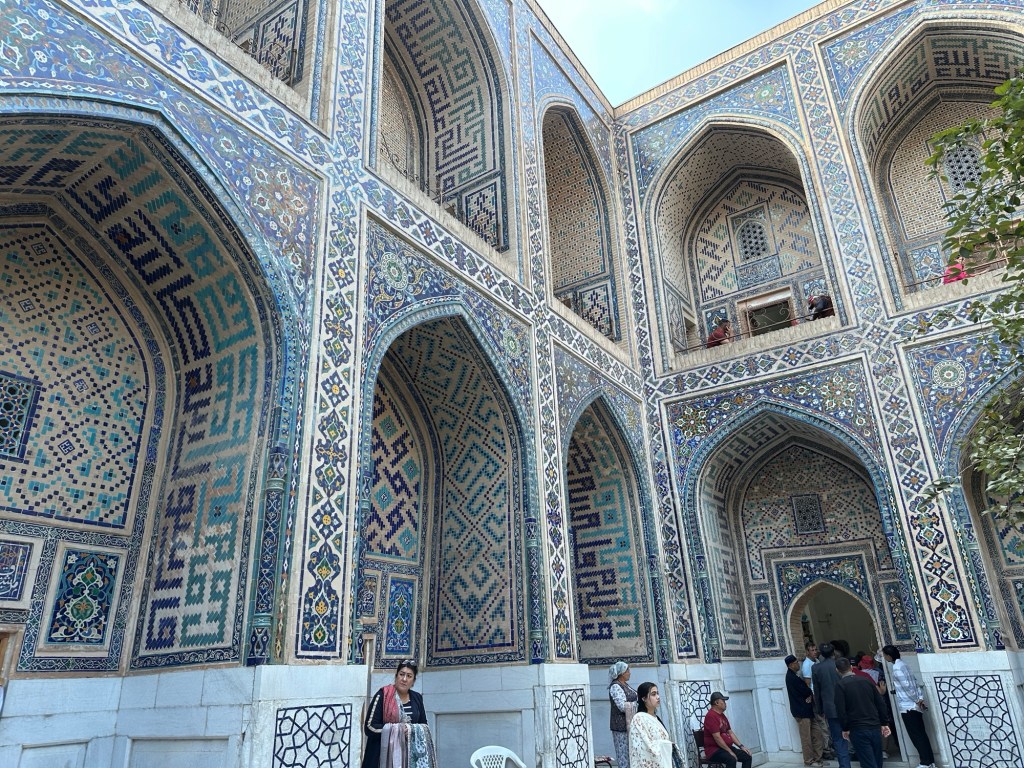
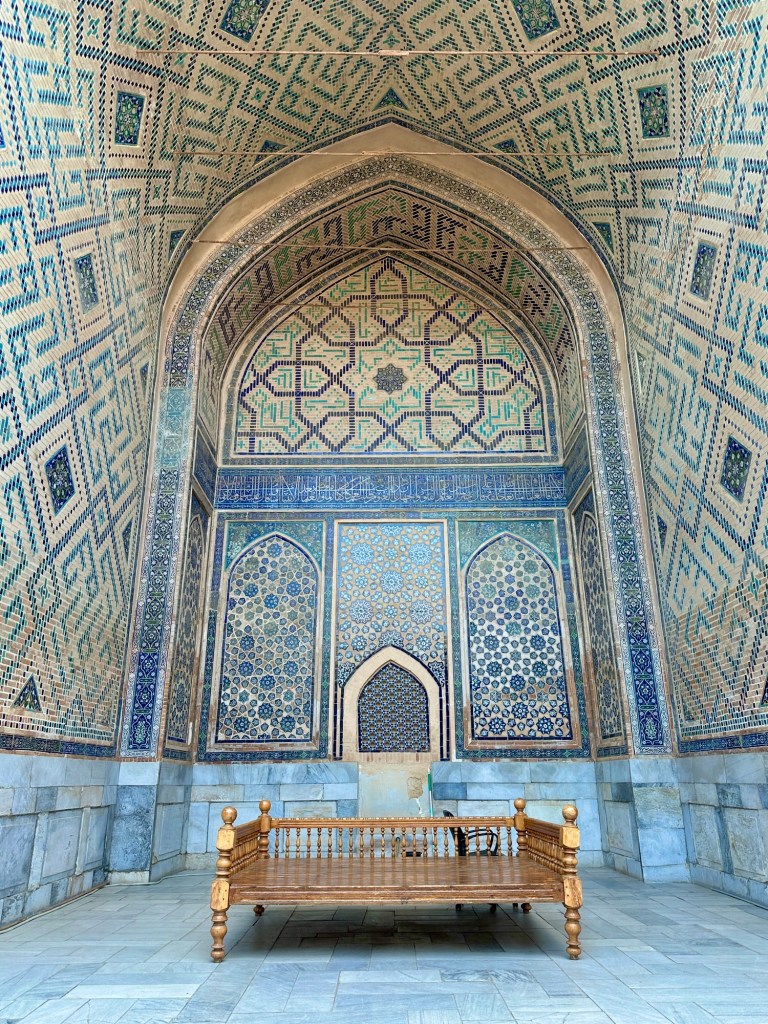
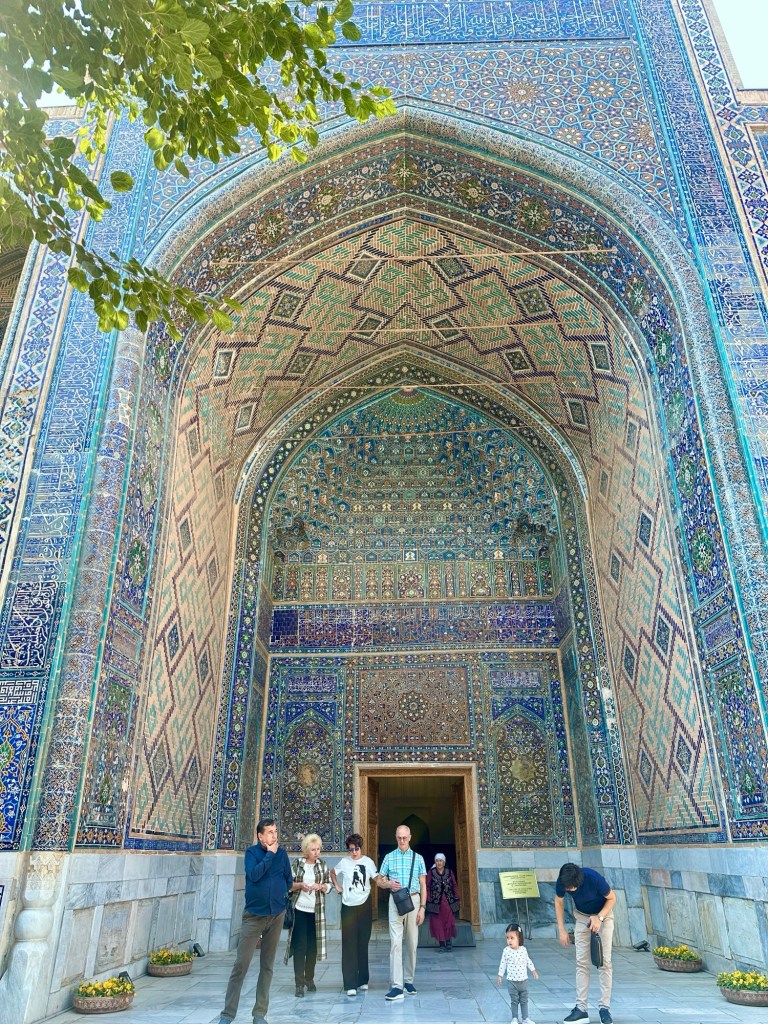
The portal is decorated with stars showing his affinity for astronomy. Some of the other design details are very similar to that of the madrasa in Bukhara.The biggest difference is how completely and dramatically this one has been restored vs. the more subtle improvements in the one in Bukhara.It just looks too perfect
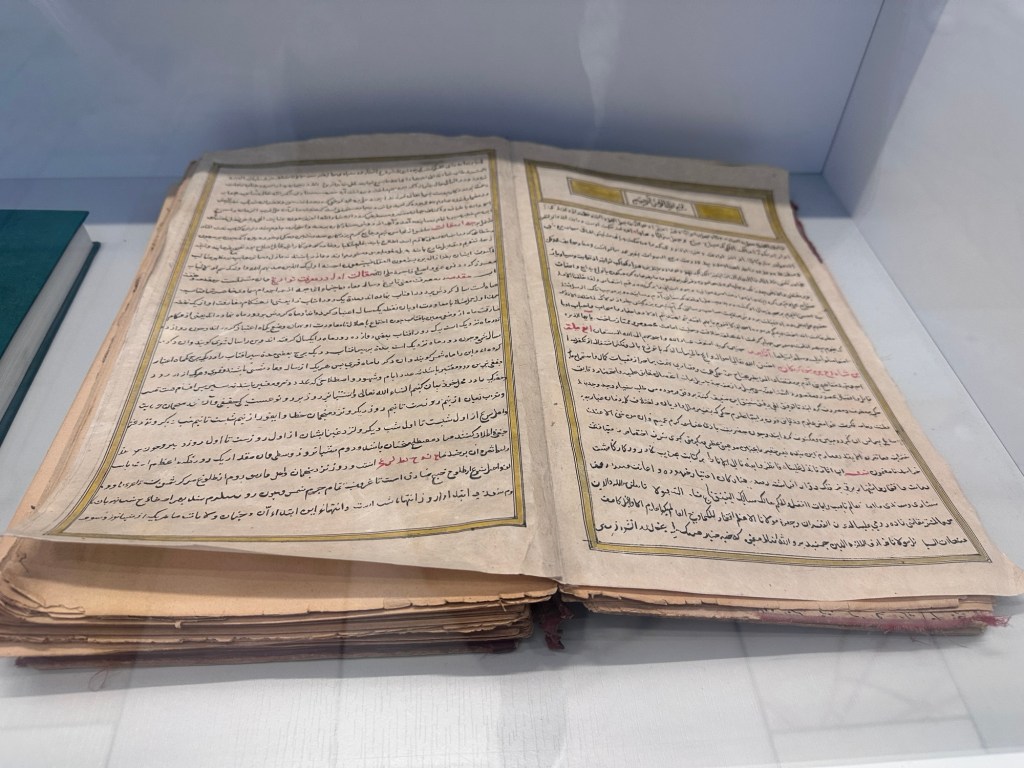
The best part of this madrasa is the ability to access the second floorJoe striking a poseRelatively simple designs throughout The mosque in the rear of the madrasa houses a really good exhibition showcasing Ulugbek’s focus on science education.Ulugbek’s book on astronomy.
Sher Dor Madrasa
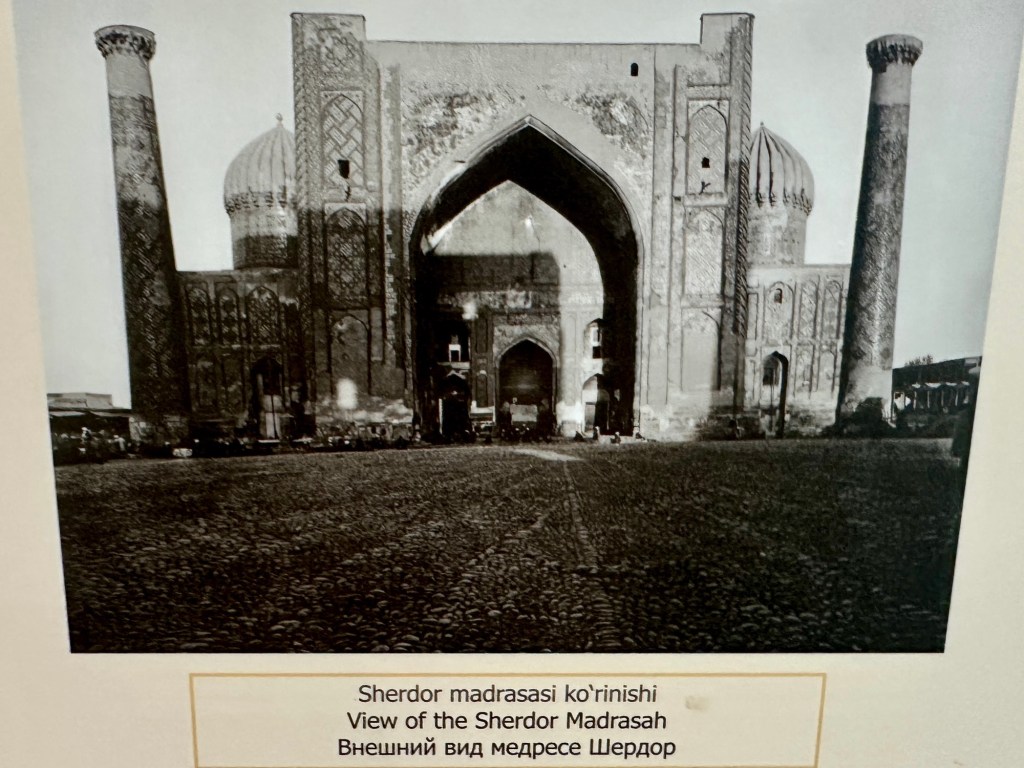
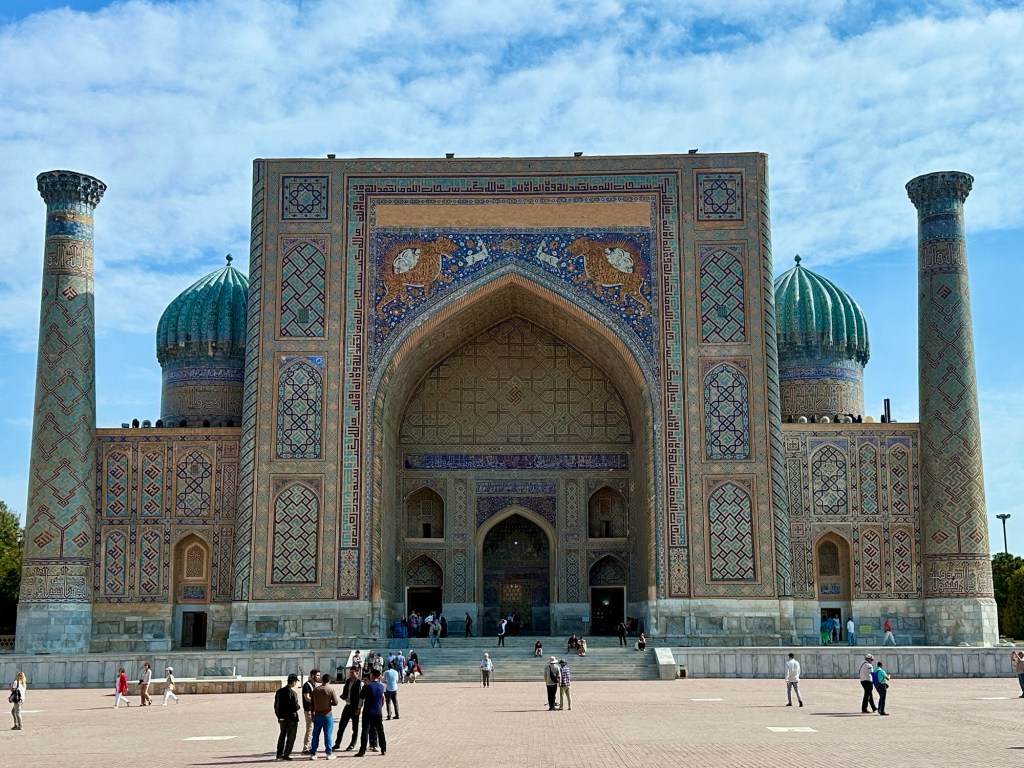
Two hundred years after the completion of Ulugbek Madrasa, Sher Dor Madrasa was completed in 1636 after 17 years of construction.
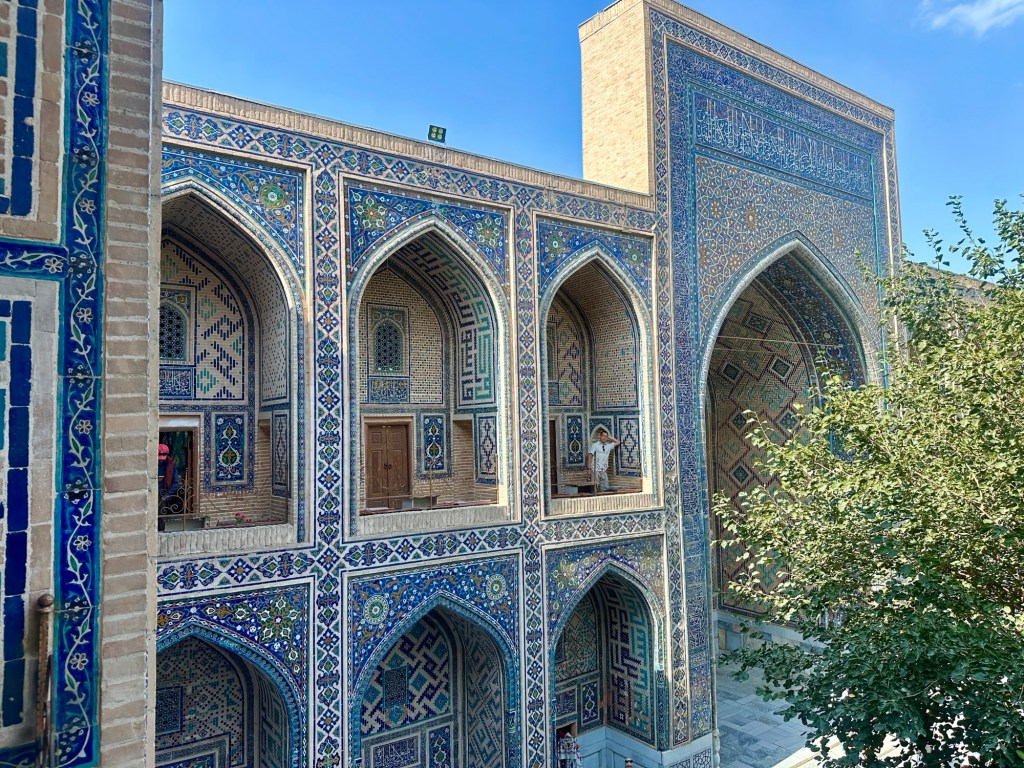
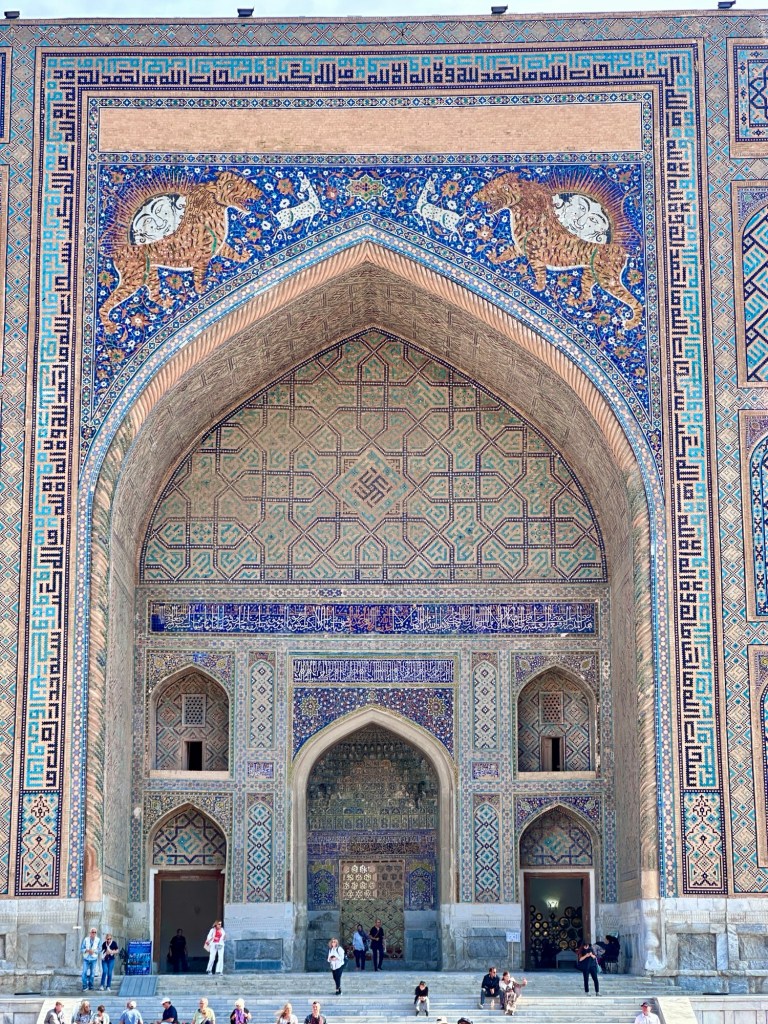
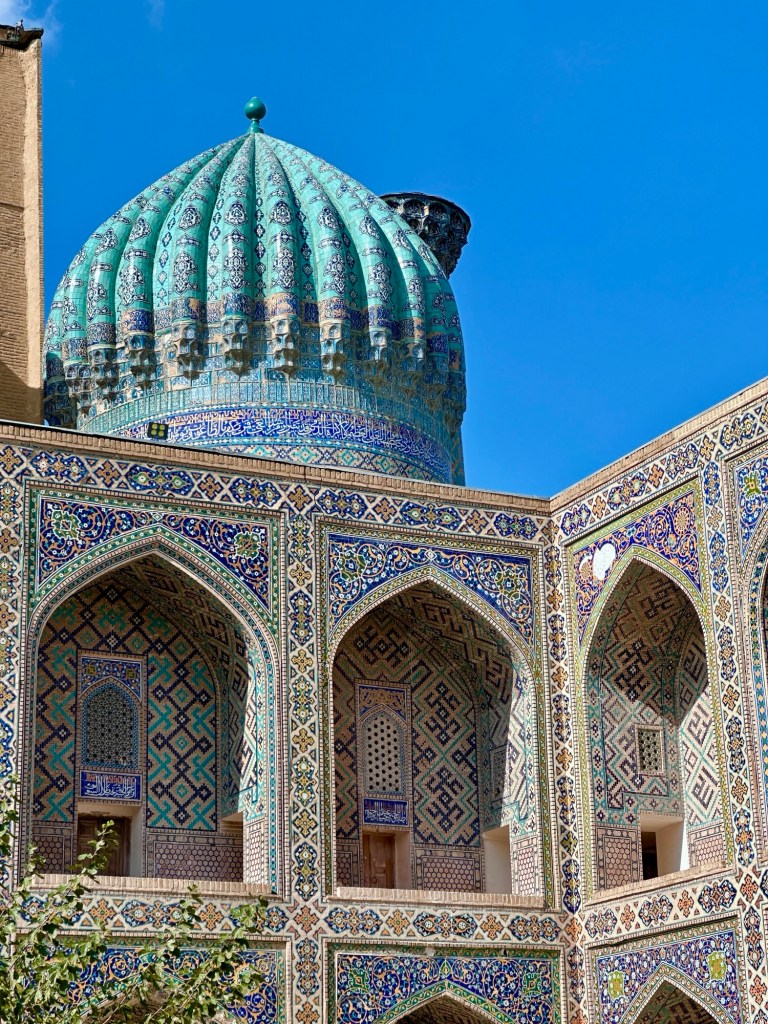
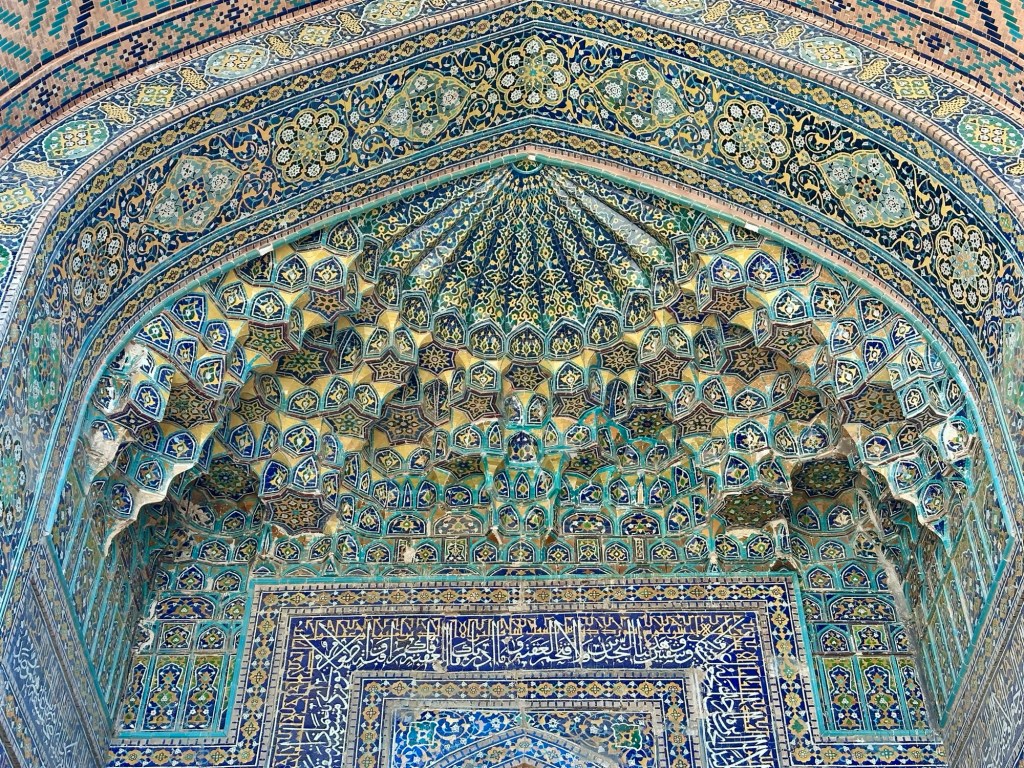
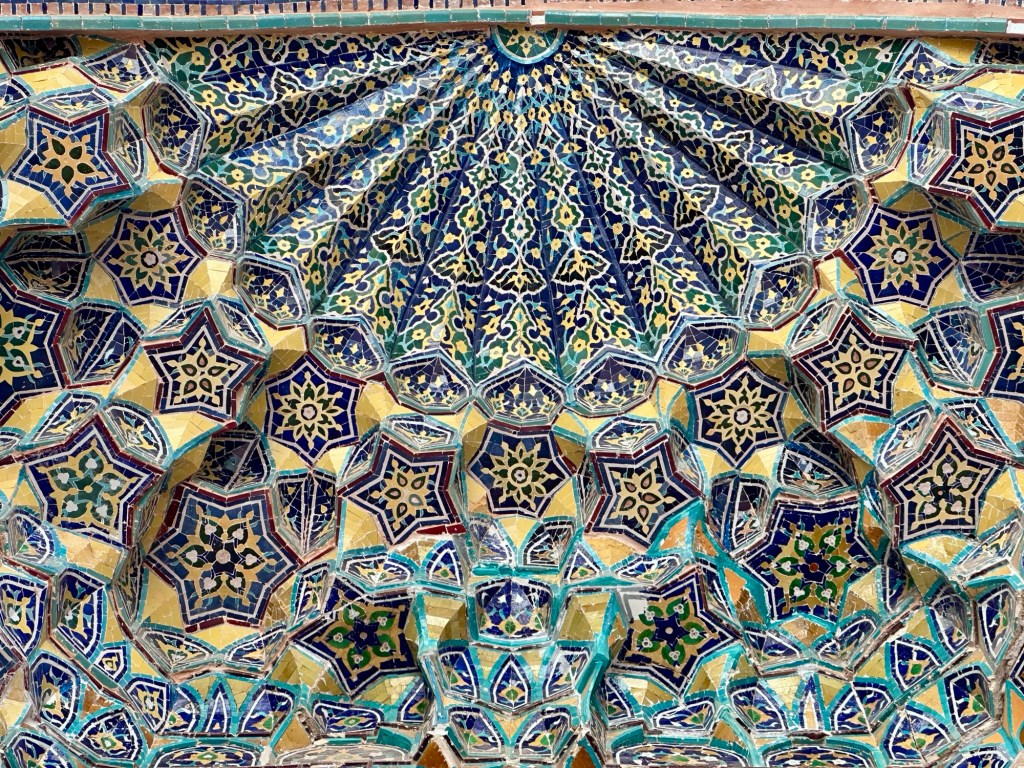
Sher Dor in early 1900s2024Sher Dor in Persian means “lion”, and the madrasa is named for the 2 lions (that look like tigers) above the entryway. Again, going against Islamic tradition of not depicting living beings.A bit more fancy in the design details With the use of stalactite overhangs .
One of the living quarters here has been “restored”. A big contrast to what hadn’t been done to the rooms in the Bukhara madrasas.
Tilya-Kori Madrasa
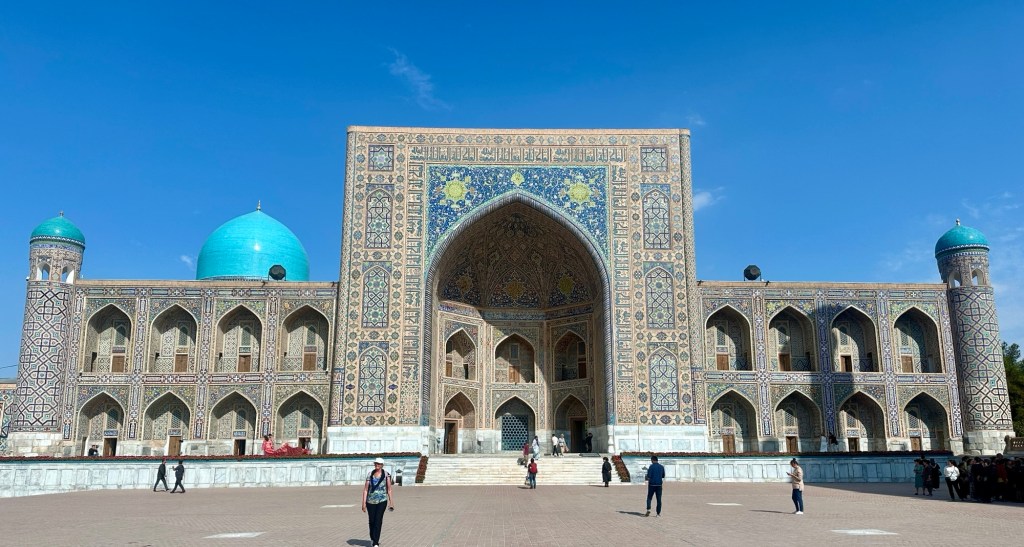
Finished in 1660, Tilya-Kori “completes” Registan.
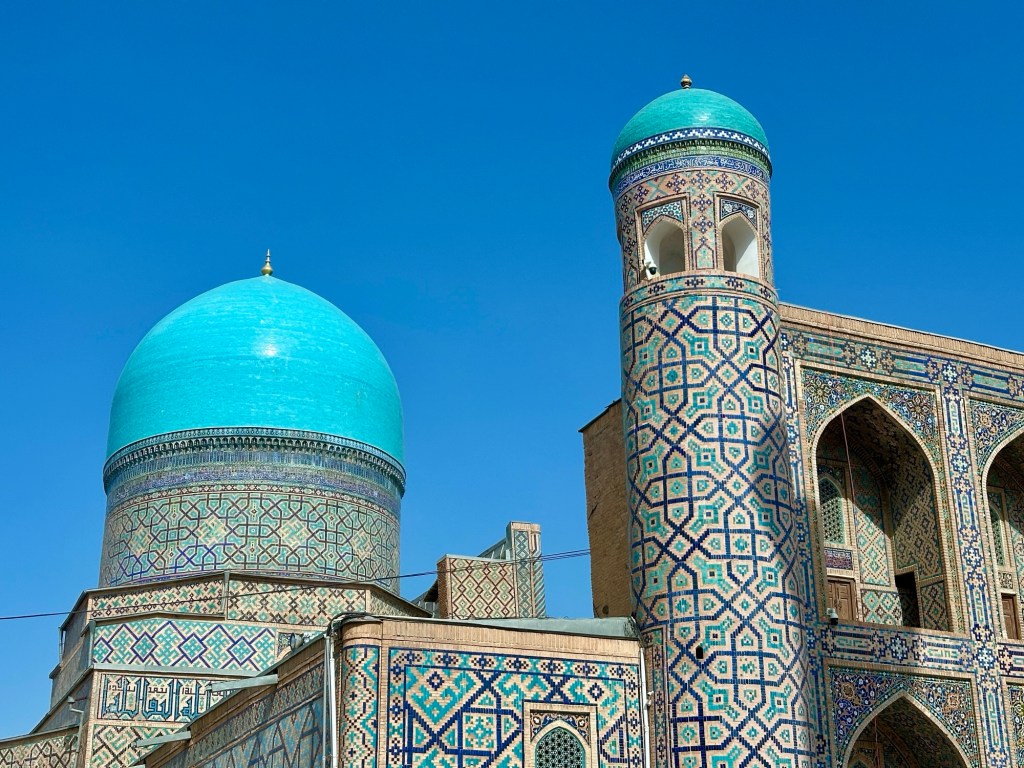
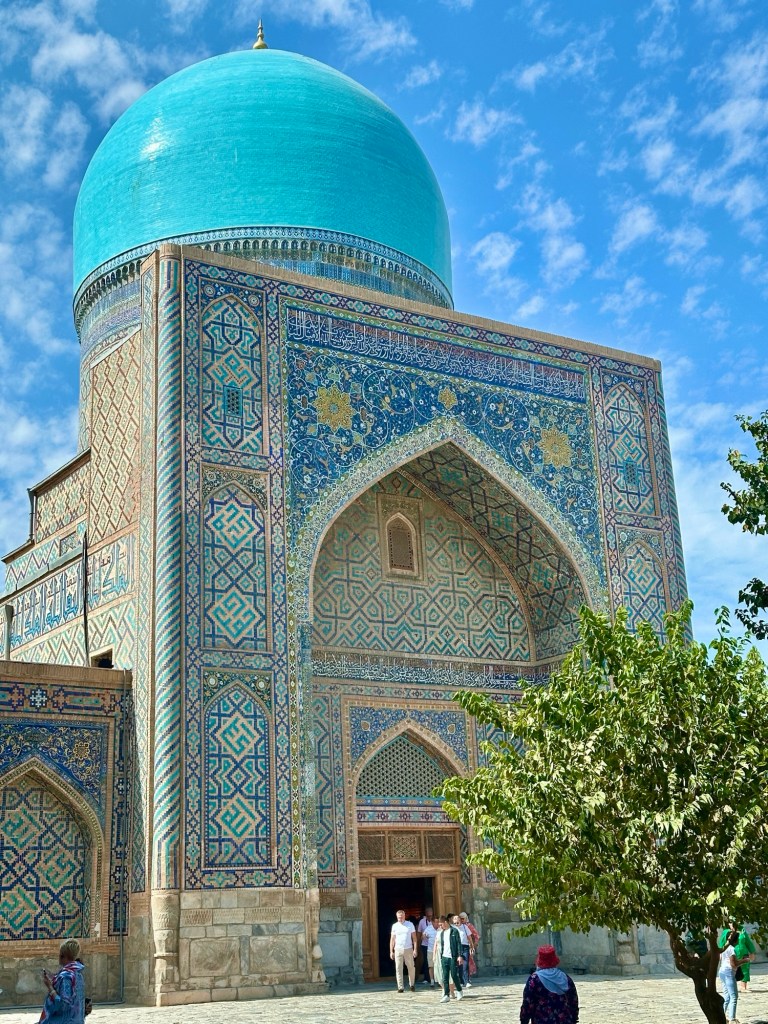
Tilya-Kori in the early 1900s – notice the lack of a dome on the left.The Russians took the liberty of adding a blue dome.The dome shape looks just a smidge off
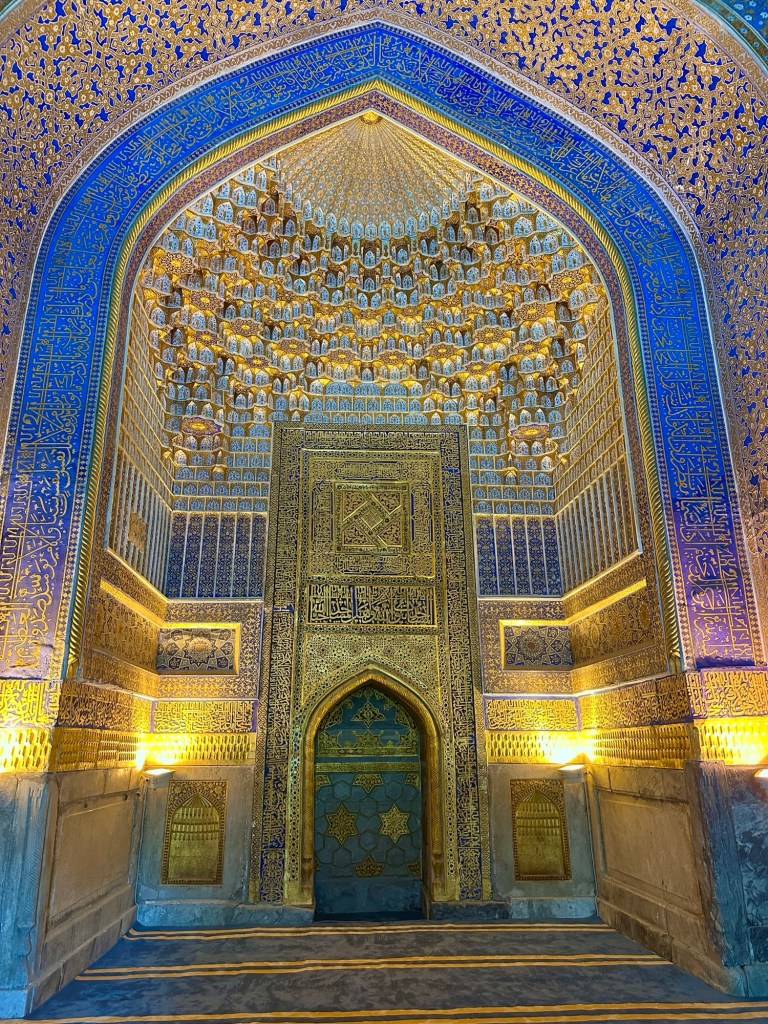
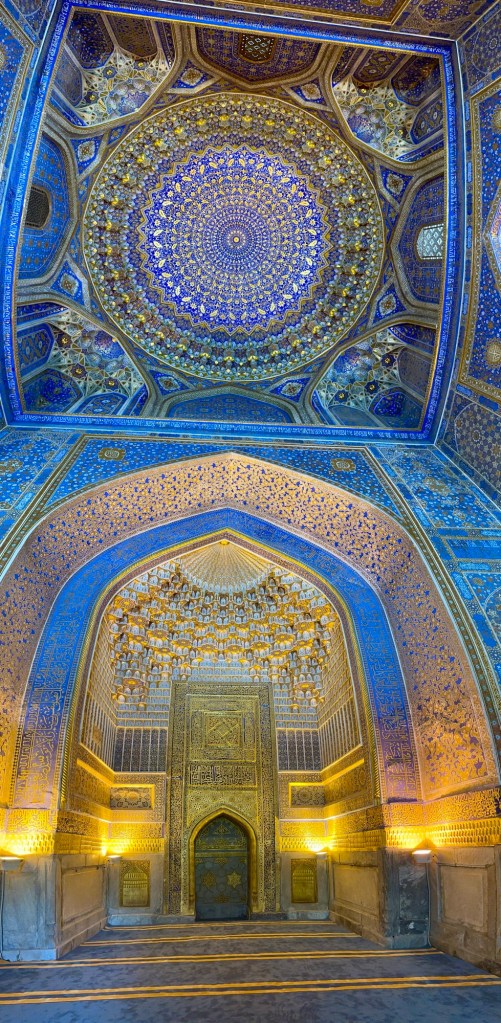
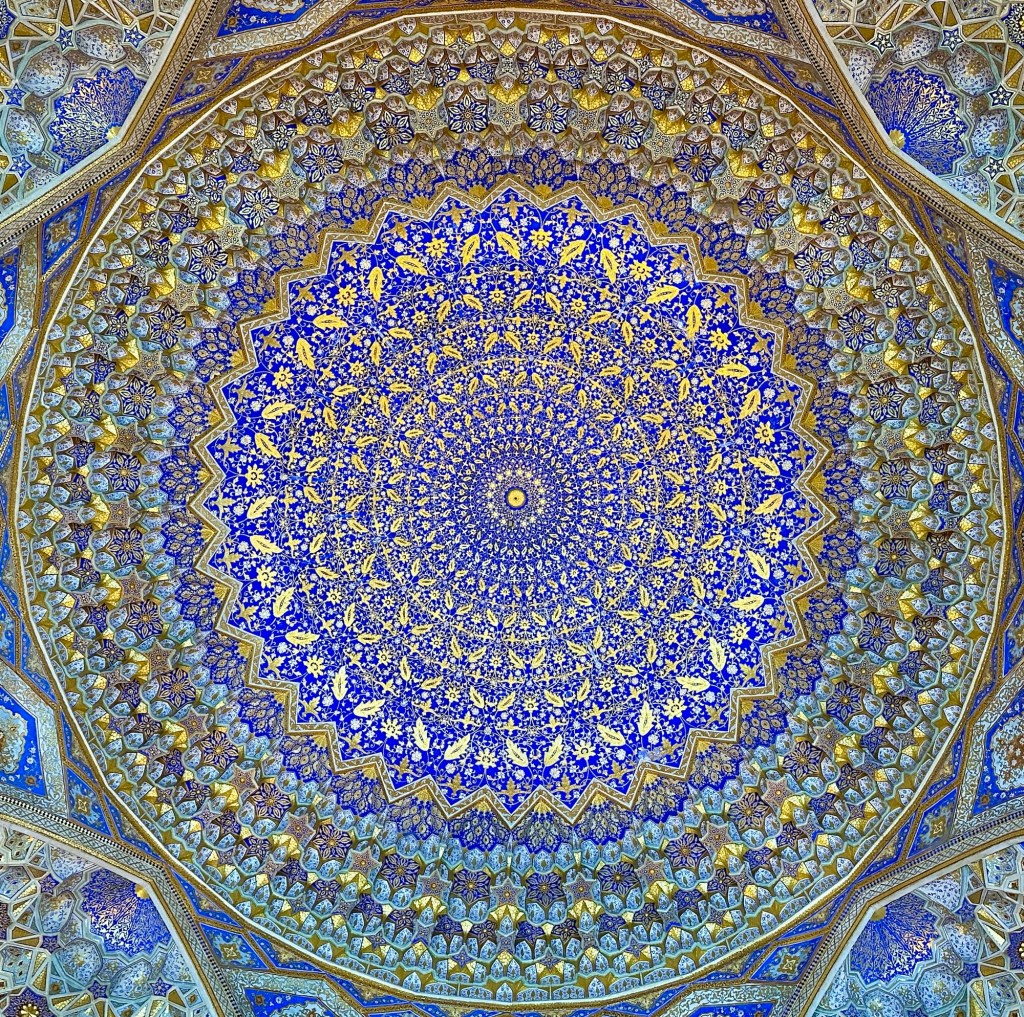
Tilya-Kori in Persian means “gilded”, and you’ll immediately understand why as soon as soon as you enter its mosque.
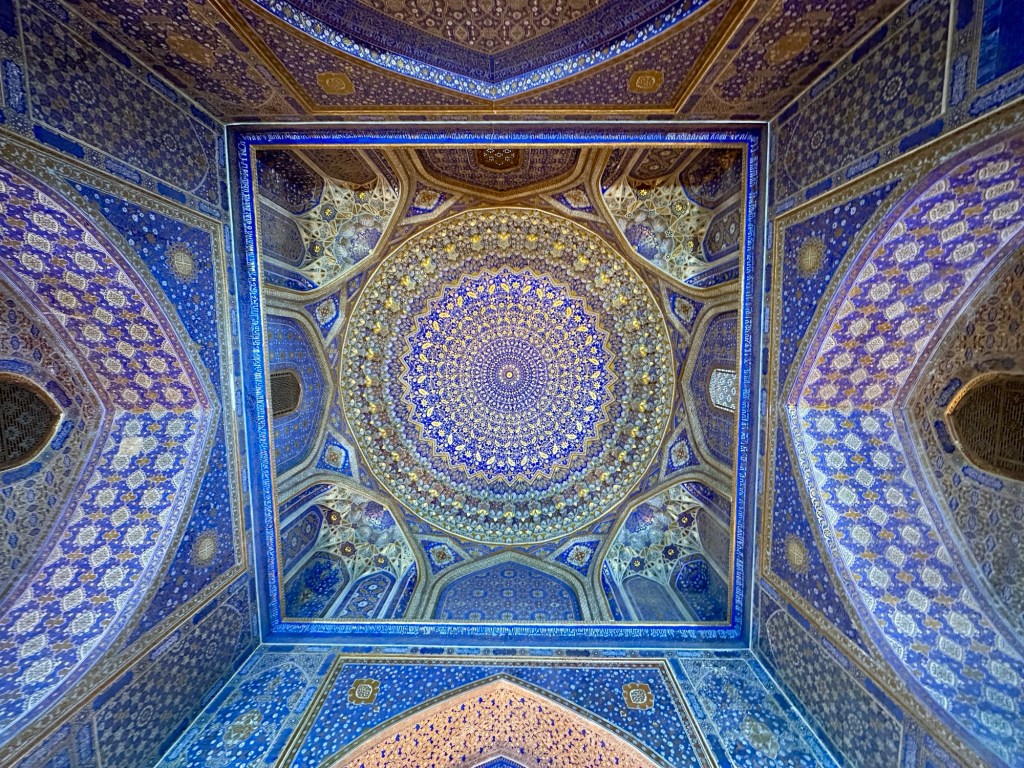
Persian mosque with a “Russian dome”Blue with an overwhelming amount of goldThe most interesting part of the mosque is its “dome” ceiling The ceiling is in fact flatBut the tapering of the painted gold leaves achieves the illusion that it is “domed”.
The Registan complex is no doubt jaw-droppingly exquisite and the restoration is remarkable, albeit a bit overdone based on what we saw in Bukhara. The difference could very well have everything to do with the fact that Samarkand was the capital of the Timurid Dynasty and Bukhara wasn’t, and so it was over the top to begin with, but we’ll never know for sure at this point.