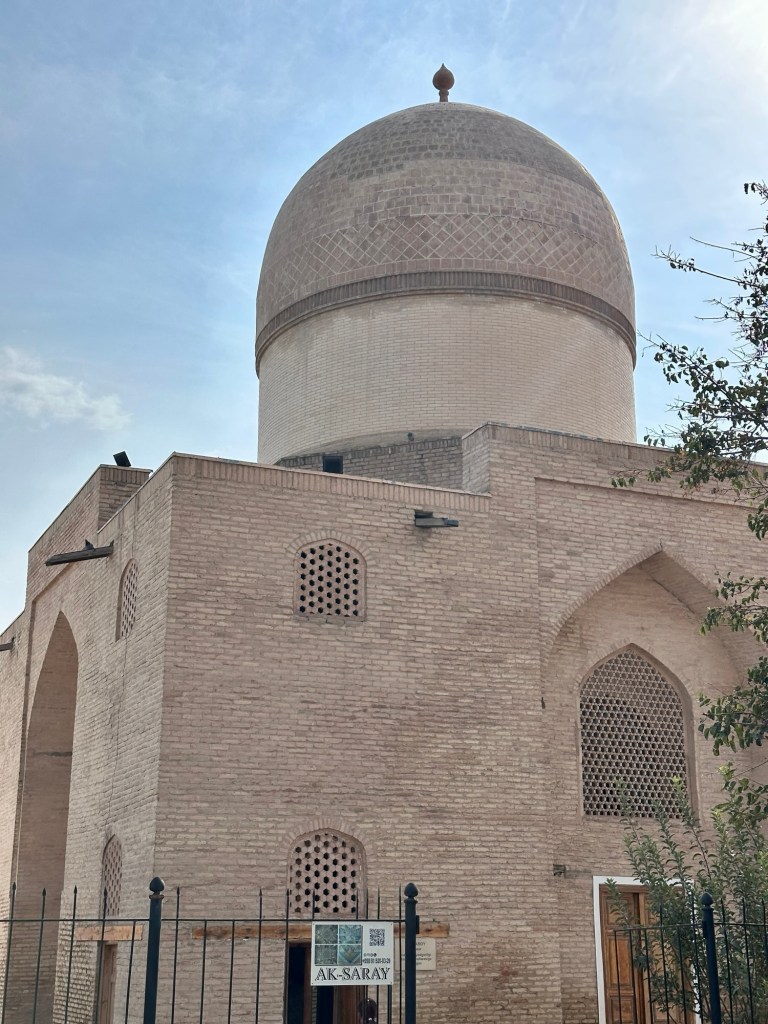
Today’s our last day in Samarkand before taking the train back to Tashkent in the afternoon. We saved the Gur-e-Mir, or “Tomb of the King” for the day of departure since it’s just a 5-minute walk from the hotel. By the time we got there at 10am, the place was hopping, so we opted to check out the Ak-Saray mausoleum located just beyond the walls surrounding Gur-e-Mir.
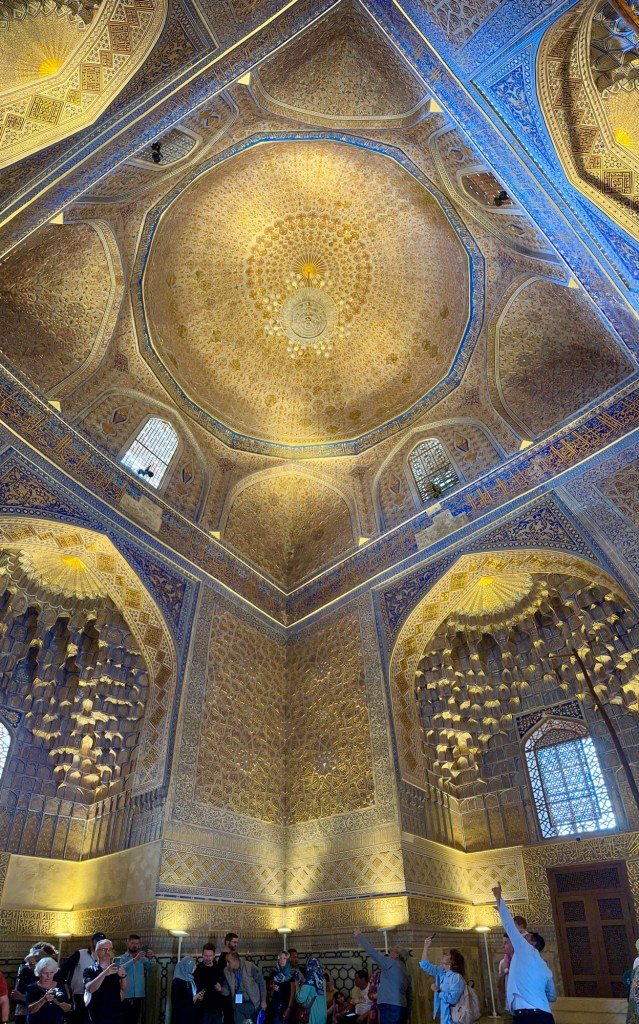
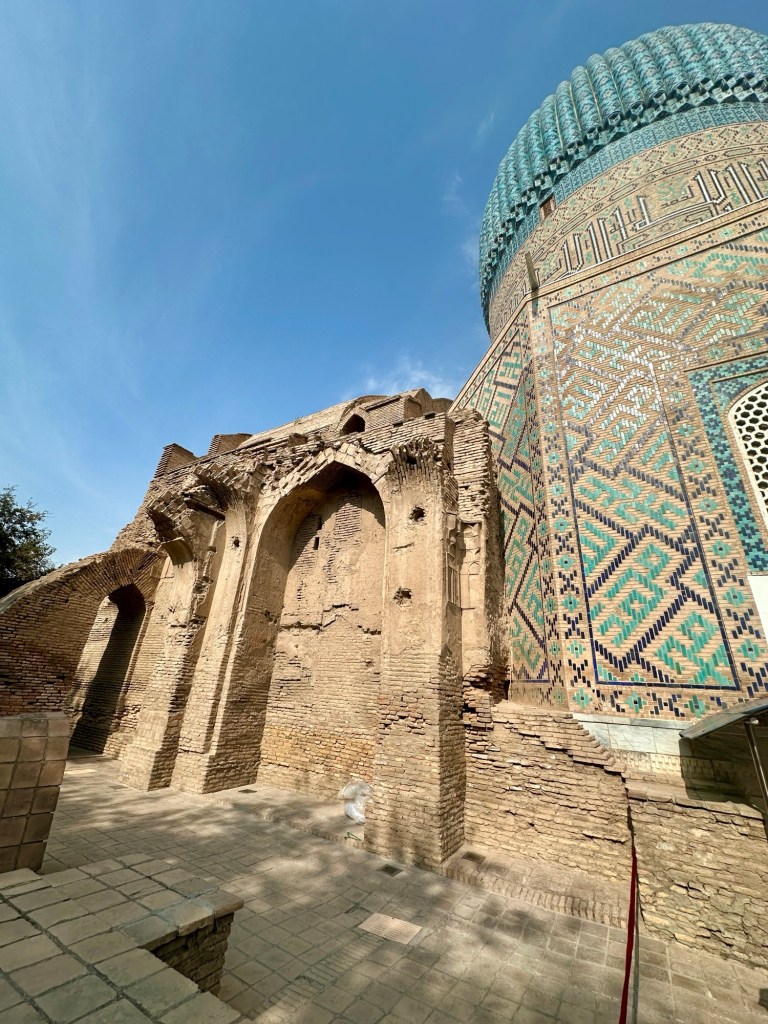
Despite being only 100ft apart, the atmosphere is completely different. Not a single soul onsite. When we entered the premises of this nondescript mausoleum, the groundskeeper mysteriously appeared and asked if we wanted to look inside. For a nominal fee, he unlocked the door for us.The interior stands in contrast to the unassuming exterior.
Directly under the center of the dome is this contraption that the groundskeeper jiggered up that looks like a turn table where he places your phone to make a recording of a “rotating ceiling”. Ingenious!
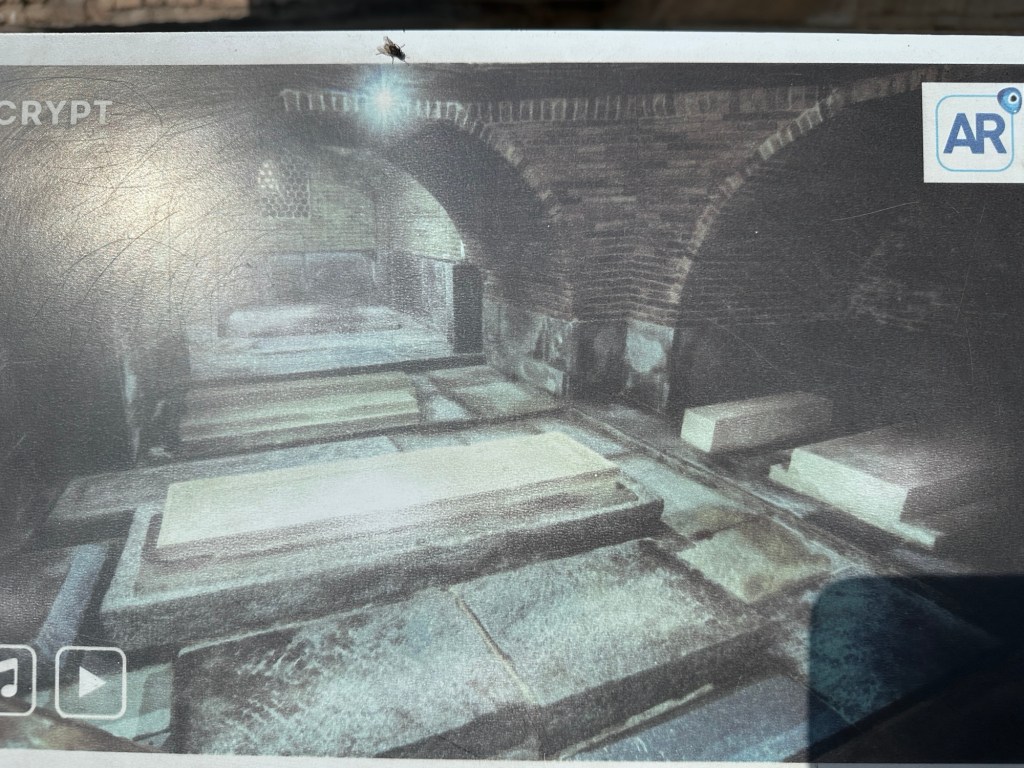
In Islamic tradition, the graves are located in the crypt below the stone marker on the main level. So who is buried here? Scientists have suggested it is the body of Abd al Latif – the treacherous son who murdered his own father, Ulugbek.
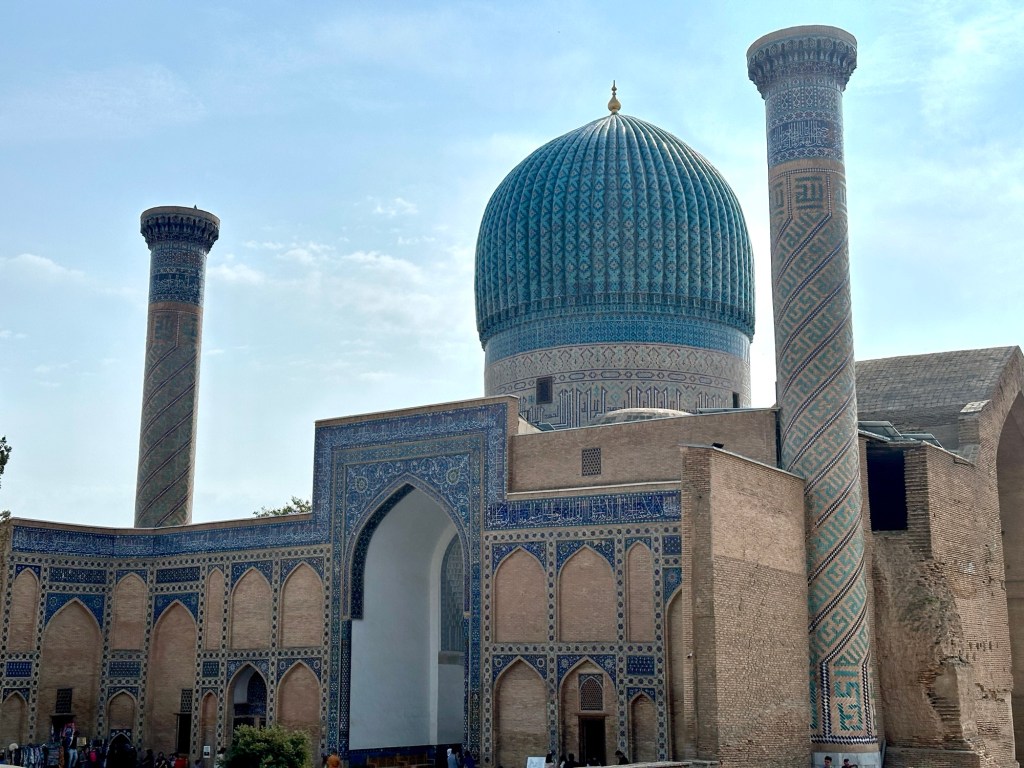
By the time we got back to Gur-e-Mir, it was no less crowded, but we didn’t want to put it off for much longer, so we braved the crowd once again.
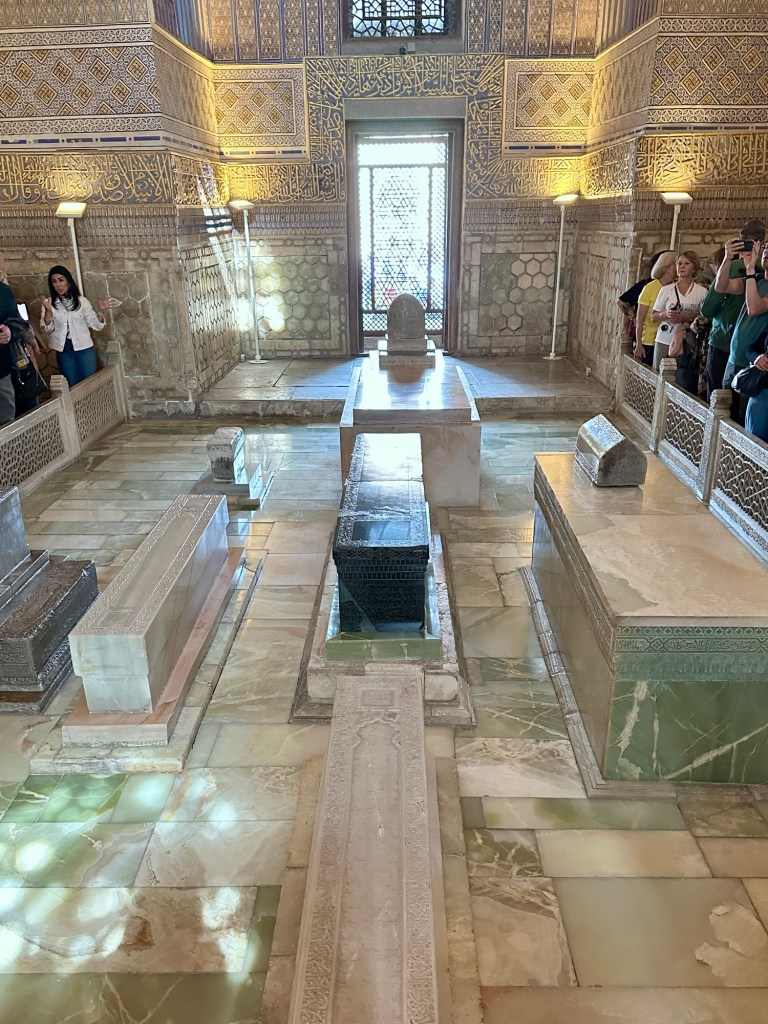
Gur-e-MirAmir Timur’s black stone occupies the center with Ulugbek’s on the bottom of the photo. Others buried here include Timur’s favorite grandson, Muhammad Sultan, Timur’s 2 sons, and one of his teachers, Sayyid Baraka.
There are so many stories and lore surrounding this mausoleum. One of the most captivating involves the Russian archeologist, Mikhail Mikhaylovich, who dug up the graves. His discovery confirmed that Ulugbek was decapitated. He also used Timur’s skull to reconstruct a 3D image of Timur. It was said that when the tomb was opened there was an inscription that read “whosoever disturbs my tomb will unleash an invader more terrible than I”. Two days after excavation the Nazis invaded the Soviet Union.
This extravagant mausoleum wasn’t the intended burial site for Amir Timur. His plan was to be buried in his hometown, Shahrisabz, but when he died unexpectedly of pneumonia in what is now Kazakhstan while planning an attack on China, the roads into Shahrisabz was snowed in, leaving the family no choice but to put him to rest here. On a separate note, the Ming Dynasty has the pneumonia to thank.Image of the cryptOverheard a tour guide explaining that there is 2kg of gold leaf on the ceiling, which Joe and I later calculated that is worth $173k with today’s gold prices. Doesn’t seem like a lot for a place like this. Maybe I misheard or she misspoke. Perhaps she meant 20kg..
Pictures can’t capture the grandeur of this place.Juxtaposition of the untouched and restored structures.
Our hotel sits on the border of the major sites and Russian town, which is where most of the non Uzbek cuisines can be found. After days of Uzbek shashlyk, we were craving for some Turkish kebabs.
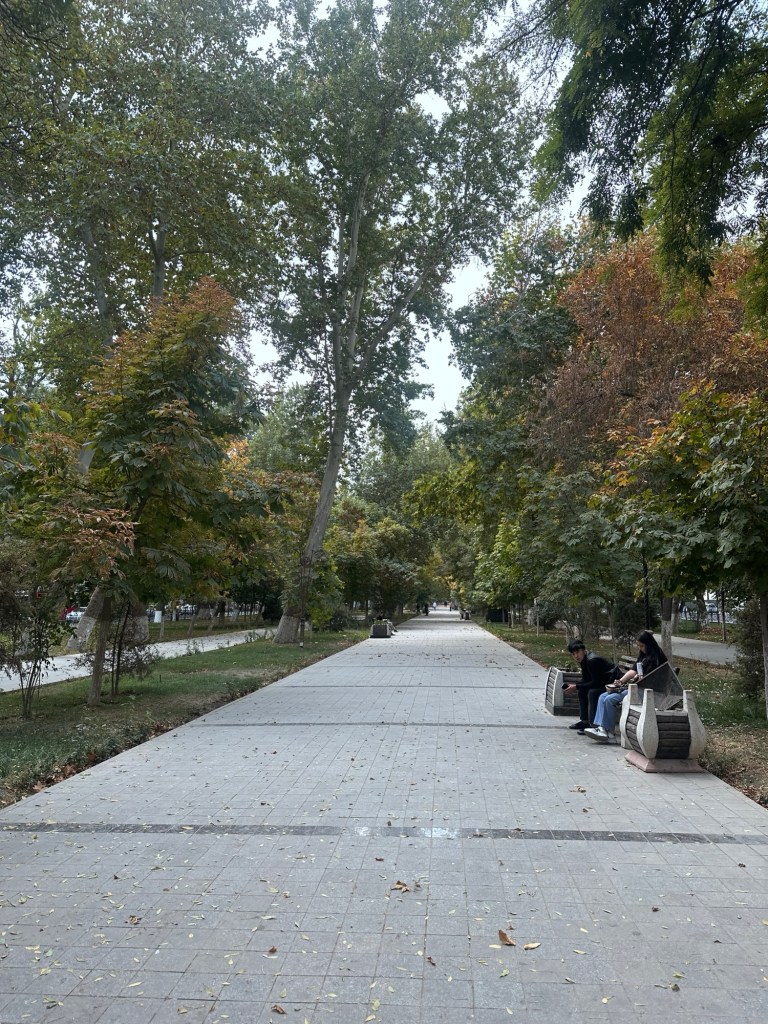
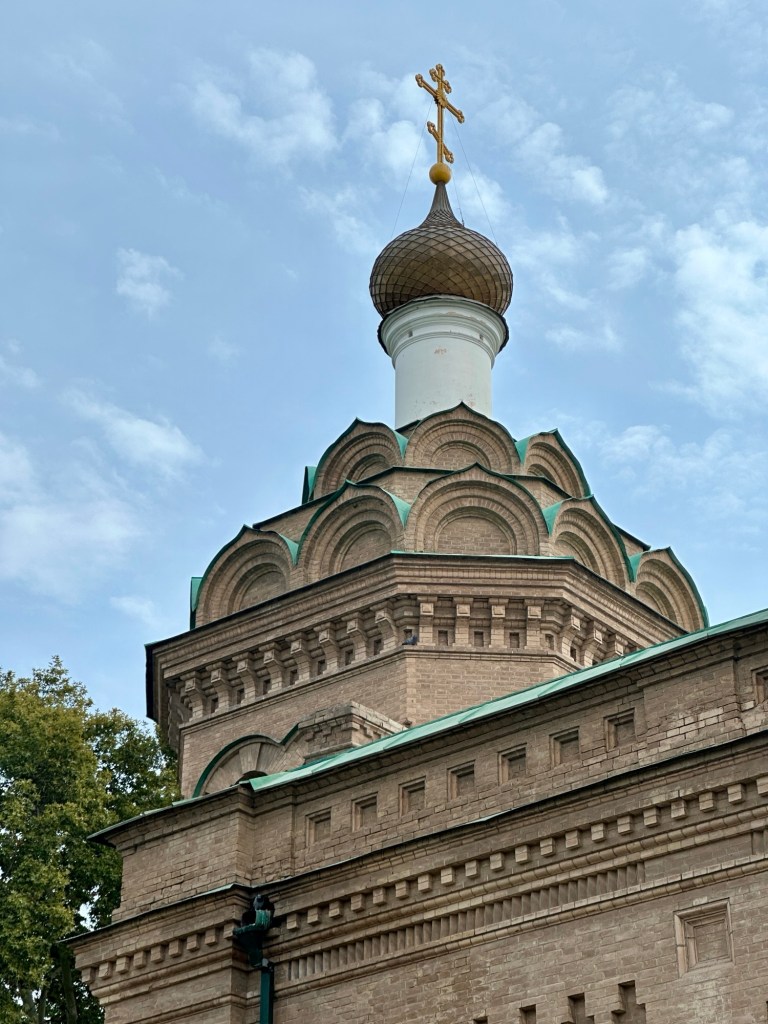
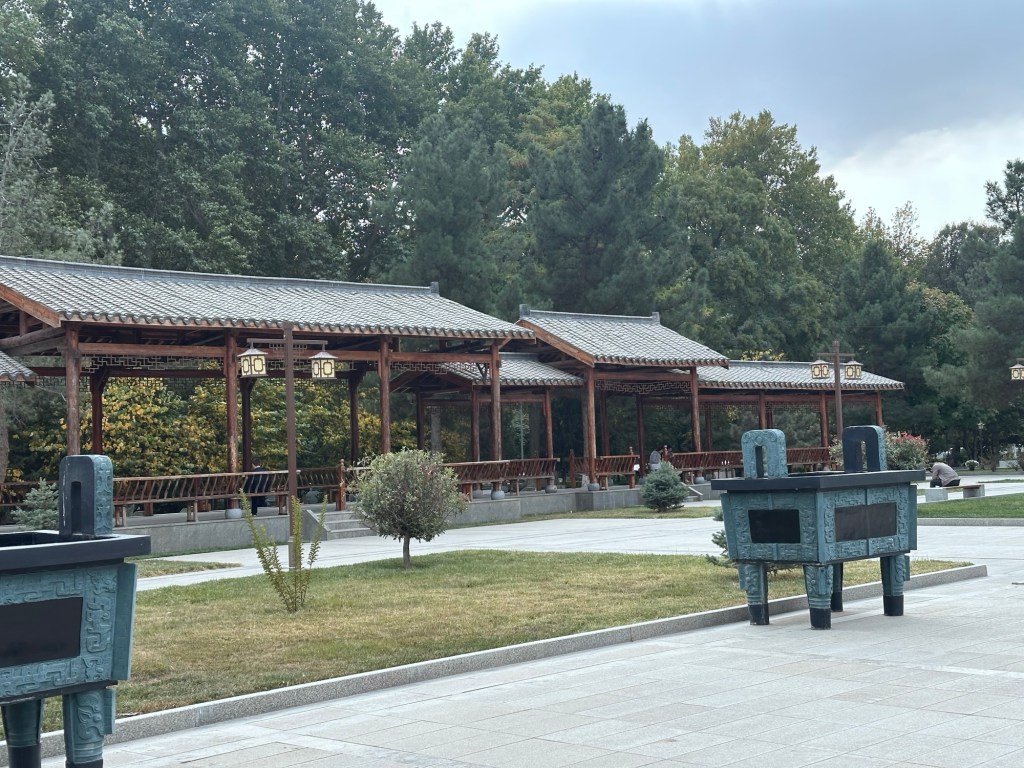
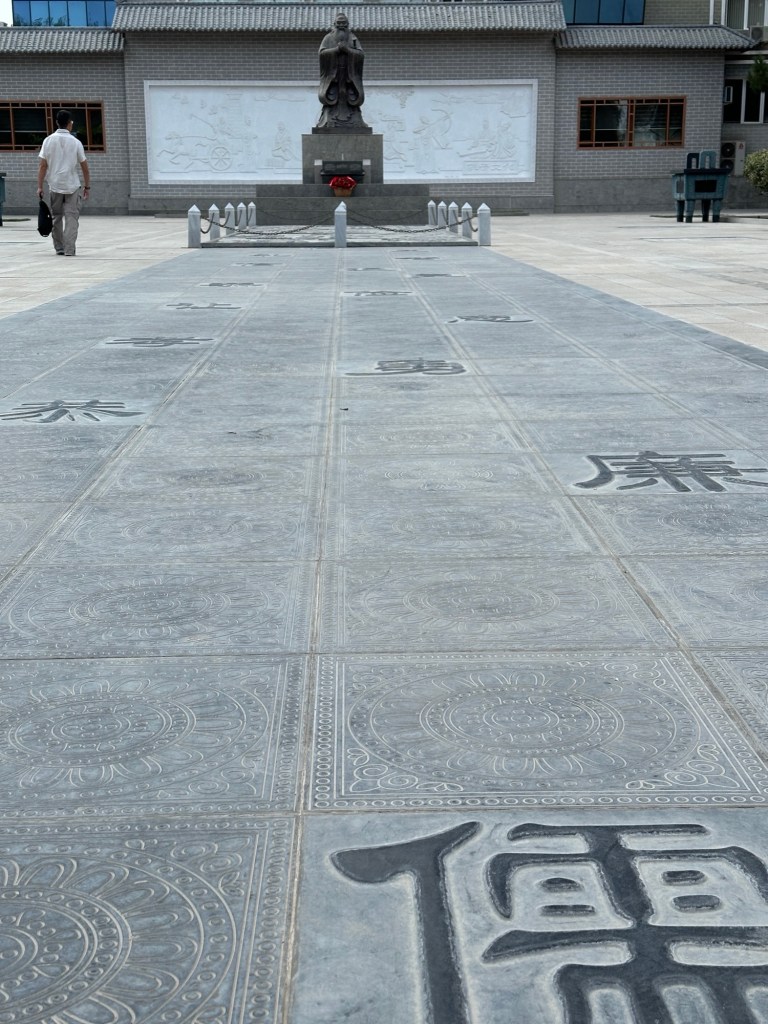
Amir Timur sculpture sits at the edge of Russian Town.The wide pedestrian median on University Boulevard.A change in architectural style from what we’ve been seeing for the past couple of weeks.St. Alexus ChurchFrequented by Russian babushkas.Other Russian style buildingsA surprising find in Russian Town is this Chinese pavilion dedicated to Confucius.With the inscription, “He who learns but does not think is lost. He who thinks but does not learn is in great danger.”
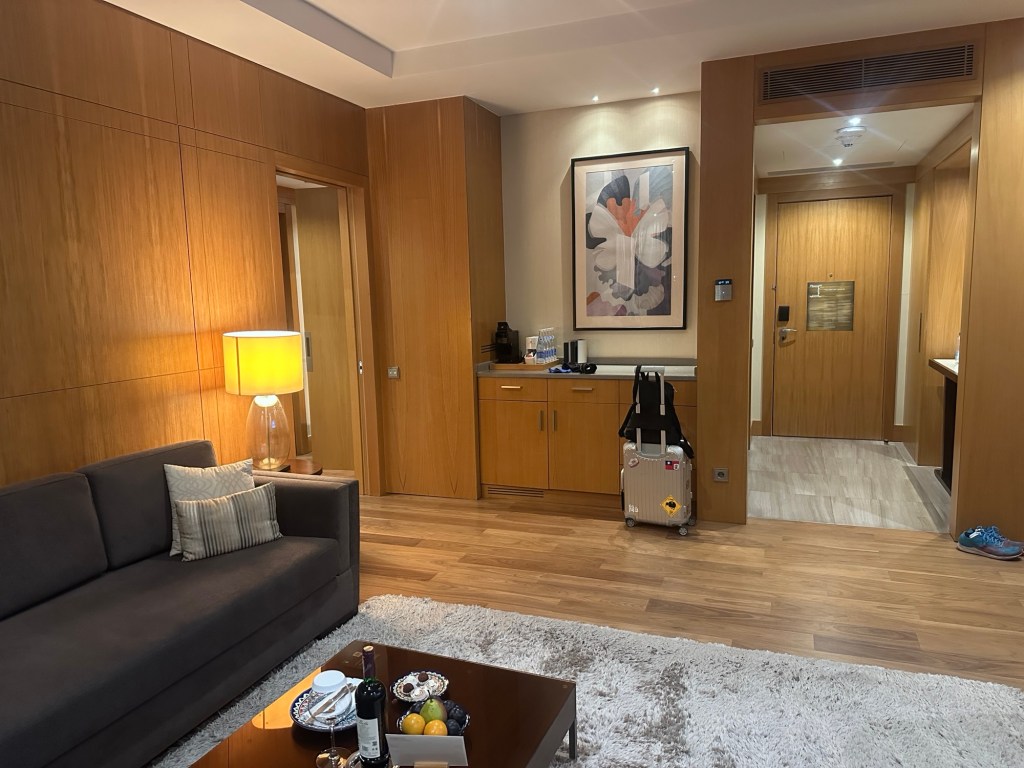
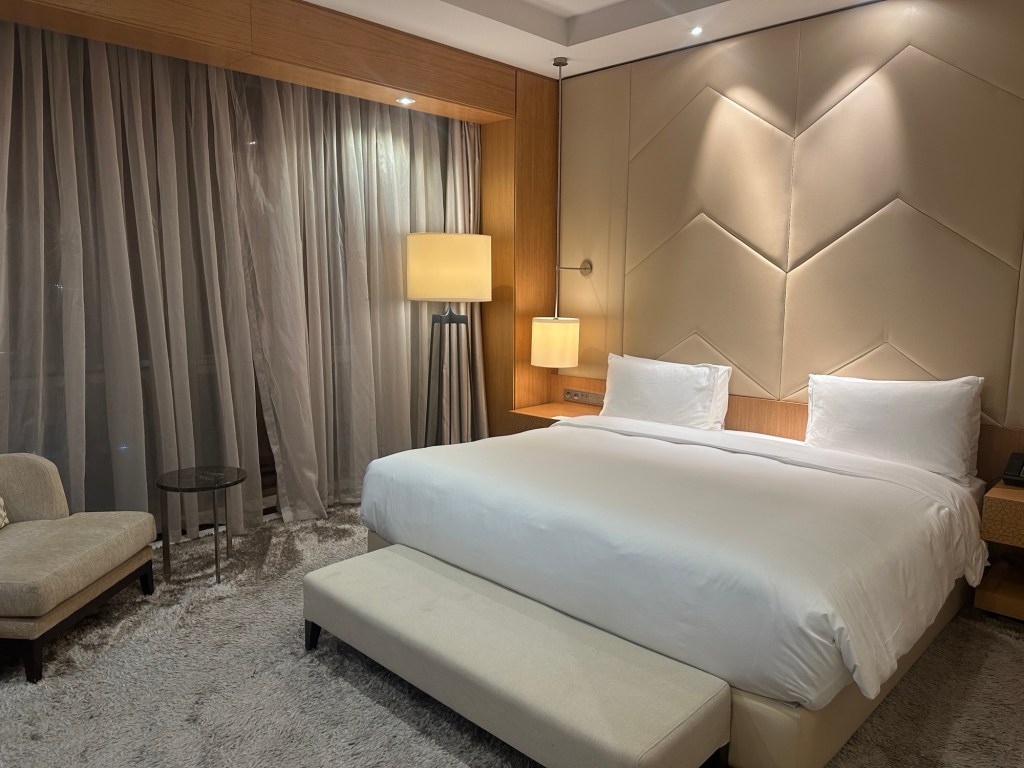
And that concludes our Central Asia trip. For the next day and a half, we’ll be parking ourselves in a suite at the Hyatt Regency Tashkent waiting for our flight back home.
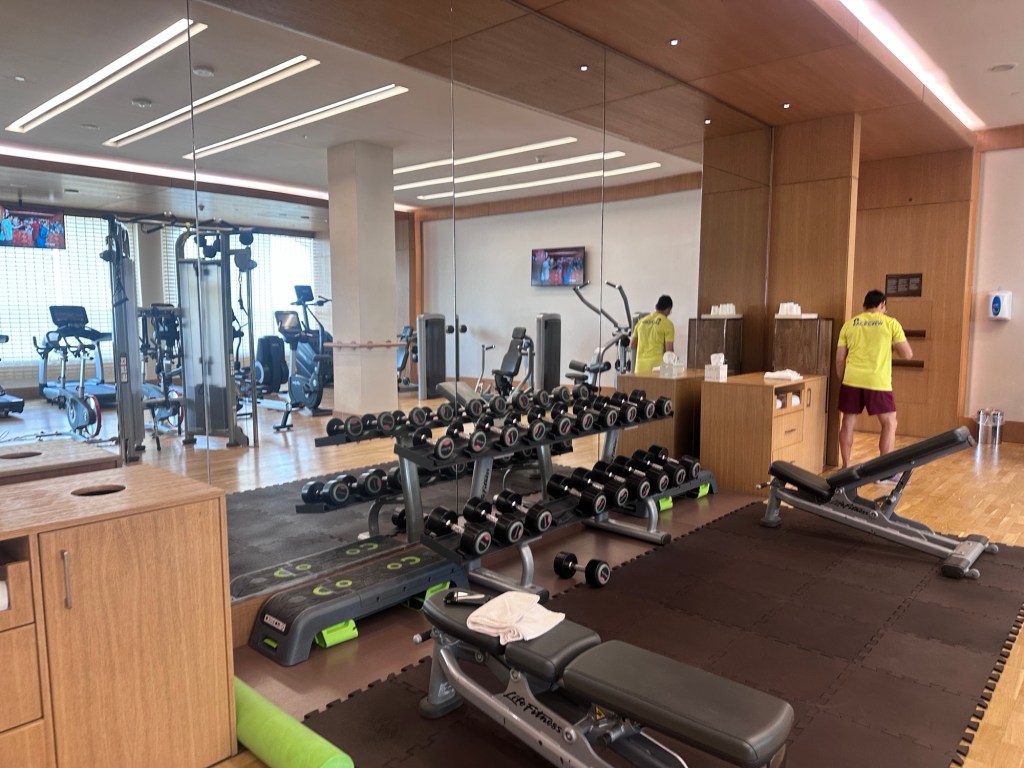
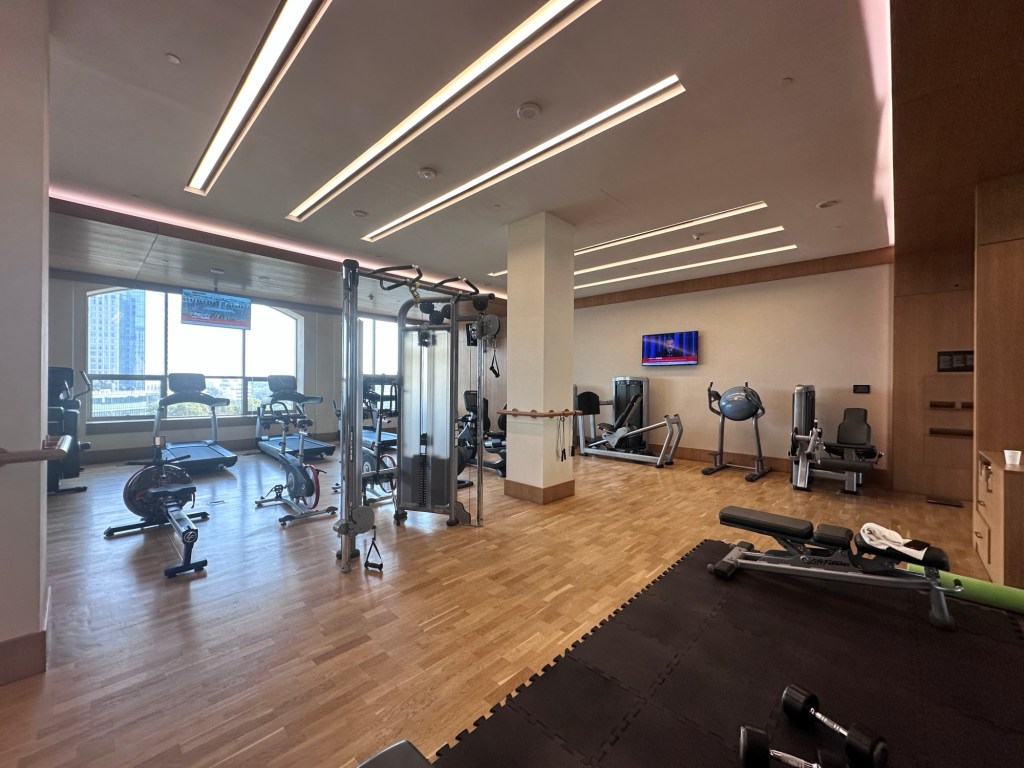
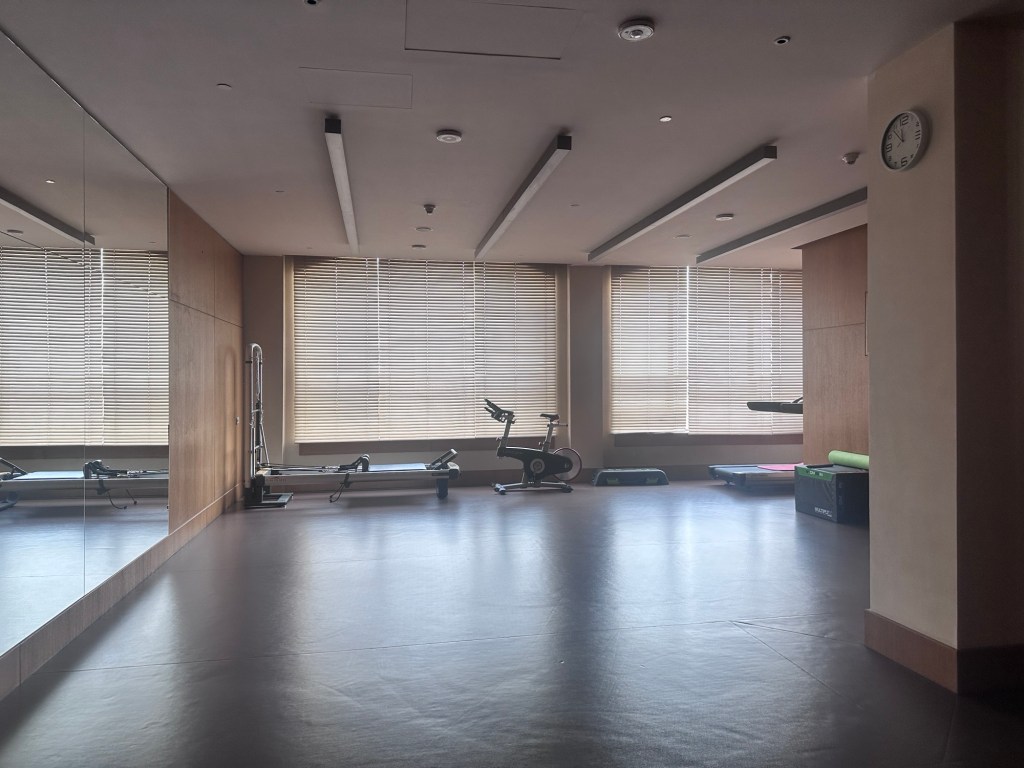
A nice change after “roughing it” in a boutique hotel for the past few days.The first reformer I’ve seen in any hotel.Hitting the gym and lounging poolside.













 FIRE'd @ 47