The impetus of the Silk Road started when China needed steeds to fight off the northern Mongols. In return, China traded silk with the steppe nomads. Over time, the flow of goods extend into Iran, India, and Russia with Bukhara and Samarkand serving as halfway points. Fruits such as grapes, apples, and pomegranate made it to Xian, while porcelain, paper, and tea moved westward. Ideas, culture, religion, and technological know hows also traveled with the caravans. Other trades were more nefarious, such as human trafficking of Slavs, lending to the current day term of “slaves”. Established as trading posts, the cities of Bukhara and Samarkand flourished and grew into luxurious caravan towns.
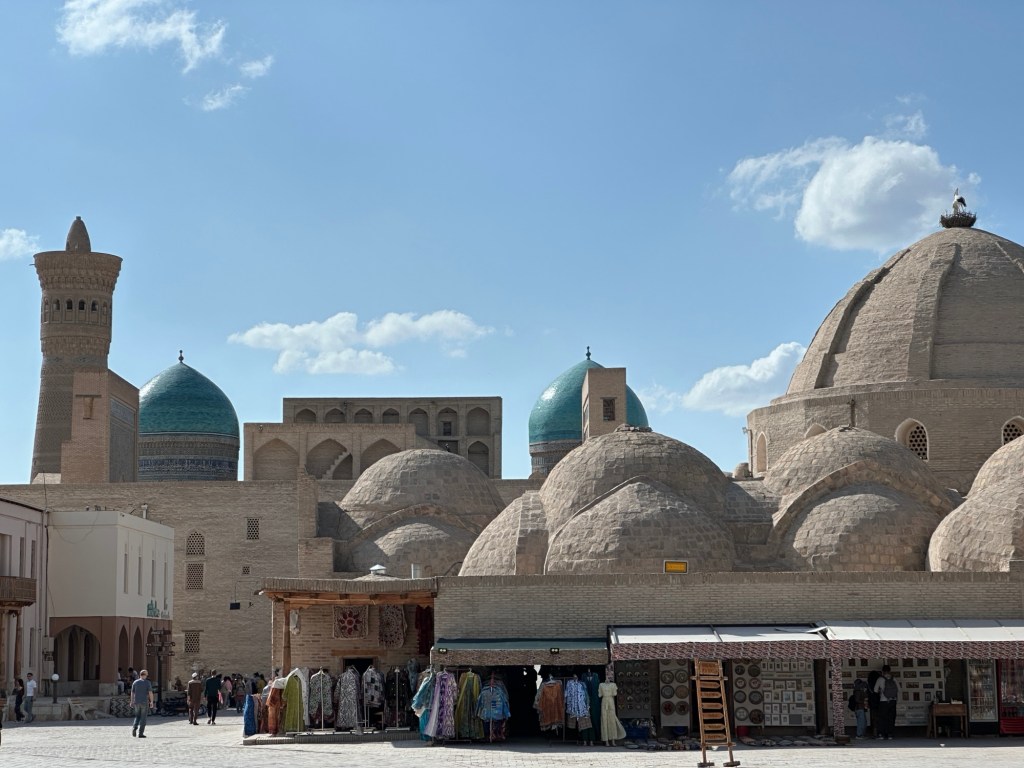
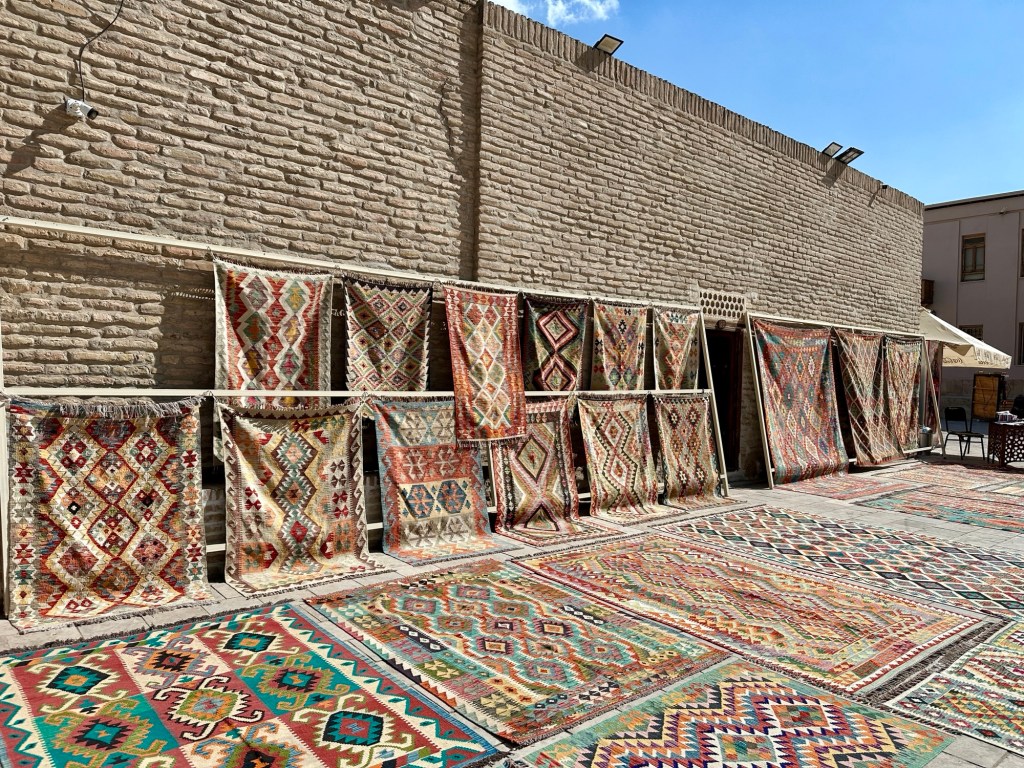
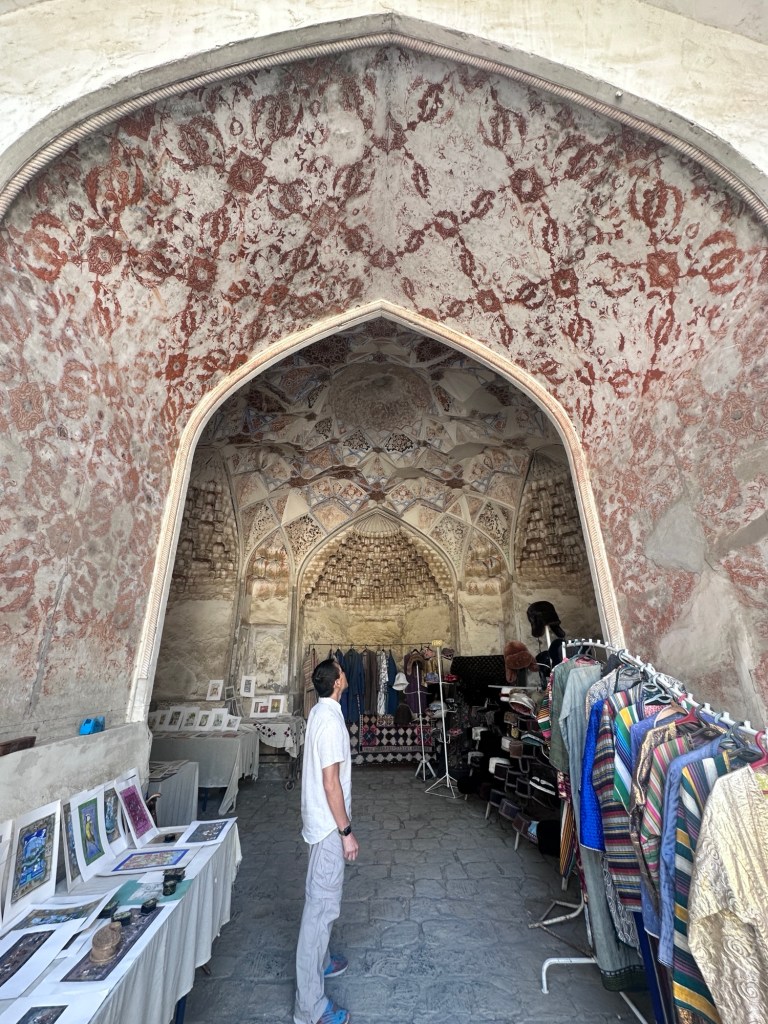
Trading domes such as these were where goods exchanged hands between merchants.Carpets are ubiquitous like in Turkey and Morocco.
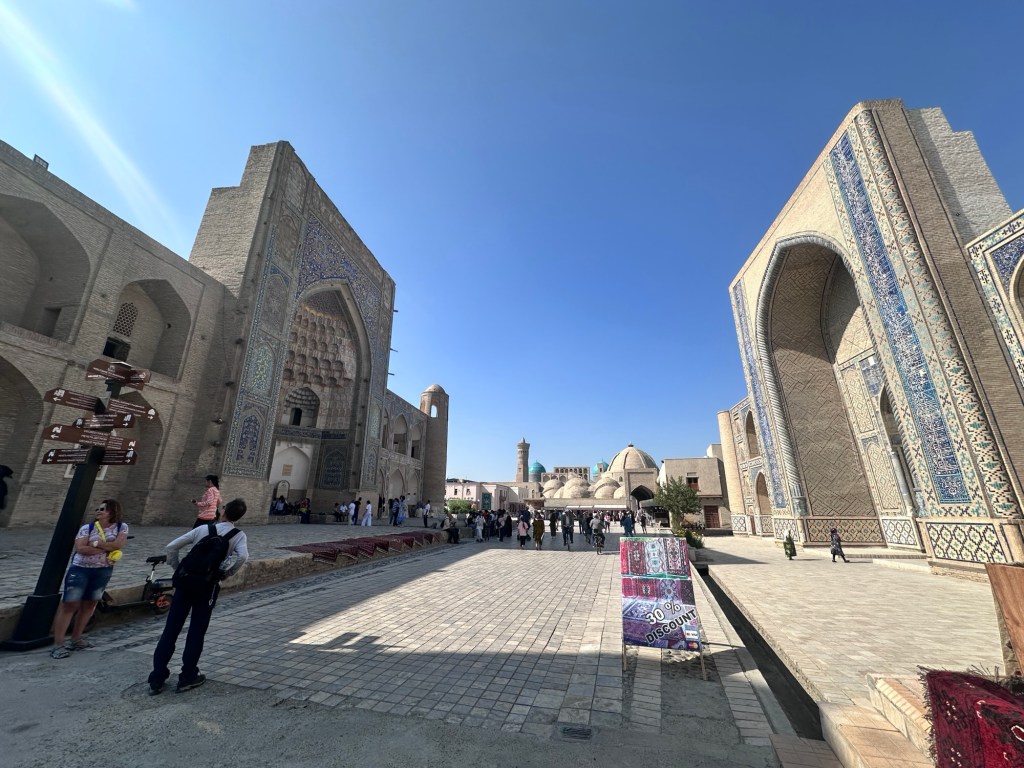
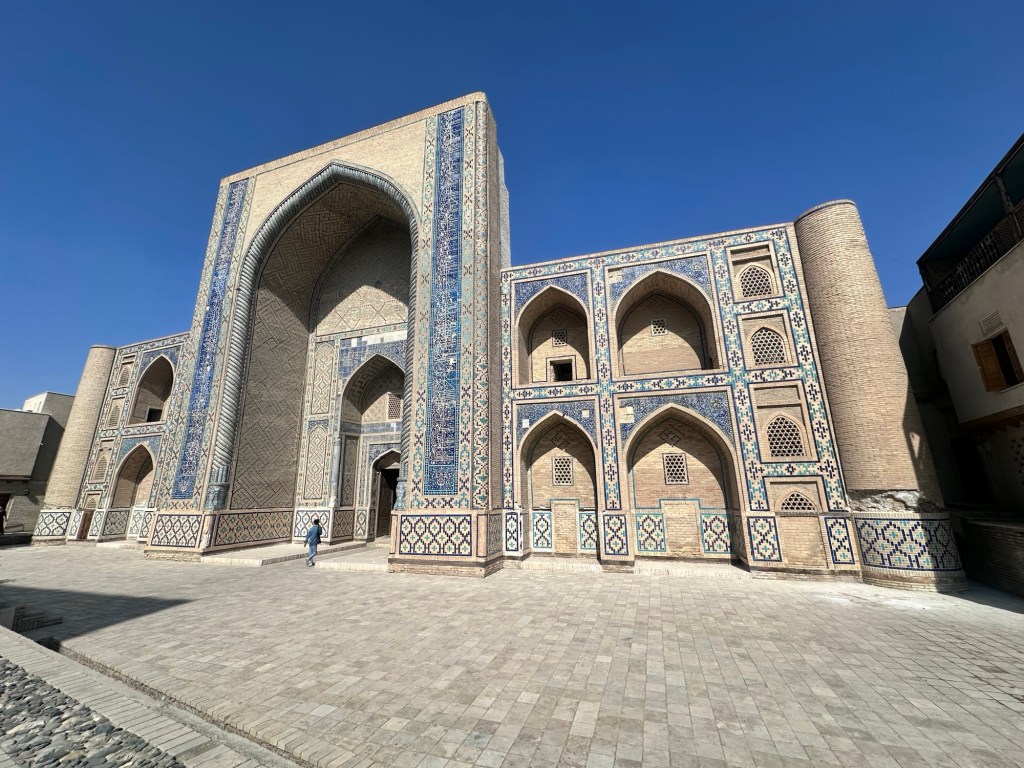
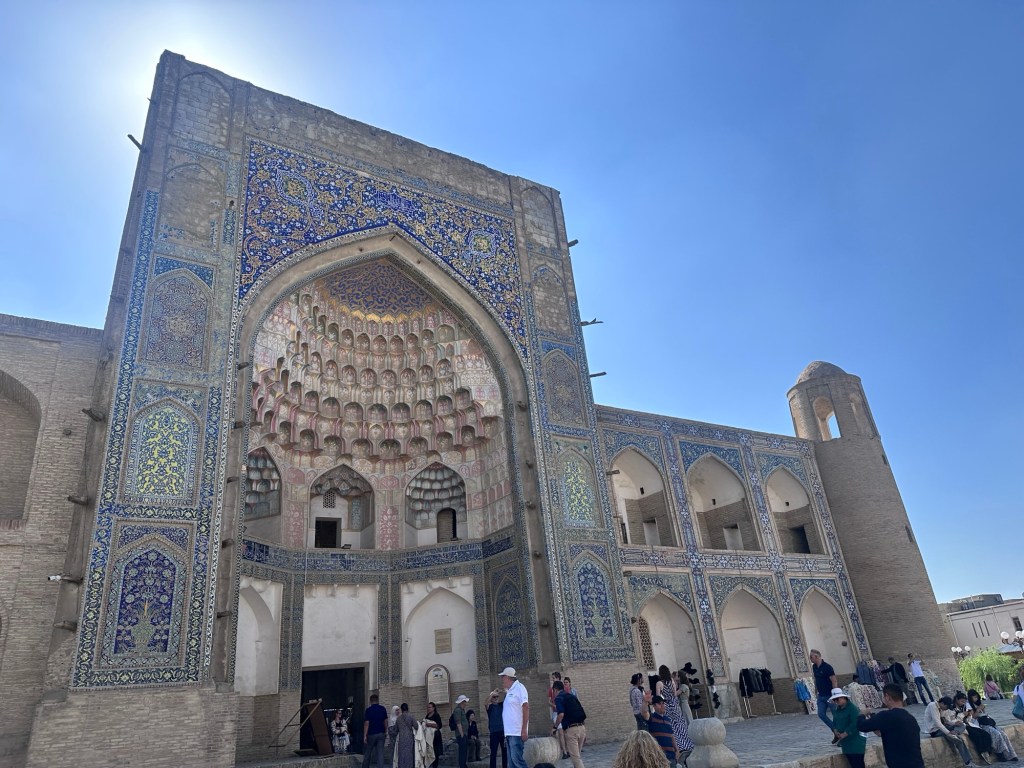
A UNESCO heritage site, Old Town Bukhara is a compact area of mosques, medrasas, caravanserais, and trading domes. It is not unusual to have 2 medrasas sit across from each other like the Ulugbek and Abdul Aziz Khan medrasas, or a madrasa facing a mosque.
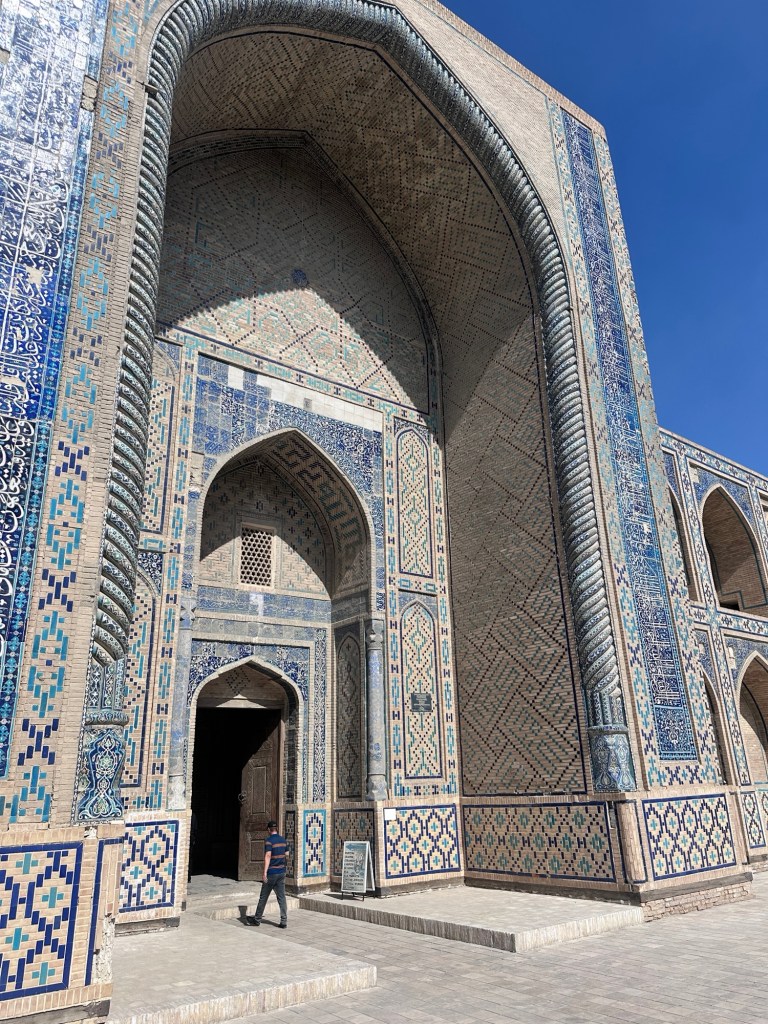
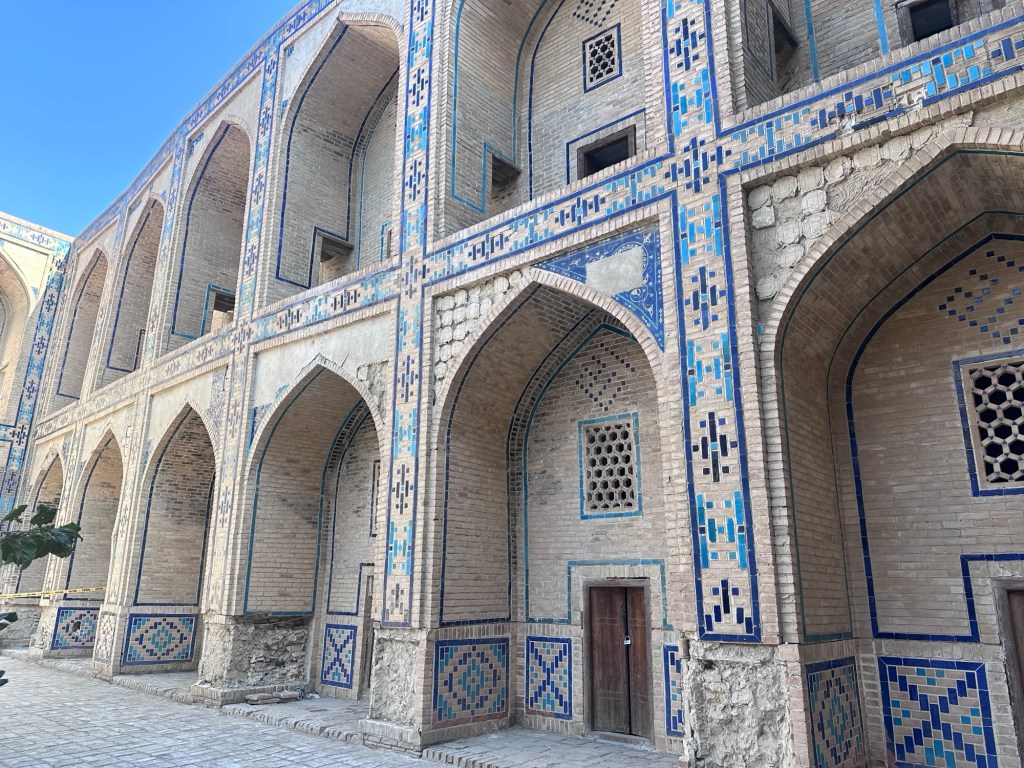
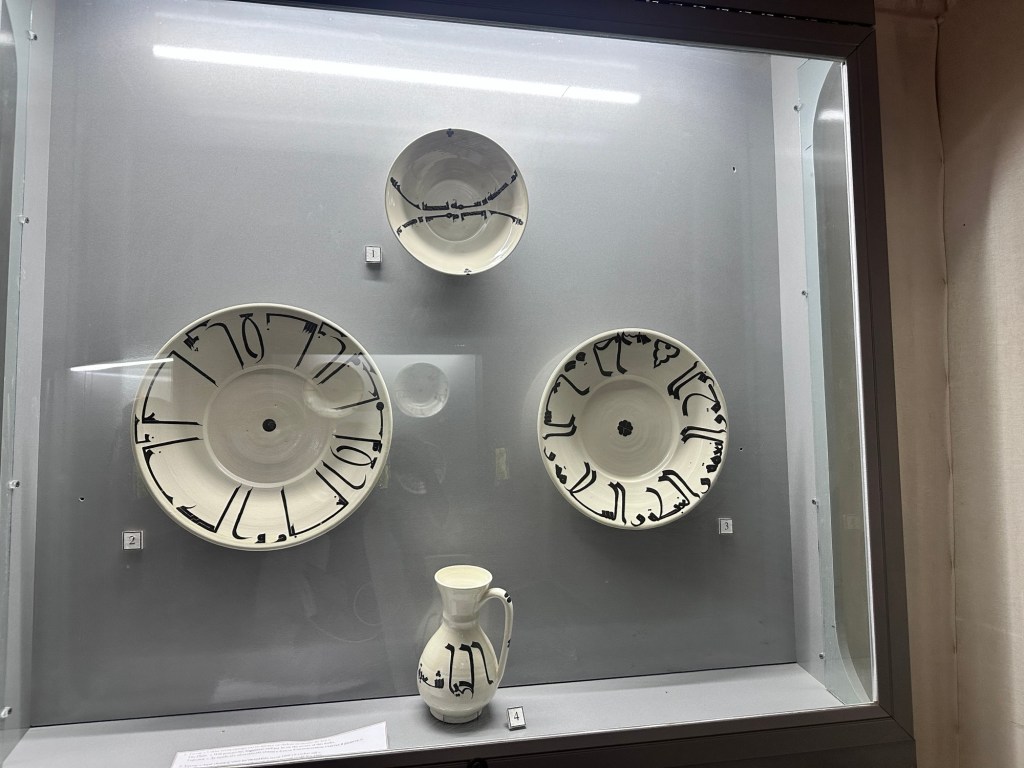
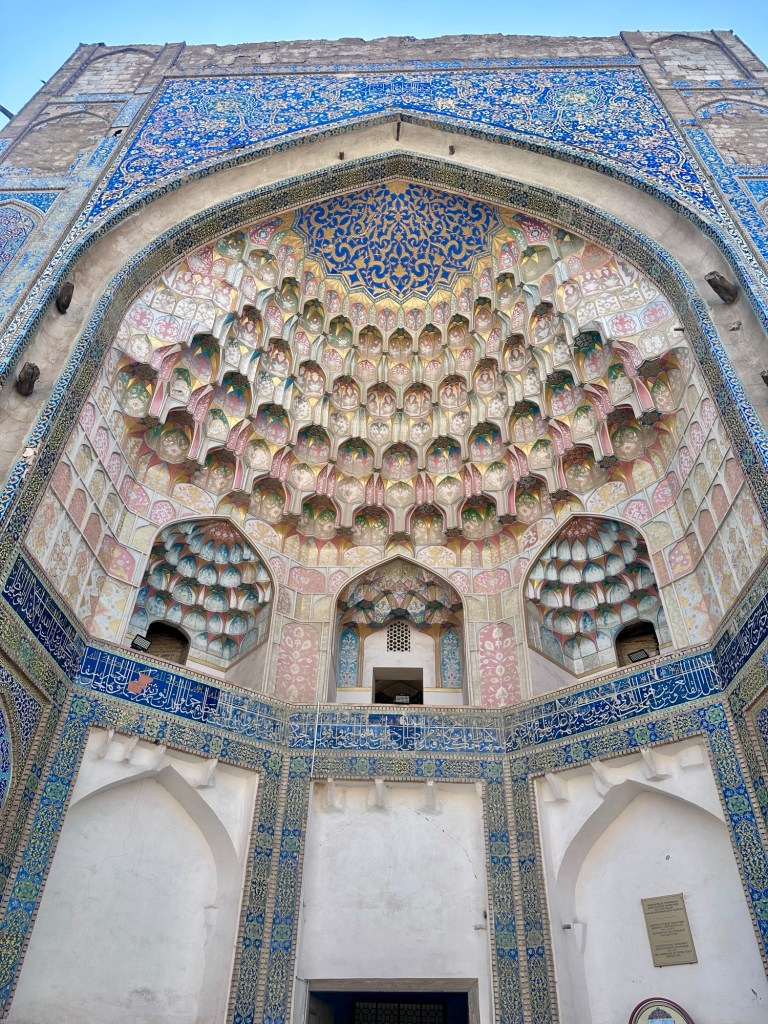
Abdul Aziz Khan madrasa on the left and Ulugbek madrasa on the right.Built in 1417, the Ulugbek madrasa is one of 3 built by the astronomer and is the oldest in Central Asia.The relatively simple blue and white façade.Inner courtyard It currently houses a small calligraphy museum displaying Arabic calligraphy on all sorts of items.
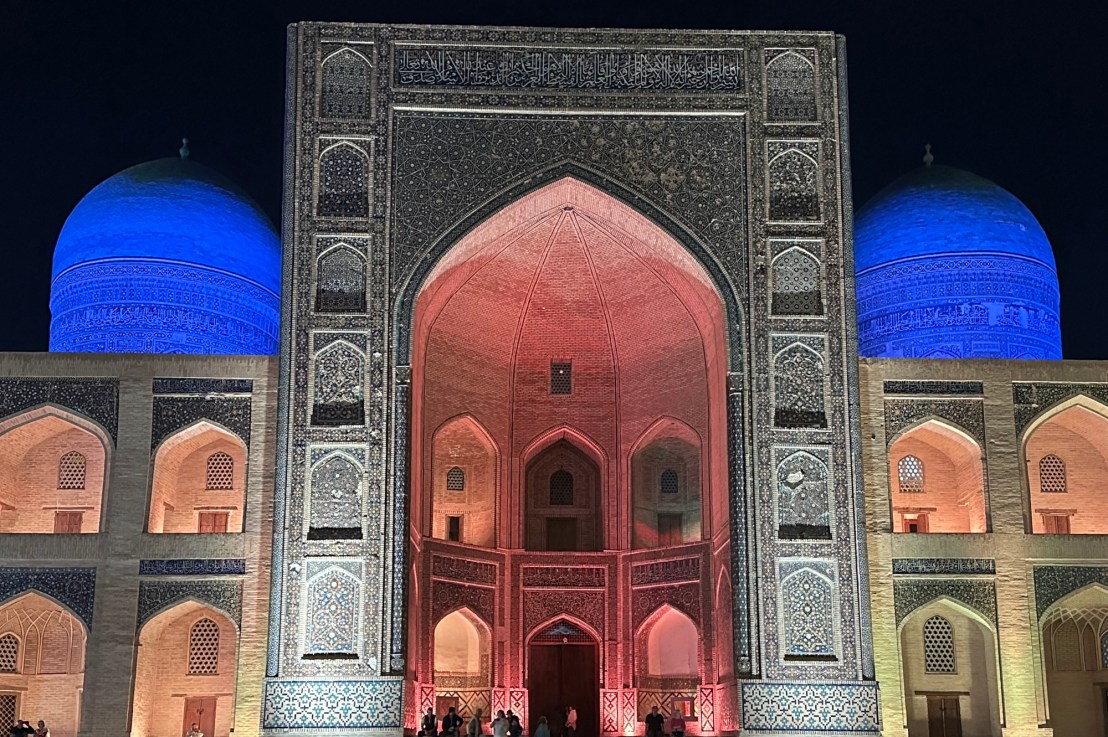
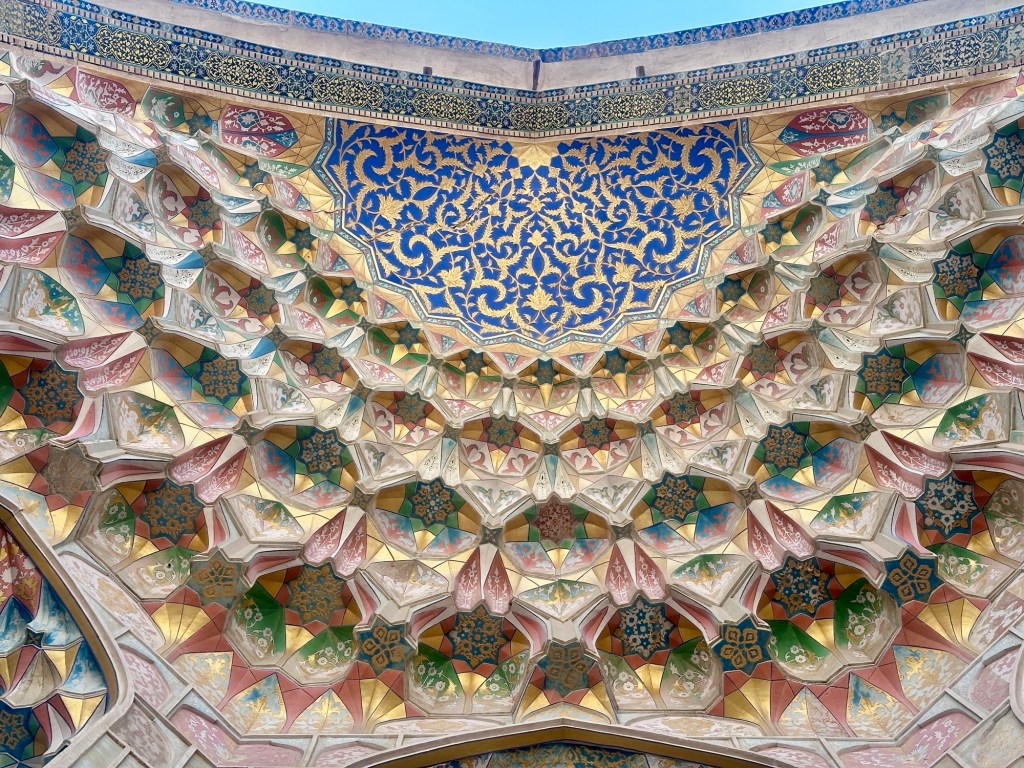
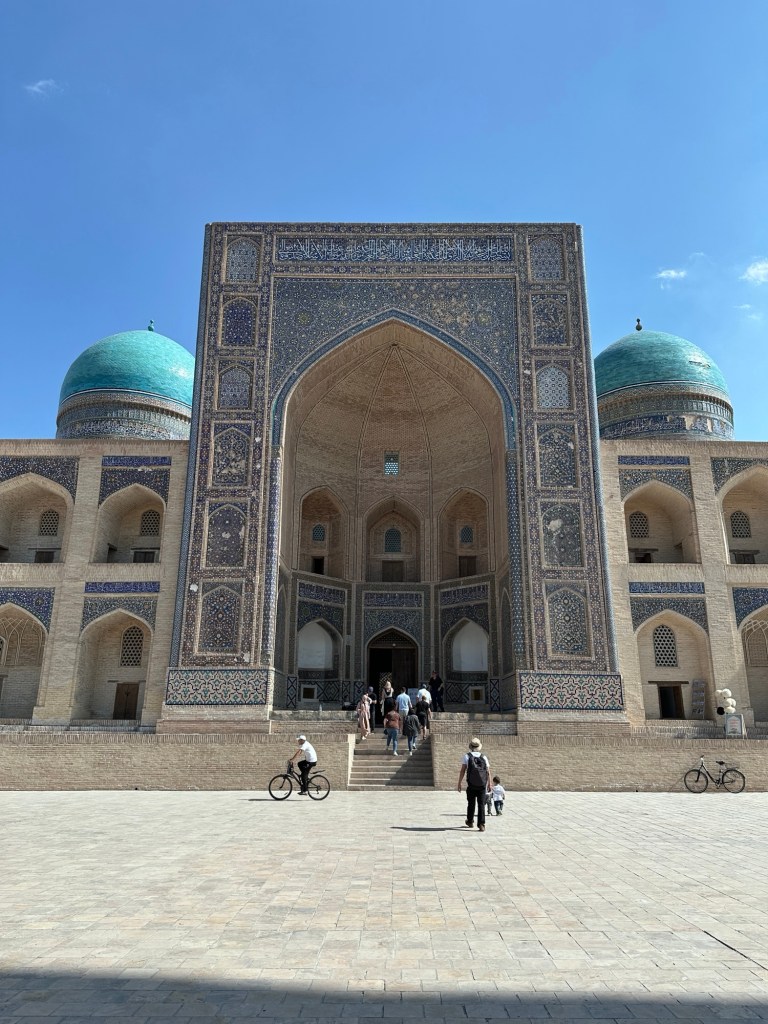
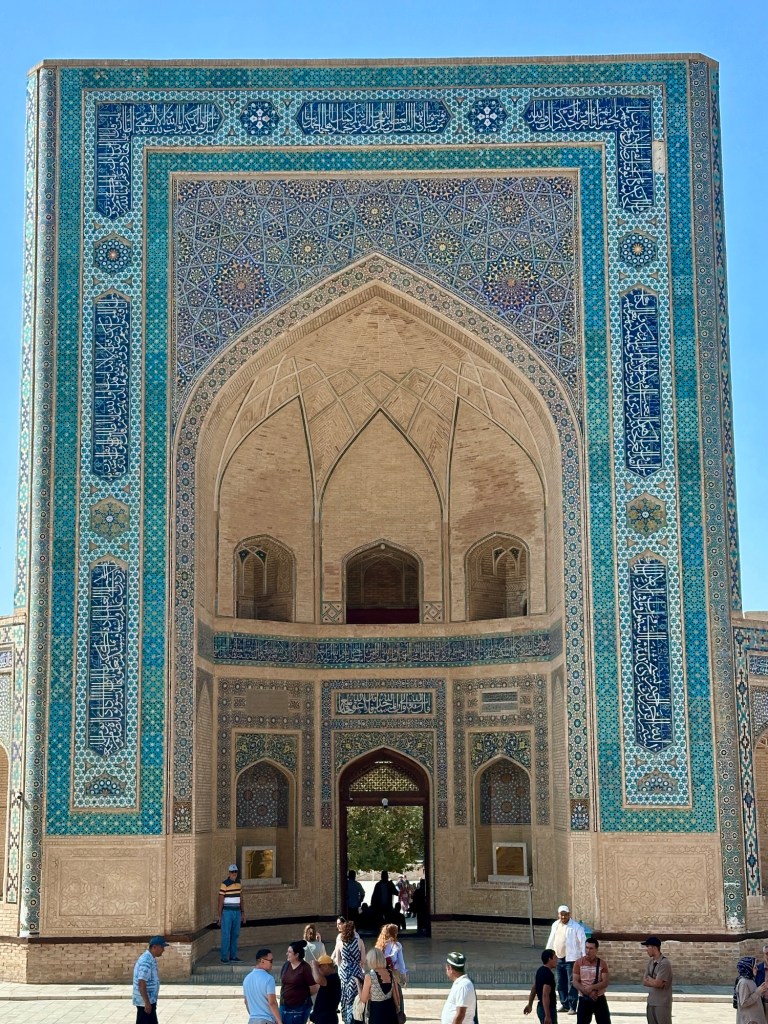
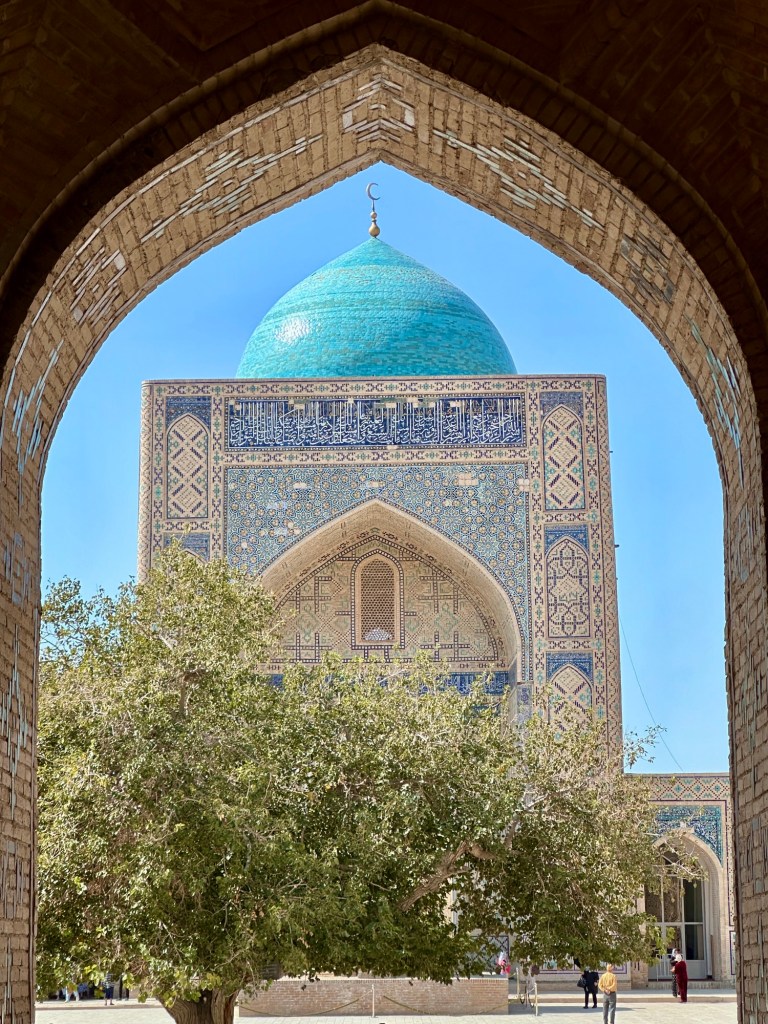
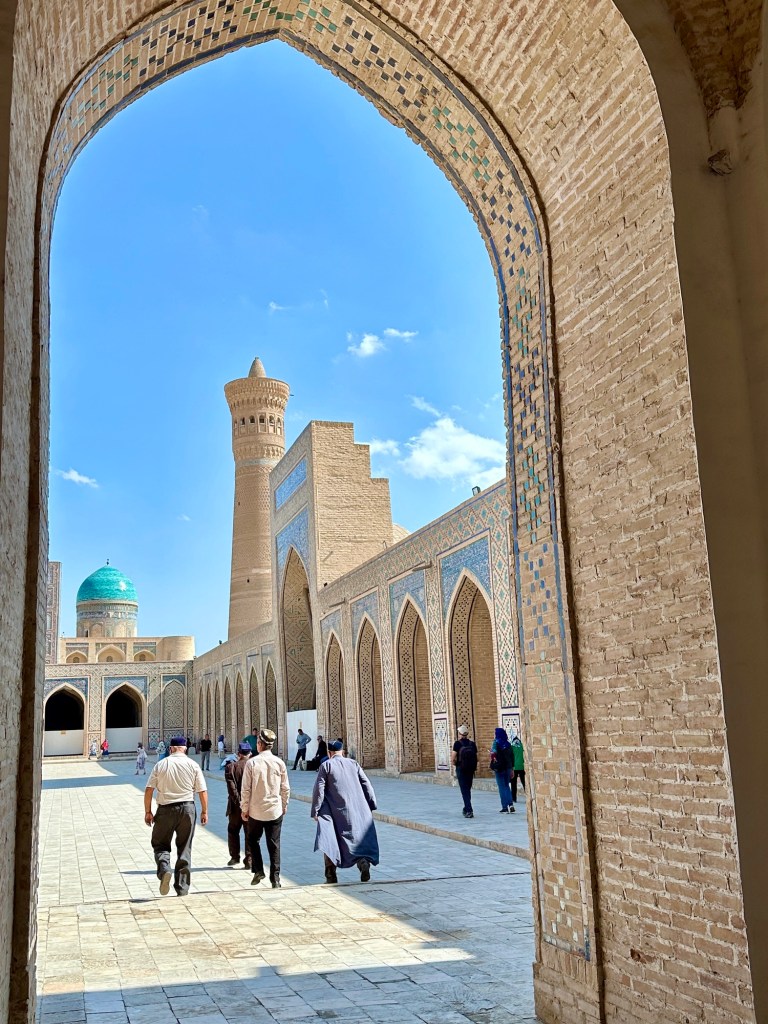
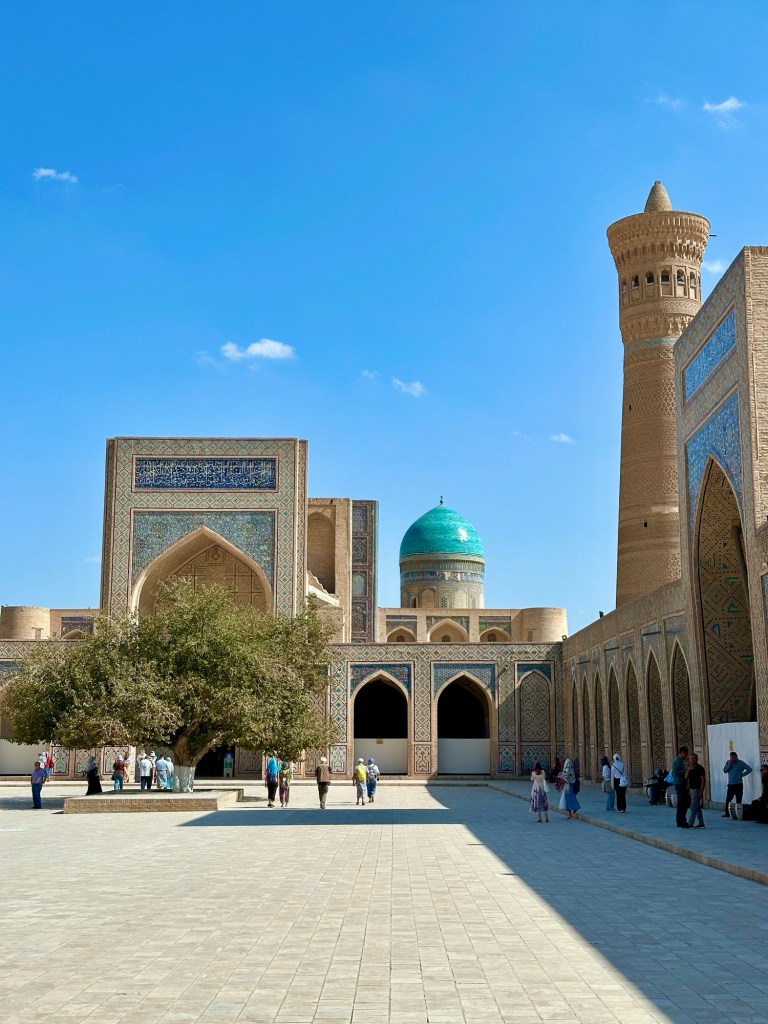
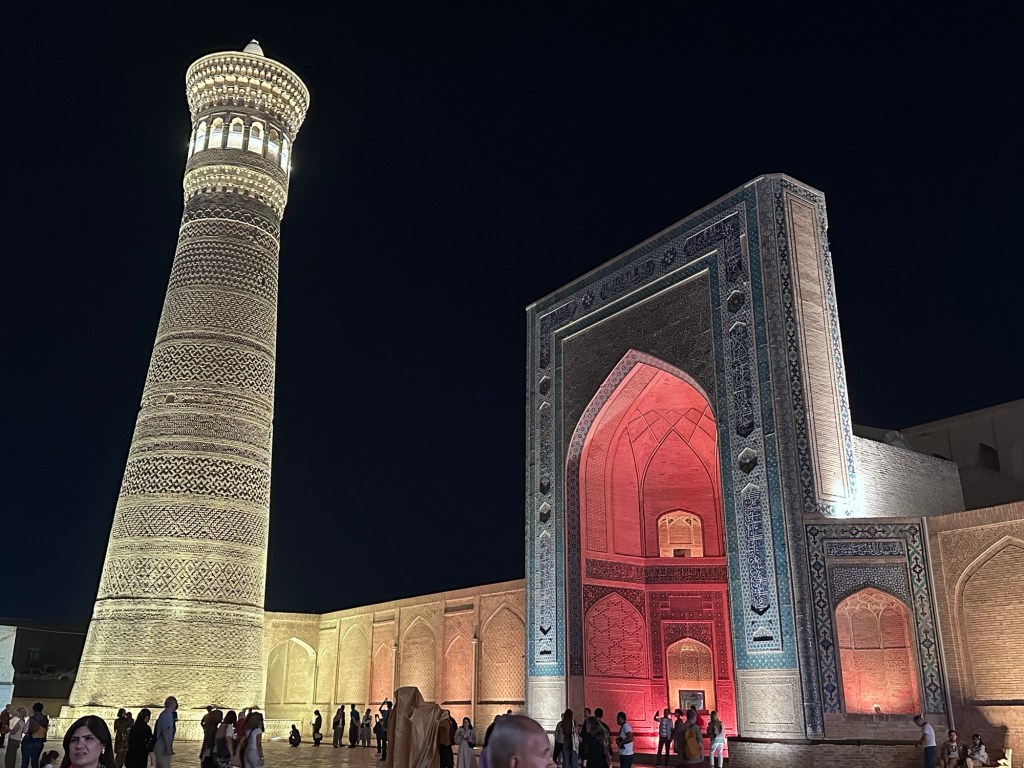
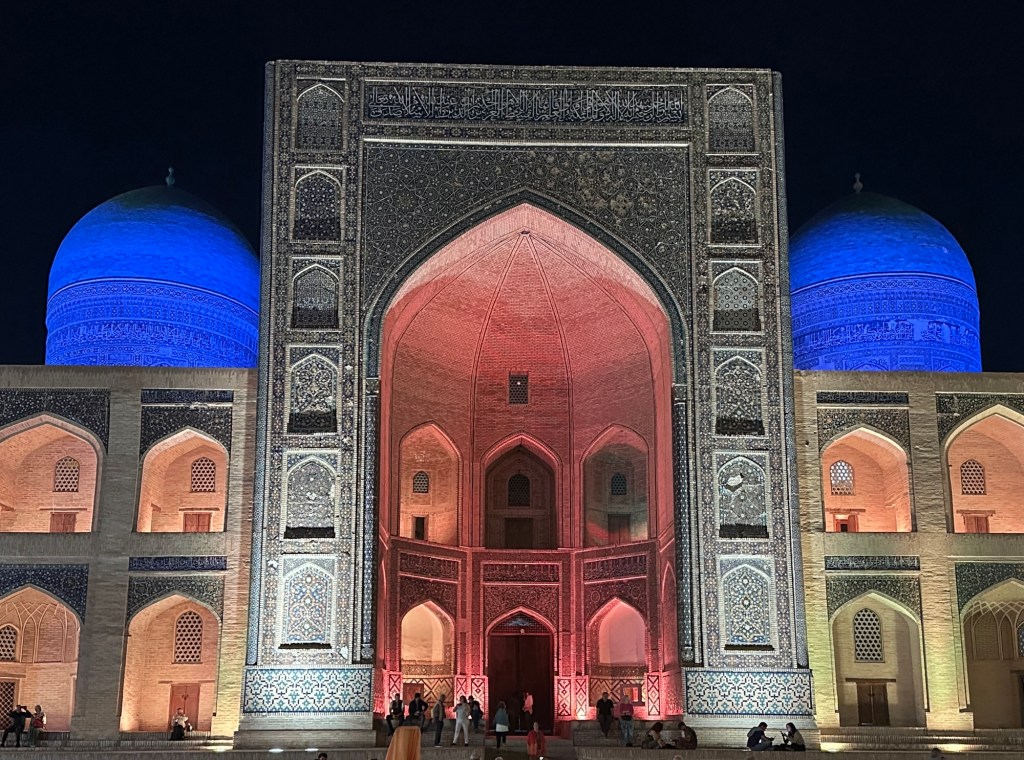
A video walkthrough of a room.Abdul Aziz Khan decided to build a more elaborate one across the way in 1652.With beautiful stalactites entryway.Can’t get more stunning than this.One of the living quarters still has its original wall paintings and fireplace.Stalactite ceiling FireplaceThe prayer room houses the woodcarving museum. The mihrab is said to have Abdul Aziz’s image embedded (bottom center) despite Islamic traditions forbidding such practice.Joe next to the Abdul Aziz imageThe working Mir-I-Arab madrasa sits across from the Kalon Mosque. Under the left dome is a burial vault, and under the right one is a small mosque.Entryway to the Kalon mosque.Peaking into the courtyard.WorshippersA view of one of the Mir-I-Arab domes and the Kalon minaret from the courtyard.Standing at 155ft the Kalon minaret, built in 1127, was so impressive that Genghis Khan ordered his men to spare the tower when they laid waste to the rest of the town in 1220.The backside of the mosque.
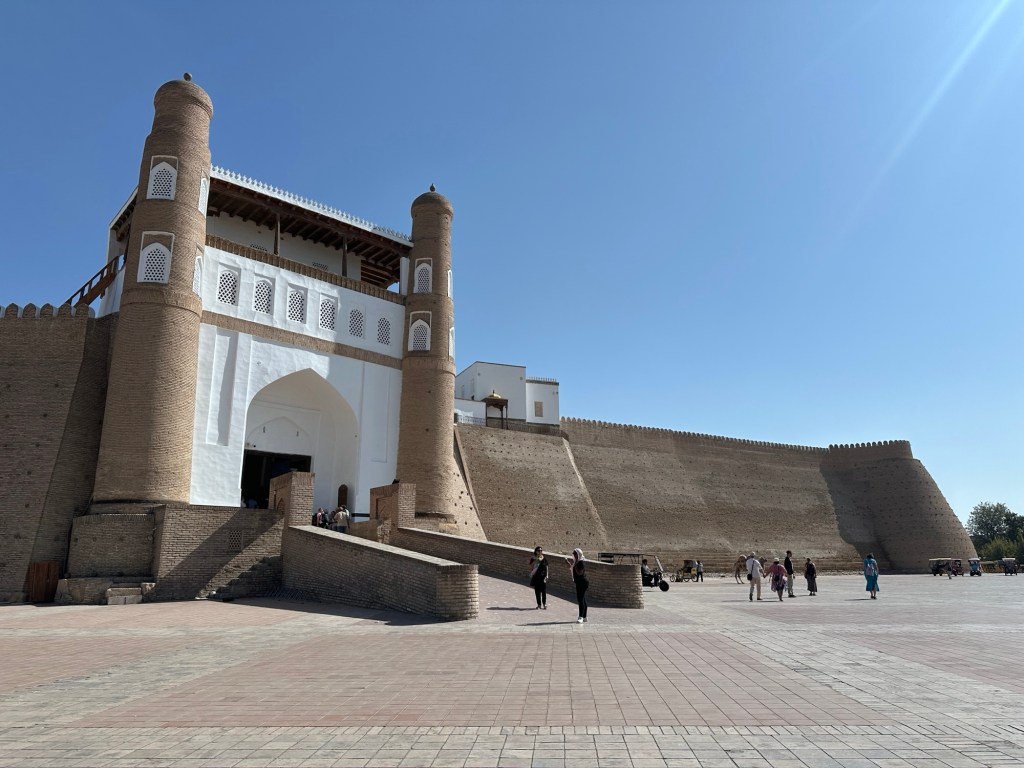
A short distance outside the town center lies the Ark (Persian for ‘citadel’), the palace of the Bukhara Emirs.
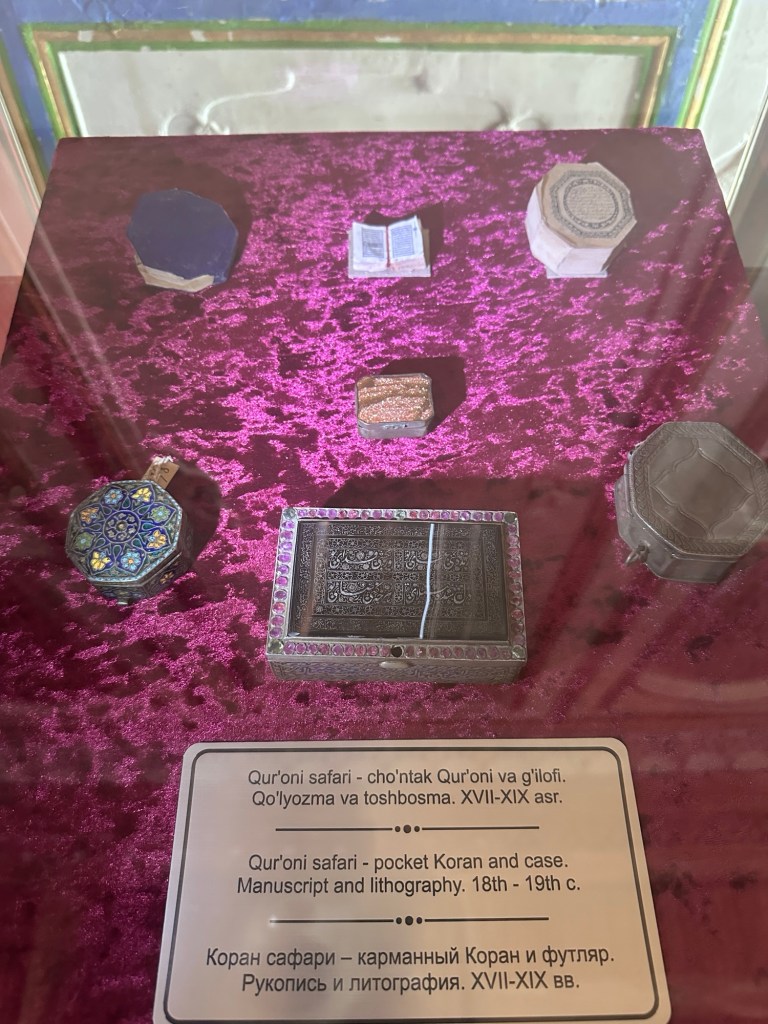
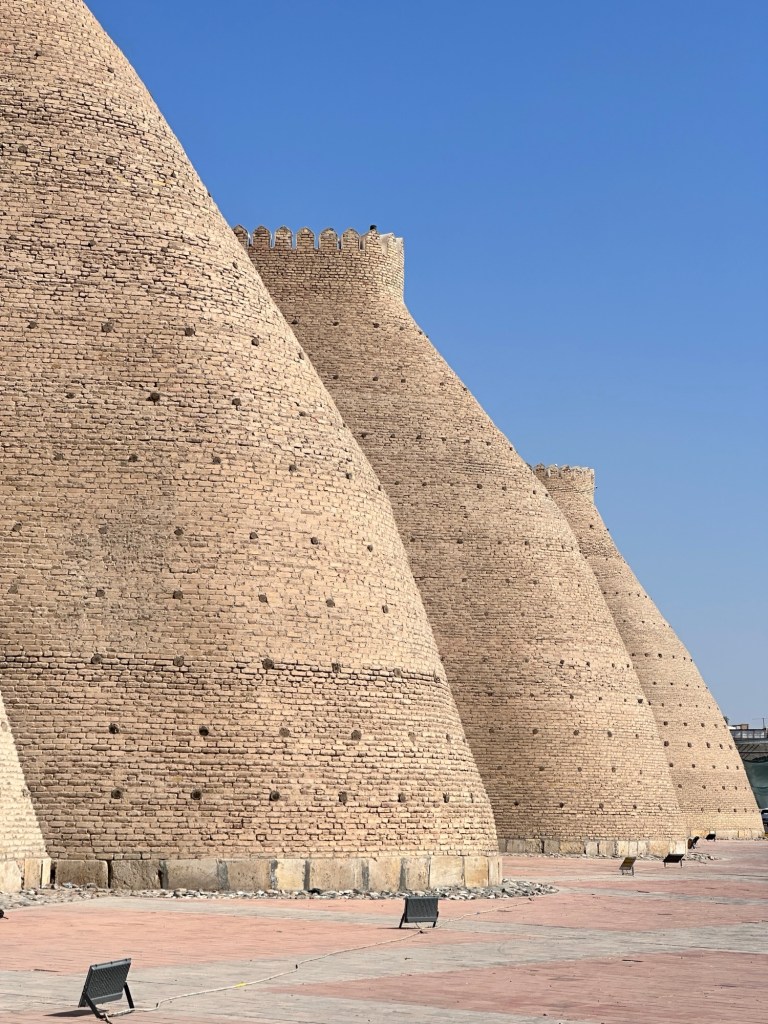
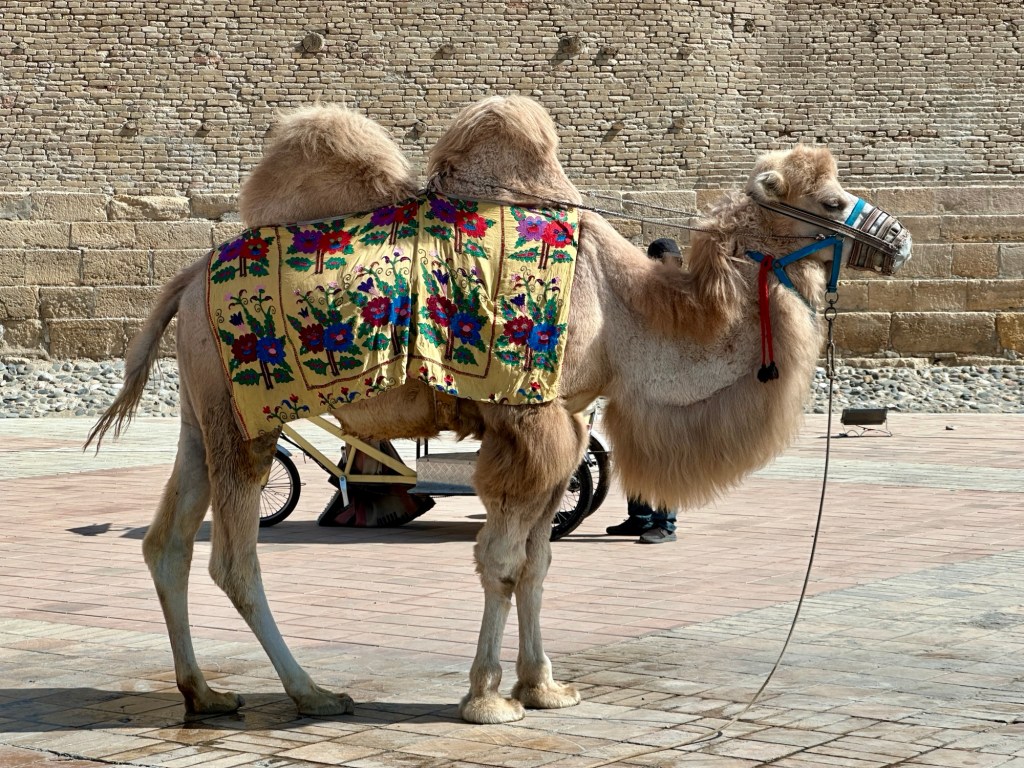
The Ark houses several small museums, and is a good place to visit if you haven’t already been to a gazillion museums in the last 4 weeks like we have. It was a bit underwhelming for us.Of some interest are the coronation hallAnd this tiny Koran.For size comparisonIn contrast to the tiny Koran are the imposing outer walls..A Bactrian camel outside the Ark.
Across the roadway is the beautiful Registan.
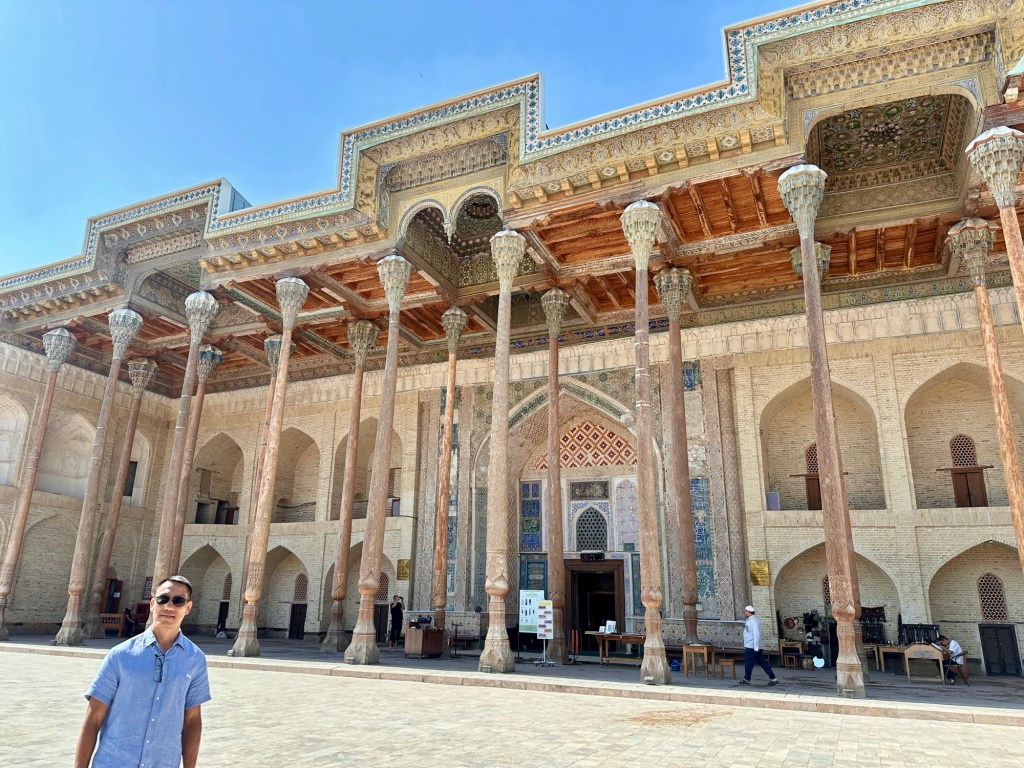
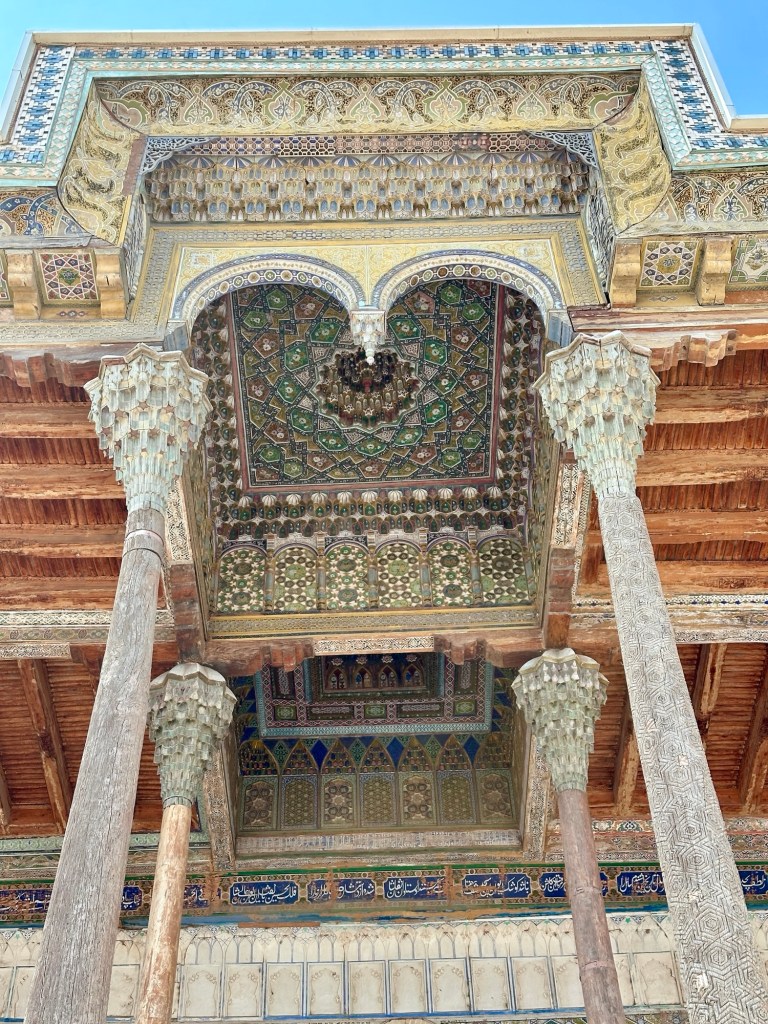
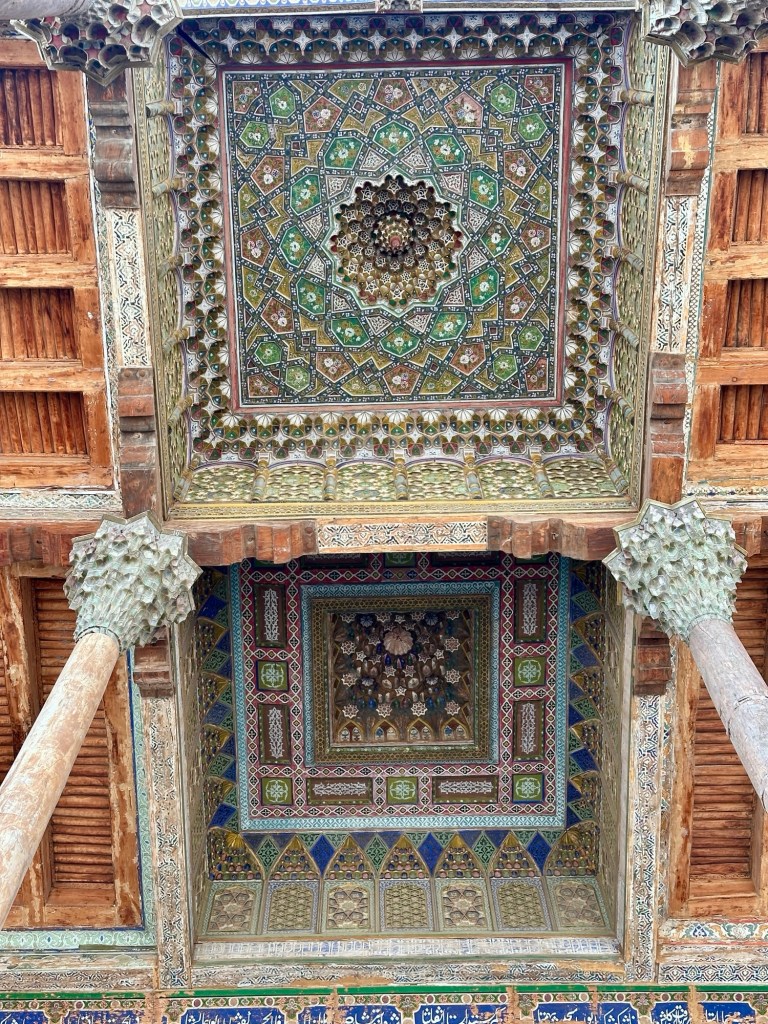
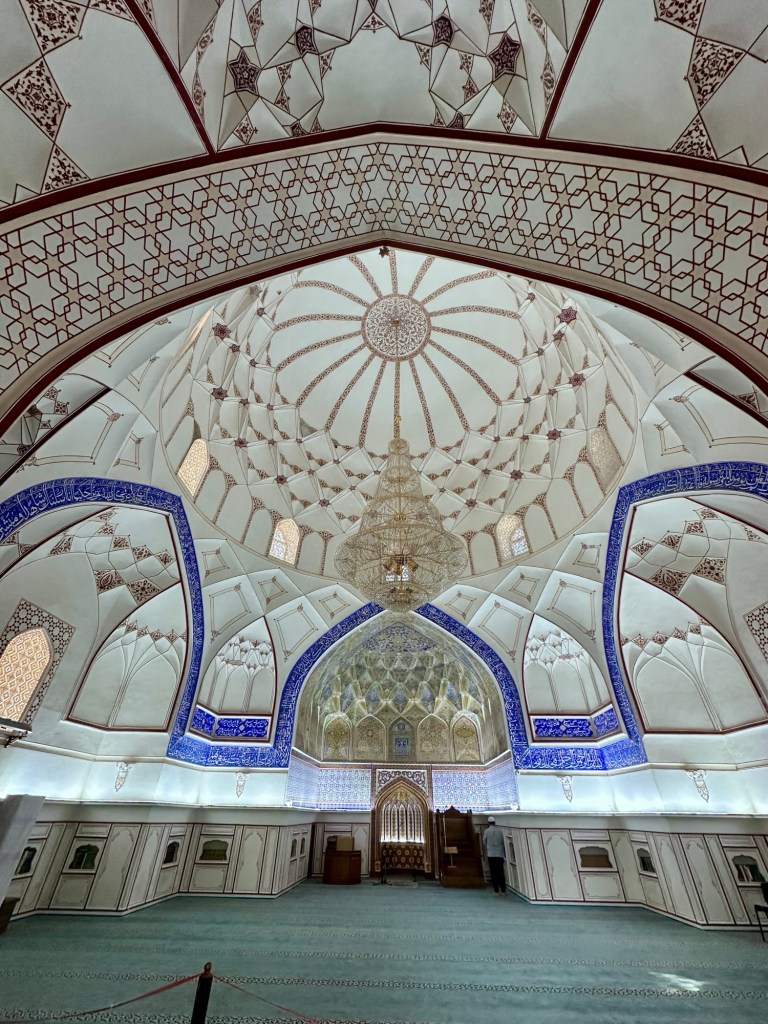
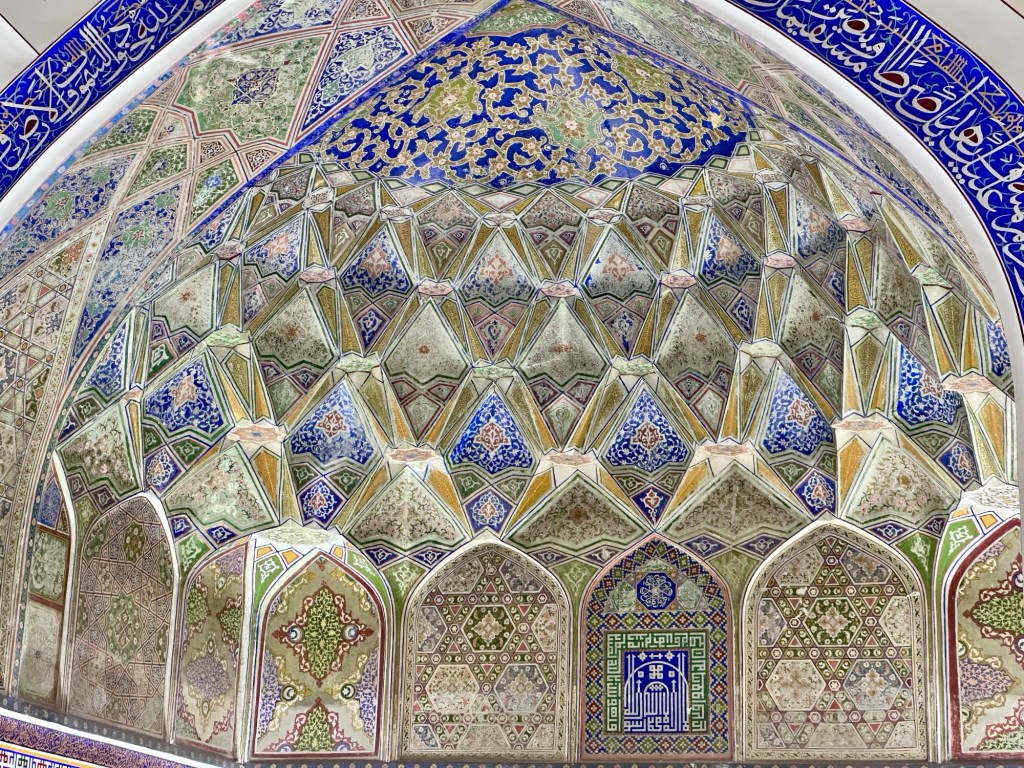
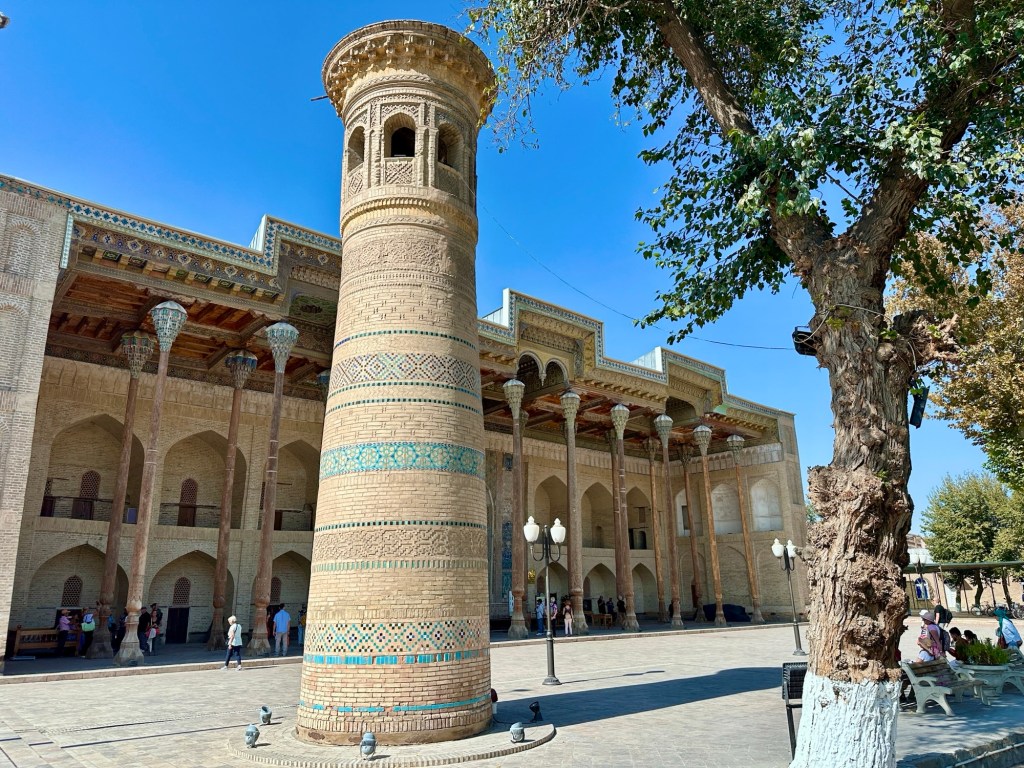
Built in 1718, the Bolo-Hauz Mosque was the emir’s official worship site.The wood columns (each sculpted a different pattern) and carvings stand in contrast to the styles we’ve seen in the town center.But it is no less beautiful.The white interior lends an airy feel despite it being much smaller than a lot of the more modern mosques we’ve been in so far.Close upMinaret in front of the mosque
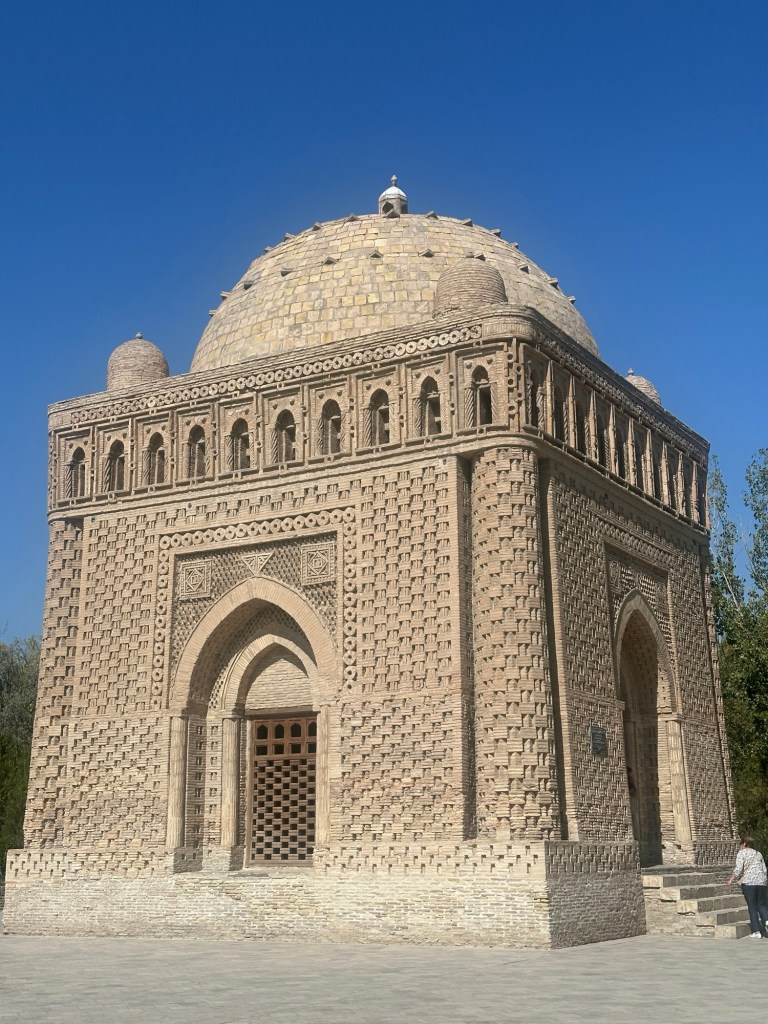
Back in Dushanbe, Tajikistan, the Ismail Samani monument stands tall across from the parliament. Here in Bukhara, you’ll find the mausoleum of this Samanid ruler who made Bukhara into Islam’s most glorious cities.
Completed in 905, this is the oldest Muslim monument in Bukhara, and has lasted for 11 centuries without needing any restoration.
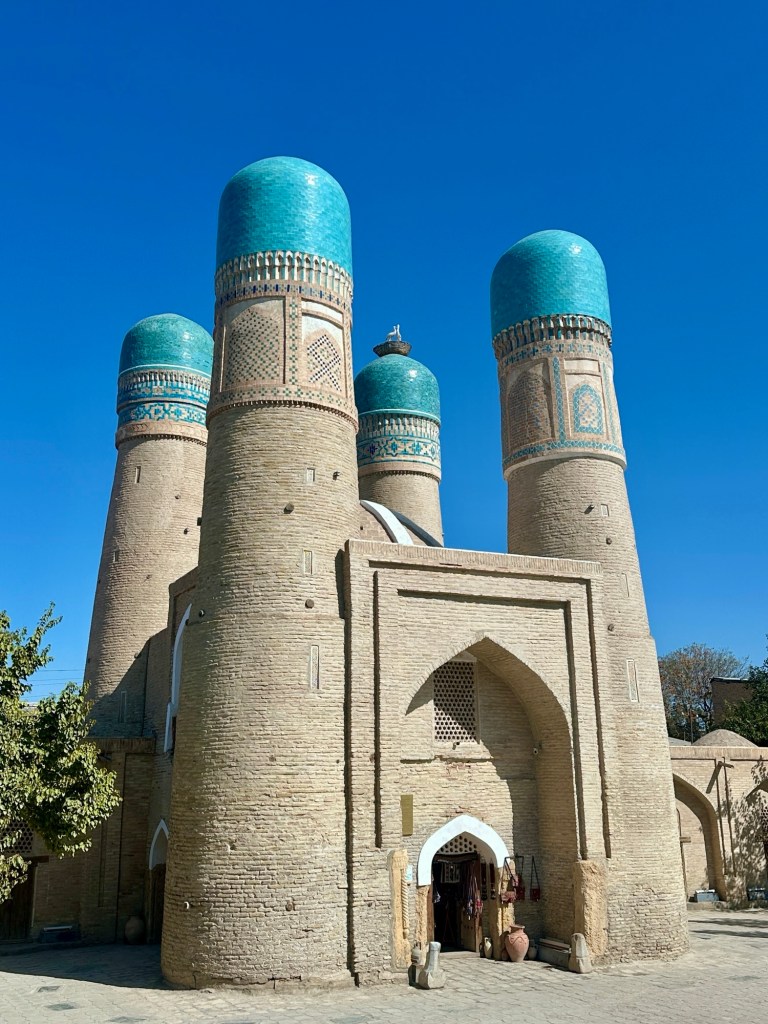
Finally, the cute little Chor Minar…
The 1807 small gatehouse of a destroyed madrasa.Night time view of the Kalon Minaret and MosqueMir-I-Arab madrasa







 FIRE'd @ 47