Finally time to embark on the highlight of this trip. Left our hotel at 6am to catch the 4-hour train ride to Bukhara.
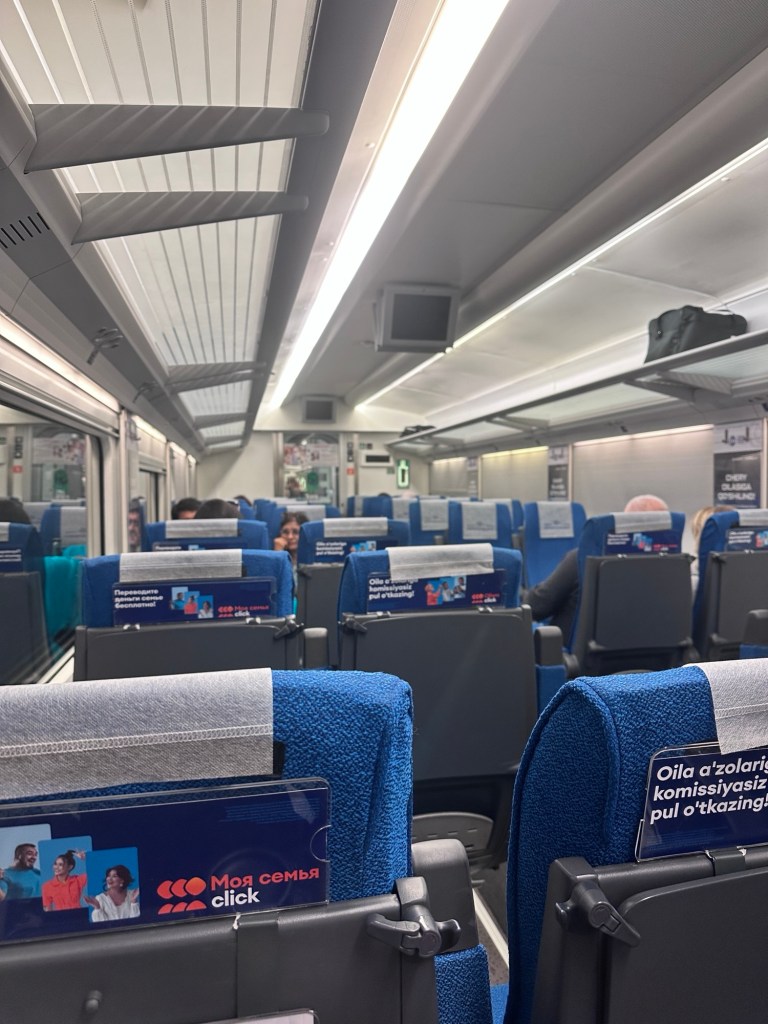
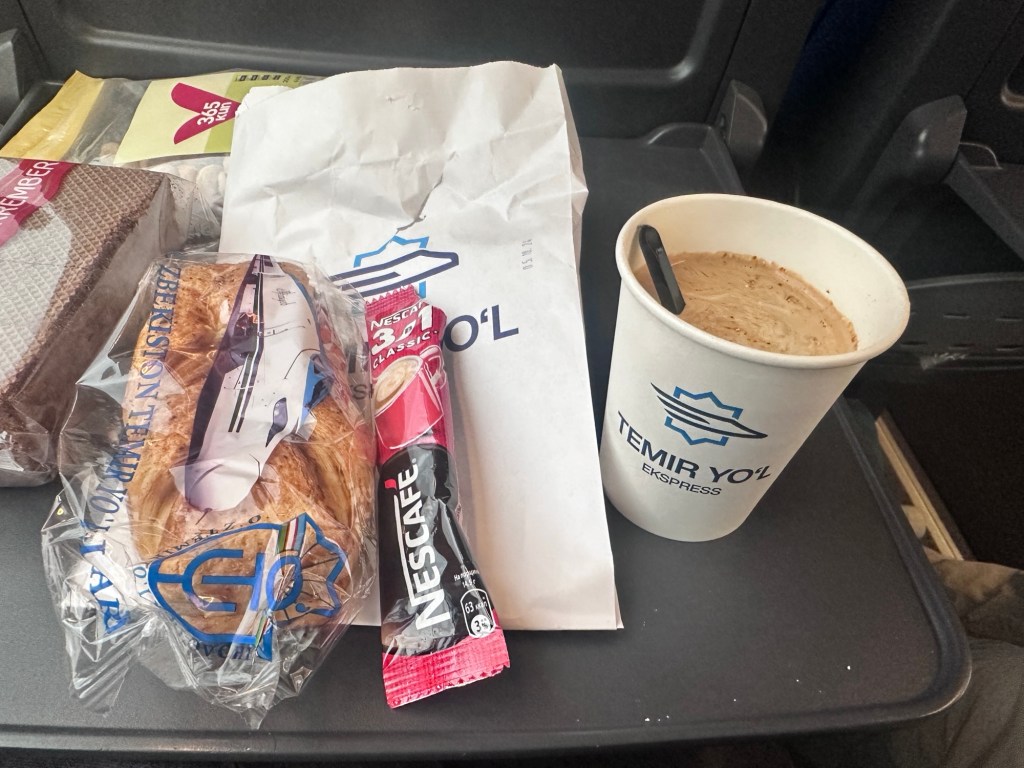
The Afrosiyob high speed rail, noticeably slower than the Taiwan HSR, but a much better option than the local Sharq train that gets you to Bukhara in over 6.5 hours.InteriorFree instant coffee and bread for breakfast.
Unlike in Kazakhstan and Kyrgyzstan, public WIFI in Uzbekistan is difficult to come by if you don’t have a local phone number. This makes booking rides through Yandex nearly impossible. We made the mistake of not getting a SIM card on arrival, and we’re now left haggling with taxi drivers over the cost everywhere we go – a practice I greatly despise. I’d much rather pay the higher set prices like those in Japan than to go through the charade of who’s better at the game of bargaining, which obviously we’re not.
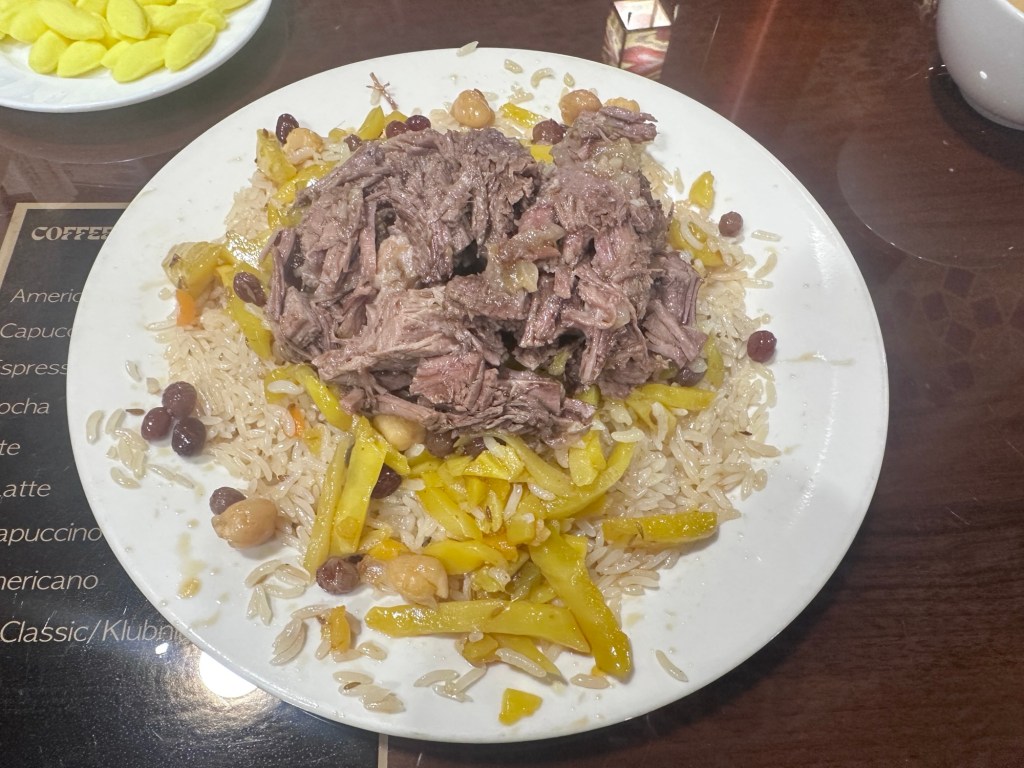
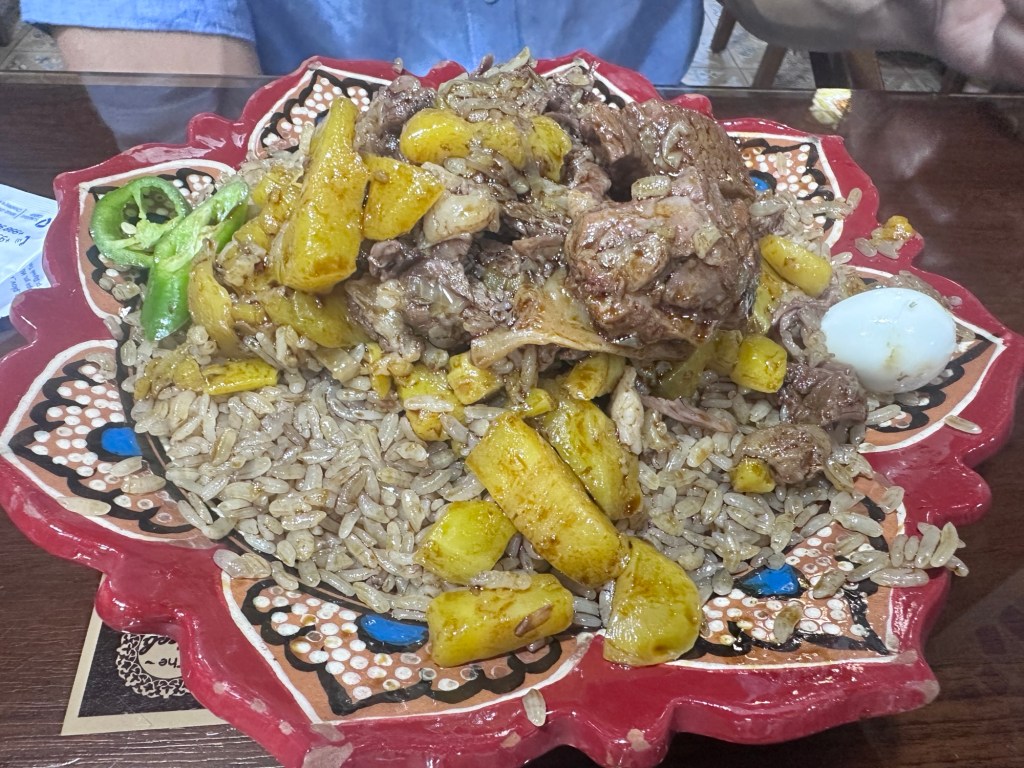
It was still too early to check in so we found a random pilaf restaurant (The Plov) nearby, which turned out to be one of the best pilaf places in Uzbekistan based on reviews. Every region in Uzbekistan has its own version of the pilaf, or osh, and each raves about their own.
Bukhara osh is slightly sweeter and lighter.Samarkand osh is more savory but just as good.
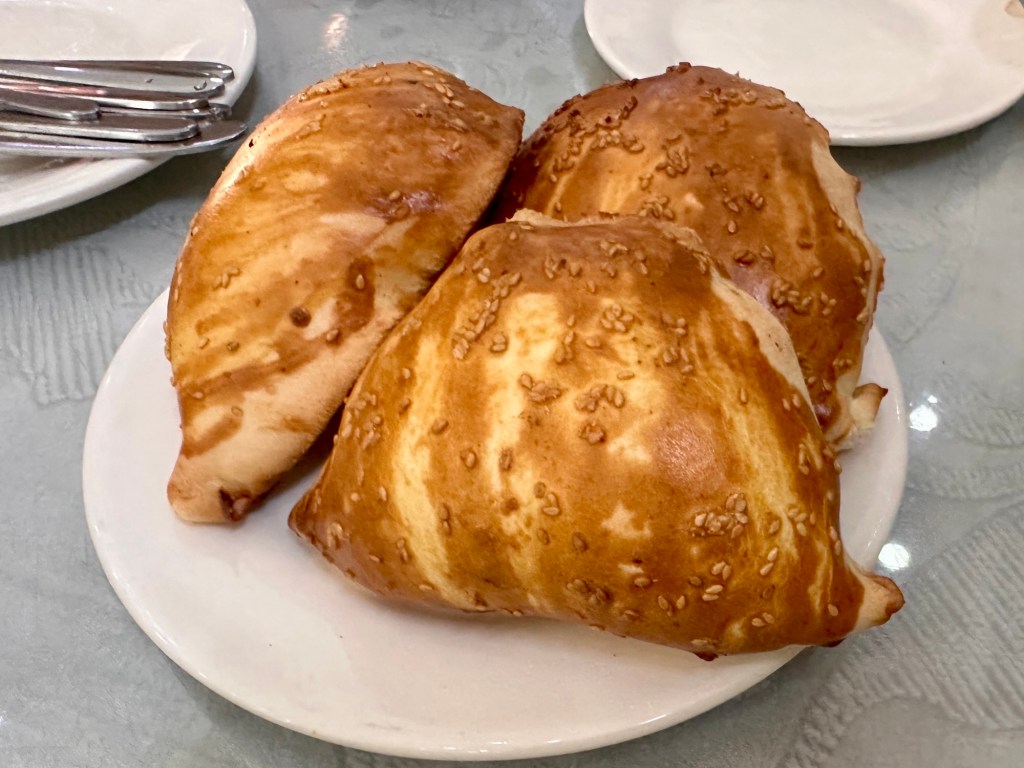
In addition to the samsa and beshbarmek we had in Kyrgyzstan, these two plates of pilaf were the tastiest foods we’ve had on this trip.
This beef samsa baked in a tandoor oven in Bishkek tastes similar to the 胡椒餅 in Taiwan, but it was packed with more meat and juices.Beshbarmek is a traditional nomad dish whose flavor can be mistaken for that of 蘭州拉麵. The similarities in cuisine within Asia can only be attributed to the Silk Road trades back in the day, when rice and noodles flowed out of China, while the tandoor oven baking technique was adopted out of India.
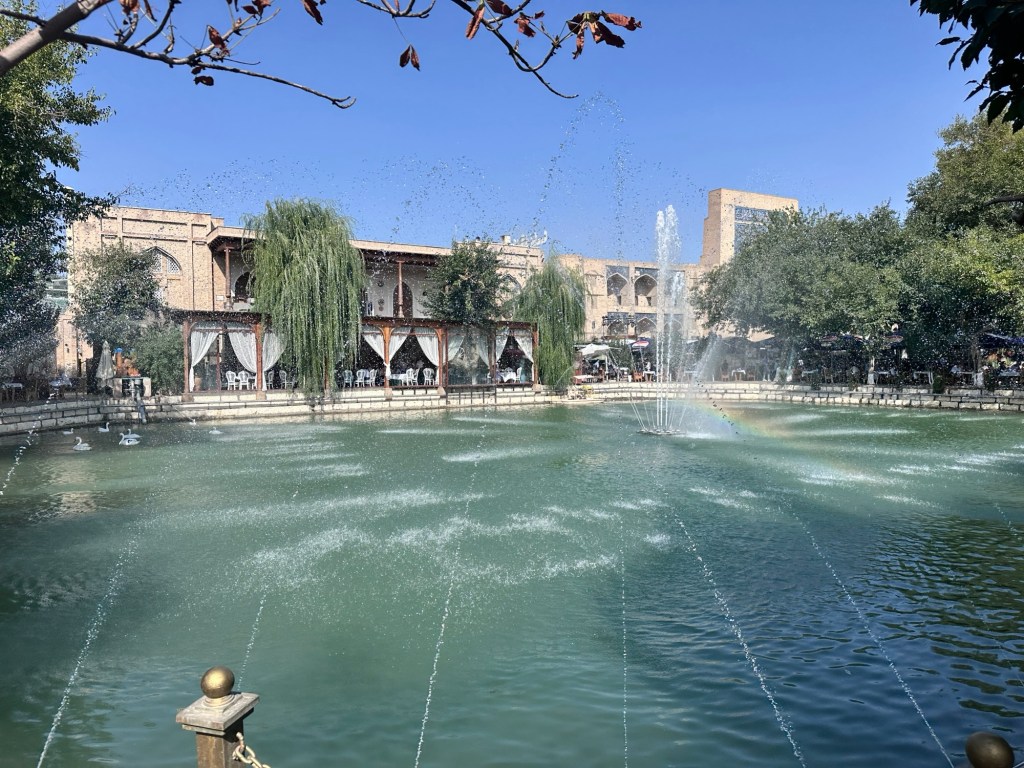
To walk off the heavy carb load, we hit the Lyab-I Hauz 15 minutes away.
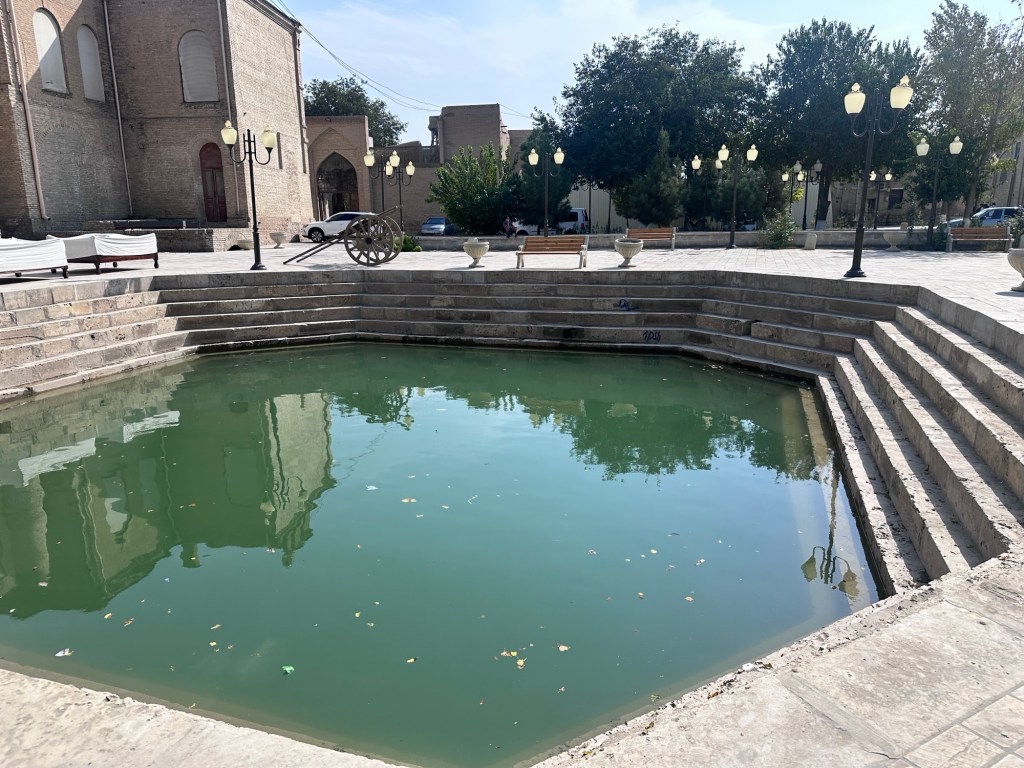
The area surrounding the central pool is a nice place to escape the heat. Back then, Bukhara had canals and pools scattered throughout where people could bathe in, but because the pools weren’t cleaned they became sources of water borne infections leading to an average lifespan of 32 years in the city. Eventually, all pools were removed leaving only a few left.This one definitely looks questionable.
A quick stroll through town offered a glimpse of this old Silk Road town.
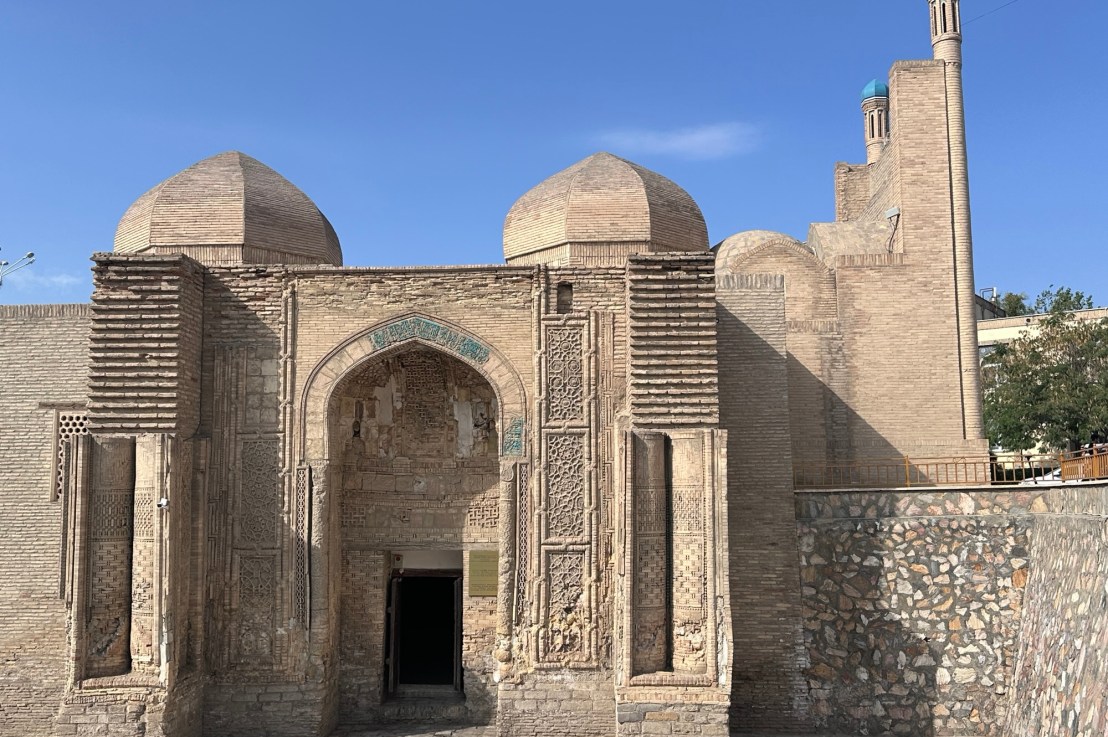
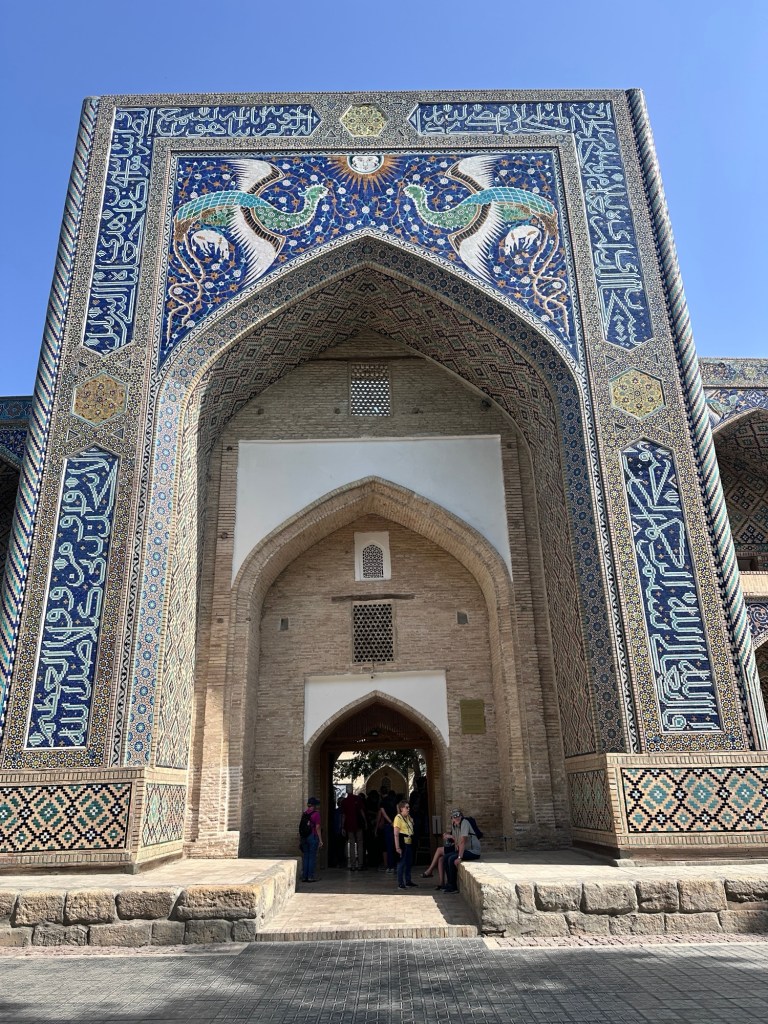
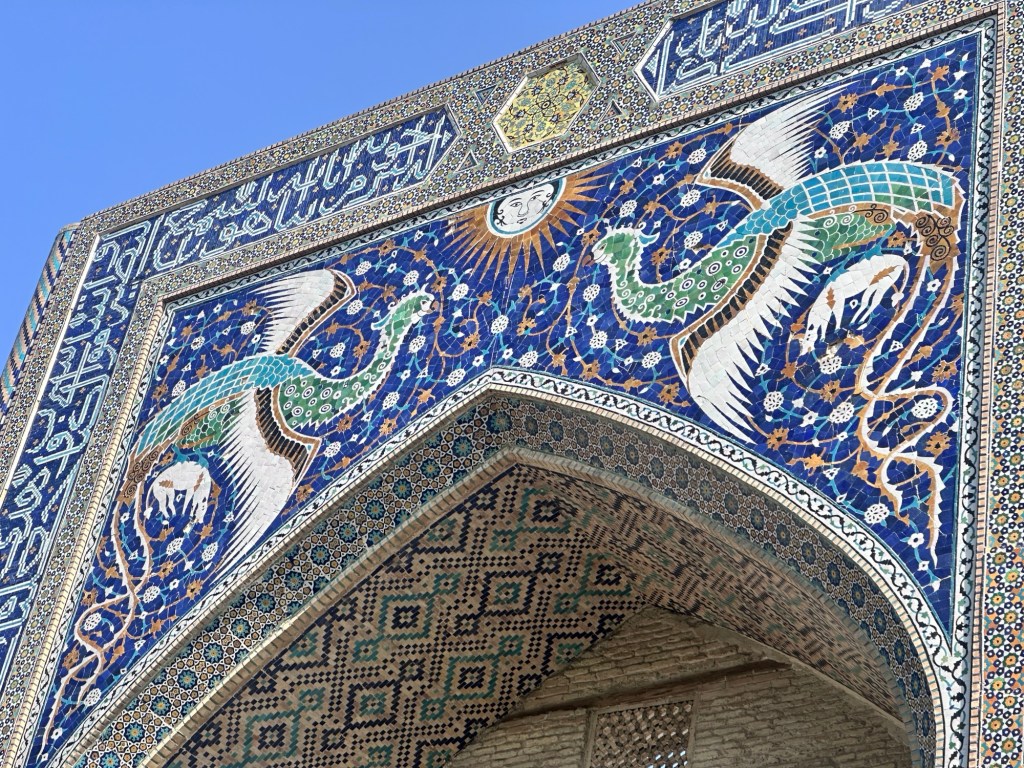
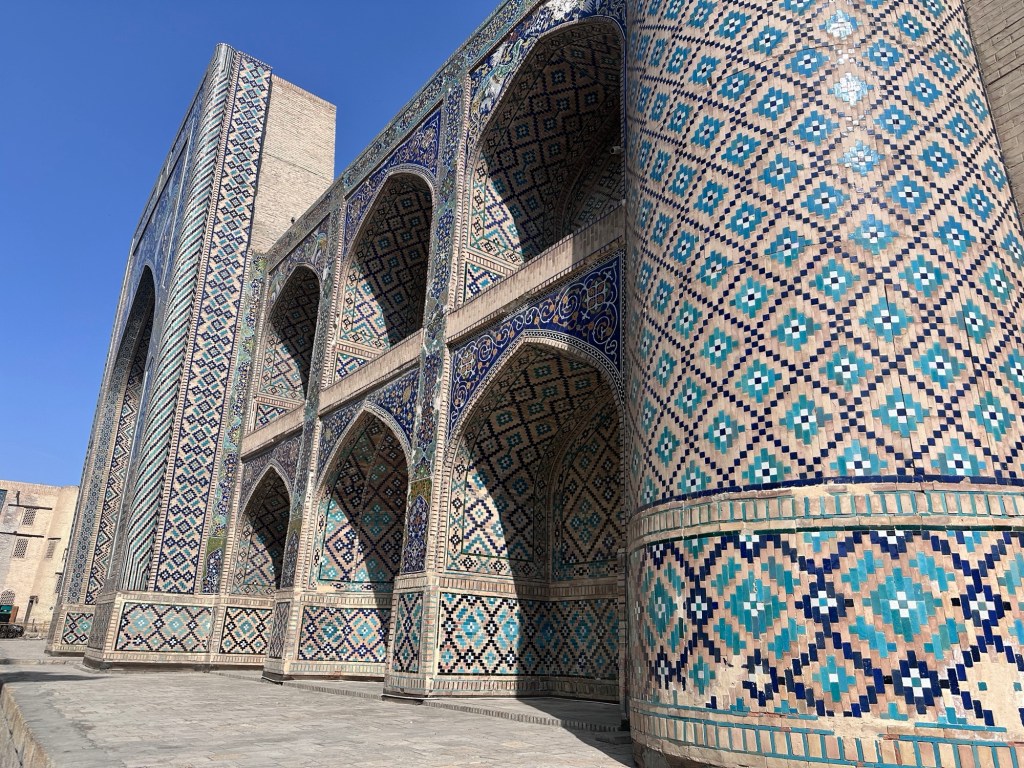
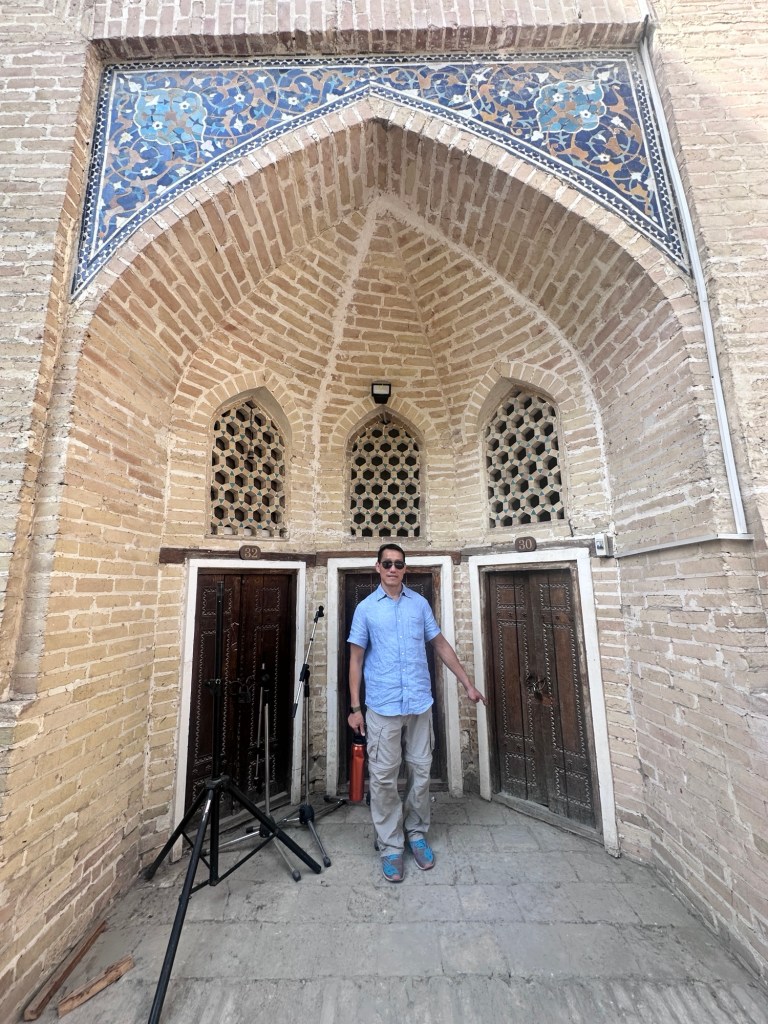
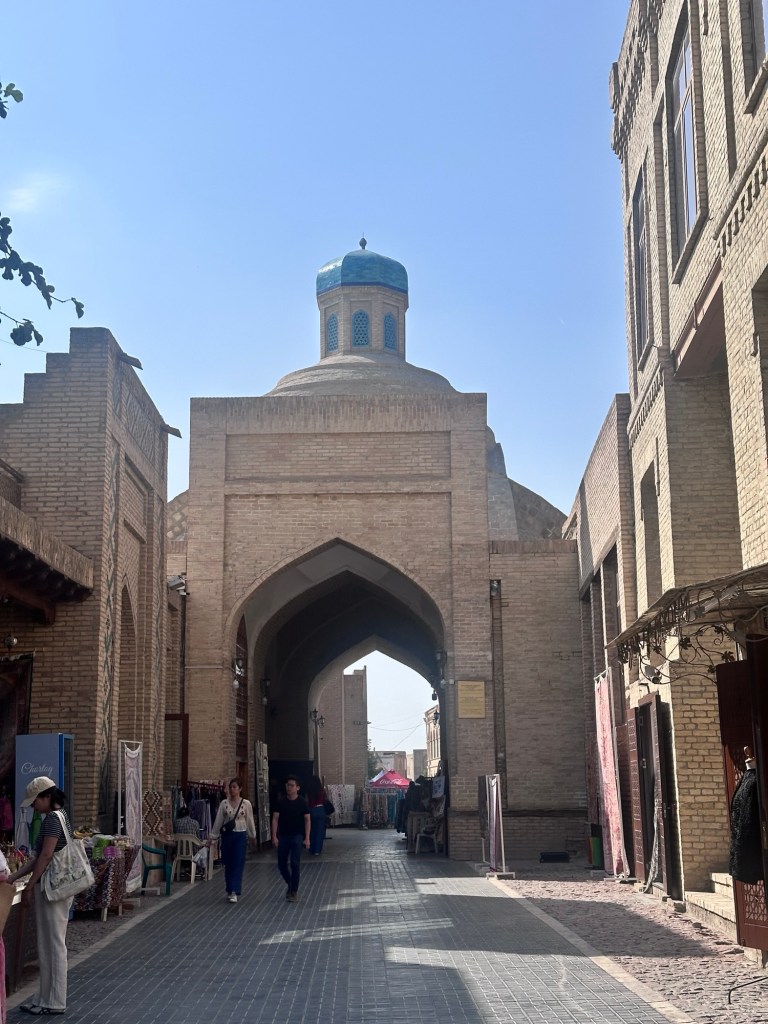
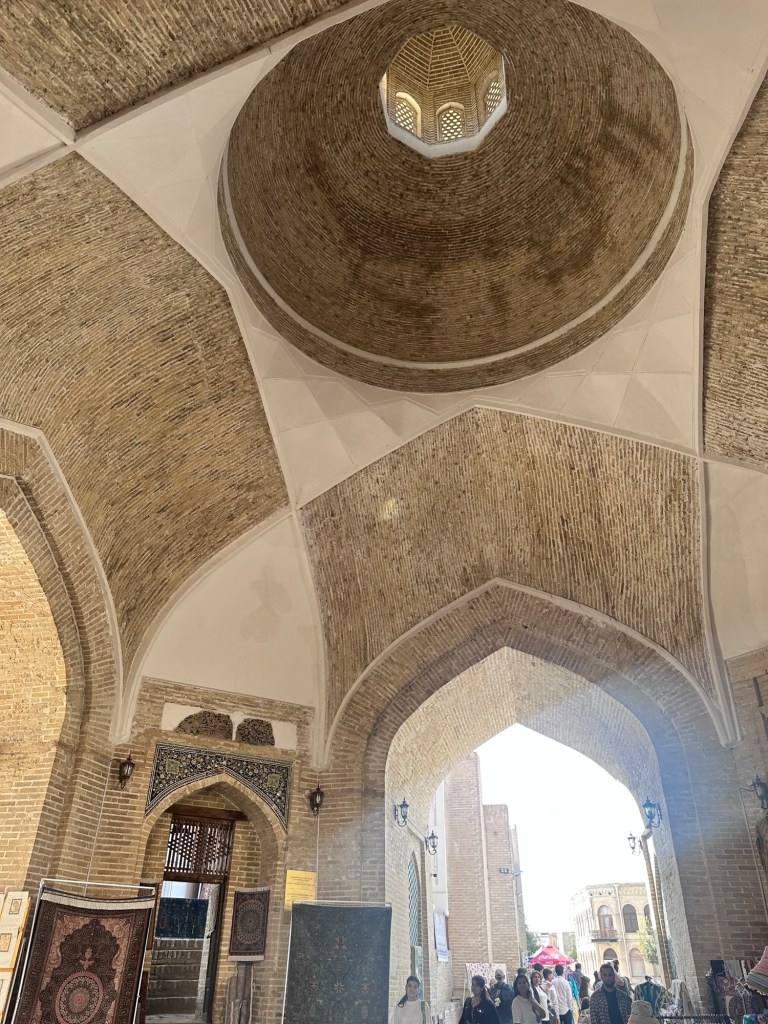
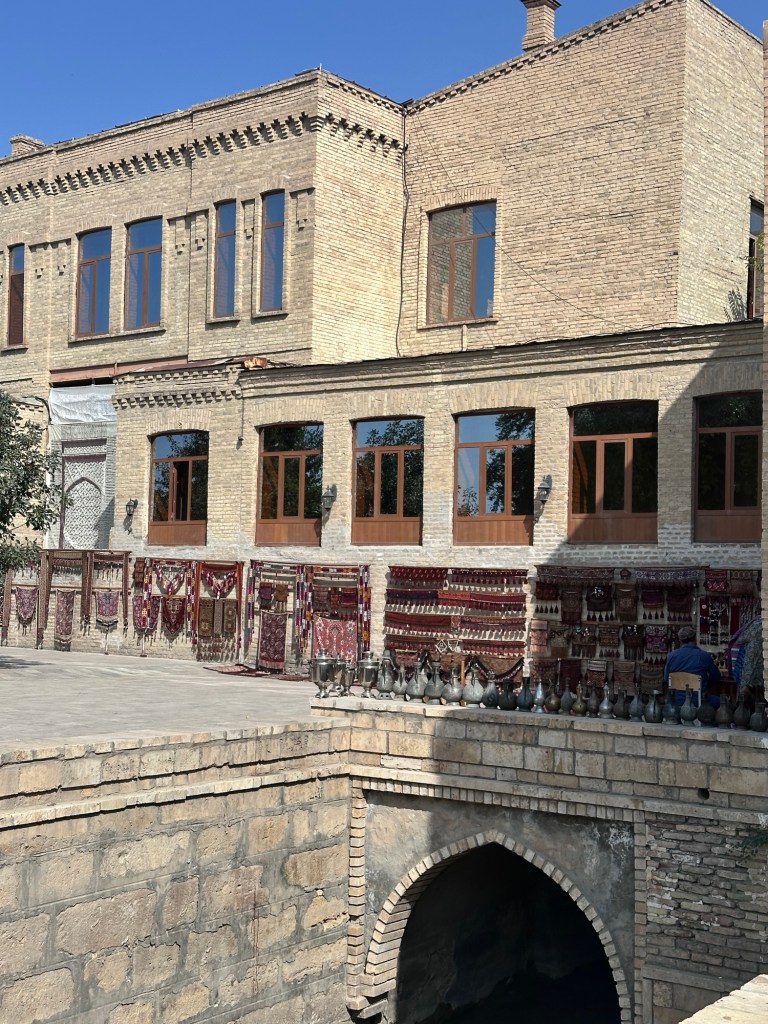
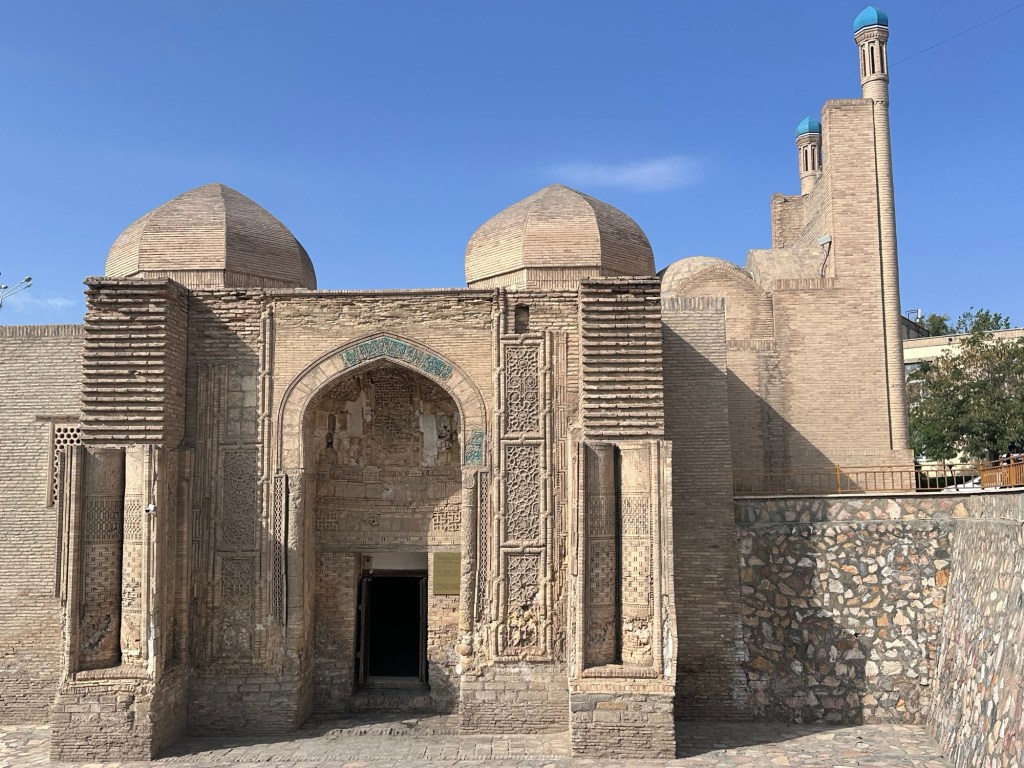
Nadir Divan Begi Madrasah used to be a caravanserai, which is similar to the modern day roadside motel, where traders and travelers can stay the night before their onward journey.The mosaic design is unique in that it features 2 peacocks each clutching a lamb, which is at odds with the Islamic tradition of not depicting living beings.Building façadeThe inner courtyard is now unfortunately housing souvenir shops.Tiny rooms and doorsEach room can fit about a modern day queen size mattress and not much else.The area is dotted with caravanserais and trading domes, a place for traders to sell their goods.Toki Telpak Furushon trading domeThe modern day stall selling copper goods and woven tapestries.The UNESCO heritage Magoki Attori Mosque is the oldest surviving mosque in Central Asia. The mosque was built on a 10th century pre-Islamic Zoroastrian temple foundation, and survived the Mongolian invasion because legend has it that it was buried in sand given its sunken location.
Tomorrow we go see the Lonely Planet “Top sights”. What we saw today were just “Sights”.





 FIRE'd @ 47